Smart building becomes a location factor
Smart buildings are no longer just digitally controlled properties, but operational ESG tools. They measure energy consumption in real time, control lighting, climate and shading automatically and provide reliable data for taxonomy, ratings and regulation. Lighthouses such as The Edge in Amsterdam, Taipei 101, Roche Basel and The Crystal in London show how intelligent buildings combine energy efficiency, CO² reduction, user comfort and governance transparency and thus become decisive locational advantages for knowledge- and technology-intensive companies.
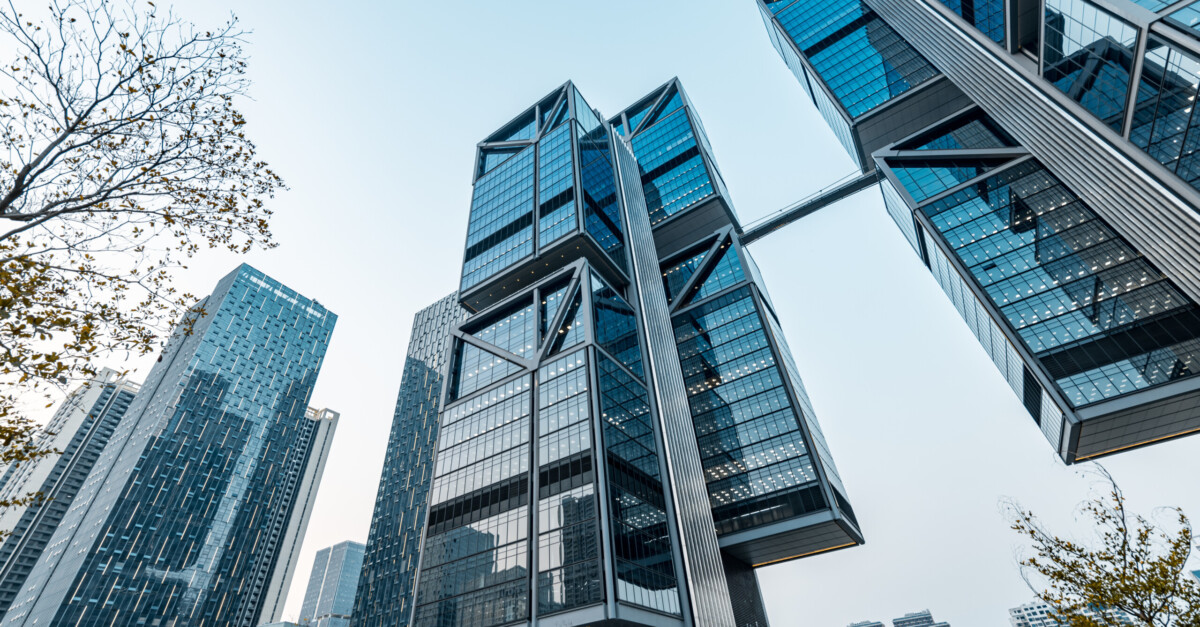
Smart buildings become a location factor when they first make ESG performance visible and controllable. Energy and resource consumption, CO² emissions, indoor climate and space efficiency can be measurably optimised through sensor technology, automation and data-based operation, and these key figures can be verified for green finance, ratings and regulatory purposes. Lighthouse projects such as The Edge in Amsterdam, Taipei 101, Roche Basel and The Crystal in London show how smart building technology can be linked to clear sustainability indicators and certifications and thus have an impact beyond the individual property.
Smart building as a talent magnet
Smart buildings are changing the working and innovation environment. User-centred buildings with high air quality, plenty of daylight, flexible spaces, apps and services are becoming a magnetic factor for talent and for companies that demand modern, healthy working environments. In such smart buildings, technology merges with workplace quality. From personalisable comfort parameters to intelligent space management, they directly strengthen employer branding and the attractiveness of a location for knowledge- and technology-intensive companies.
From individual buildings to networked campuses
Location and campus strategies are characterised by intelligent buildings. Data from many smart buildings is aggregated in neighbourhoods and campus structures. This creates controllable networks of energy, mobility and utilisation that position a city or region as an efficient, sustainable location, far beyond the individual building. This shifts the discussion. Smart buildings are no longer just a technical upgrade, but a strategic lever to make locations future-proof, regulation-proof and internationally competitive.
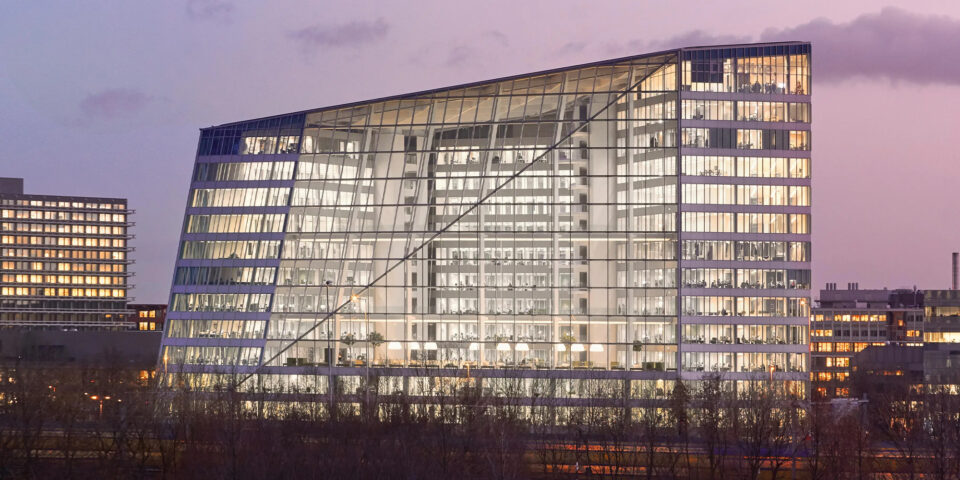
The Edge in Amsterdam is regarded as a prototype of an intelligent office building in which architecture, technology and data were conceived as a digital system from the outset. Covering around 40,000 square metres, an extremely dense IoT infrastructure with around 28,000 inputs and outputs networks sensors, LED lights with their own IP address, building automation and a workplace app. Employees book their workstations based on activity in the 3D model, receive personalised lighting and comfort profiles and work in highly flexible, daylight-oriented spaces. Thanks to its efficient shell, geothermal energy, large photovoltaic surfaces, rainwater utilisation and e-mobility, The Edge achieves an energy-positive balance and reduces CO² emissions in the double-digit million kilogram range over ten years. The permanently collected usage, comfort and energy data forms the basis for predictive maintenance, cleaning and space optimisation and makes ESG performance in operation measurable and controllable instead of just being reported. As a BREEAM Outstanding property with international benchmark status, The Edge shows how a single smart building can characterise both the working environment and the location profile of Amsterdam as an innovative, sustainable economic area.
Learn more

Taipei 101 in Taipei shows how an iconic supertall can be transformed into a green and “healthy” skyscraper using smart building technology. An integrated building and energy management system monitors and controls lighting, HVAC, pumps and lifts, supplemented by cloud-based analytics to increase efficiency. Double façades, LED retrofits, optimised air treatment, water-efficient fittings, rainwater harvesting and an improved cooling water system significantly reduce energy and water consumption. The green retrofit made Taipei 101 a LEED Platinum pioneer for existing buildings. in 2025, the tower again achieved LEED v5 O M Platinum with the highest score and WELL v2 Core Platinum. Over several years, around 160 million kWh of electricity were saved and at the same time the air quality, comfort and health of the users were significantly improved. A global ESG lighthouse project for existing buildings.
Learn more
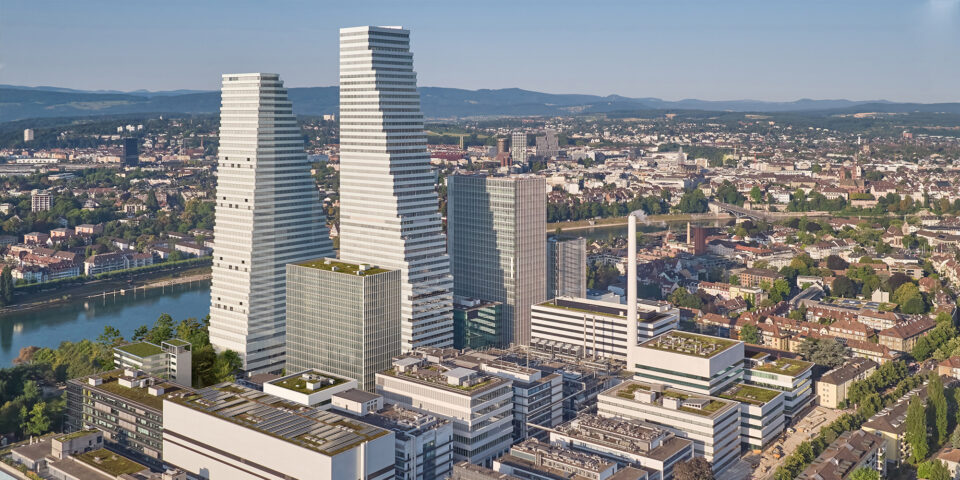
Roche Campus Basel/Kaiseraugst is pursuing a smart building and smart campus strategy on the Basel/Kaiseraugst campus, in which a continuous IoT backbone connects existing and new buildings. Sensor technology, building automation and data platforms are used in such a way that energy efficiency, user experience and operational optimisation converge in a scalable digital infrastructure. Specific use cases include occupancy and presence measurement, indoor navigation, geo-referenced floor plans and smart logistics and material flows. Large new buildings such as Building 2, BSN8/11 and the pRED Centre will serve as supports in which sensor technology, automation and data architecture will be integrated from the outset. This makes the campus a strategic ESG lever. Energy monitoring, space and operational optimisation support decarbonisation, while user-centric working environments improve orientation and service quality. Consistent data and life cycle management creates transparency for FM and governance. At the same time, Roche is strengthening Basel as a life sciences location with internationally visible reference buildings and a clear systemic sustainability logic.
Learn more
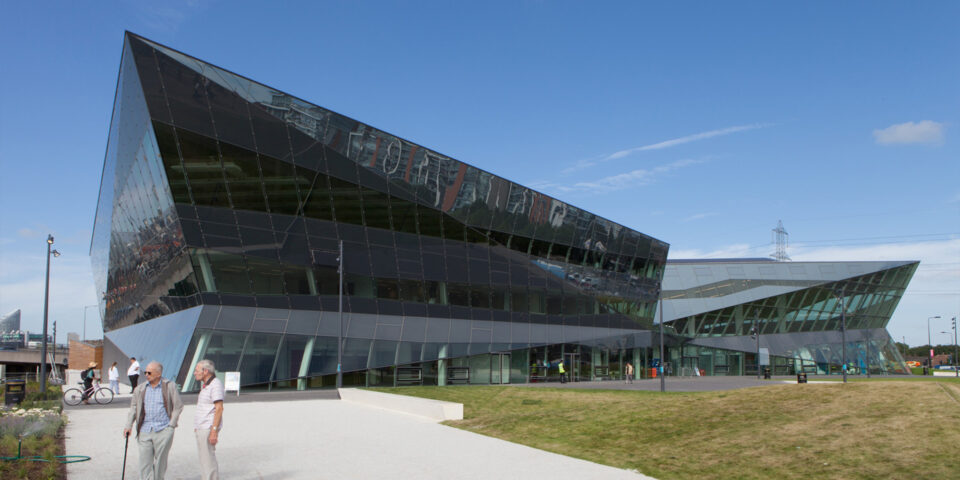
The Crystal in London is a compact but consistently developed smart building lighthouse project with a clear ESG link. It was built in 2012 in the Royal Docks for Siemens as an exhibition and conference centre, covers around 6,300 square metres and is considered one of the most sustainable buildings in the world with LEED Platinum and BREEAM Outstanding. The fully glazed, two-storey building combines an all-electric concept without fossil fuels with a finely tuned glass façade and an integrated building management system. Photovoltaics on the roof, geothermal probes with heat pumps, LED lighting, rainwater and black water treatment and water-efficient fittings significantly reduce energy and water consumption. The BMS networks heating, cooling, ventilation, lighting and security, adapts operation to occupancy and weather in real time and makes all systems measurable, benchmarkable and finely adjustable. The result is a virtually self-optimising building that also serves as a publicly accessible learning space for urban sustainability and has become an international reference case for smart, ESG-oriented architecture with its transparent performance display.
Learn more