Minergie, but still too hot
A good energy label should protect against the summer heat, not give in to it. More and more residents of Minergie buildings are complaining that their apartments heat up to 28 to 29 degrees despite strict standards. The Minergie Association is now responding by considering a possible tightening of the rules.
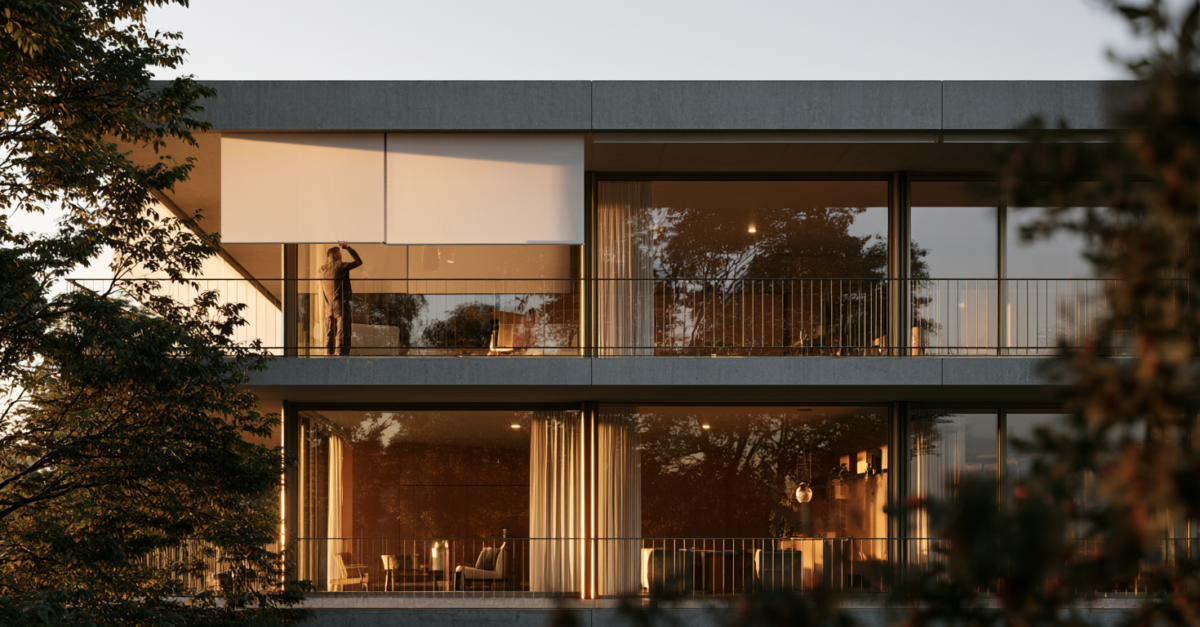

Lukas Arnold had an air conditioning system retrofitted in his Minergie-certified condo because he could no longer stand the heat. He’s not alone; many of his neighbors have also retrofitted their units with monoblock or split-system units. He finds it particularly frustrating that the building’s comfort ventilation system doesn’t bring in cool air but instead heats up the apartment even more.
The standards have already been tightened, but it’s still not enough
There are now over 60,000 certified Minergie buildings in Switzerland, and each year, 10 to 20 percent of new or renovated buildings are awarded the label. Minergie has already reduced the permissible number of overheating hours from 400 to 100 hours per year.
Cooling systems instead of just insulation
The association now faces a dilemma. According to Meyer-Primavesi, further tightening of the temperature requirements is hardly feasible without the installation of cooling systems. This, in turn, contradicts the label’s actual goal, as air conditioning systems generate additional greenhouse gases through “gray energy,” while the construction sector is already responsible for one-third of Switzerland’s total CO2 emissions.
Moving Away from Concrete, Toward New Materials
Starting in 2025, the revised Energy Act will require the cantons to set limits for gray energy; Minergie has already been setting a target here since 2023 that is 10 percent below the future cantonal requirements. The latest Minergie Net-Zero building standard even requires buildings to produce zero greenhouse gases over their entire life cycle. According to Meyer-Primavesi, particularly eco-friendly building materials such as clay are likely to see widespread use in this context.
A house that stores CO2 instead of producing it
In Widnau, there is already an apartment building that shows what this future could look like. The exterior walls are made of hemp bricks and hemp lime, while the interior walls are made of clay; the plant stored CO2 and removed it from the atmosphere as it grew. The 50-centimeter-thick hemp walls keep the heat out, while simple ventilation slits provide a natural heat exchange effect—all without mechanical ventilation or air conditioning.
Even eco-buildings have their limits
This solution isn’t perfect either. Hemp house developer Andy Keel admits that he hasn’t achieved the target indoor temperature of 26 degrees in all apartments. For his next project, which will include ten apartments, he is now having special photovoltaic shutters developed that can be slid in front of the windows, providing both sun protection and energy generation.