More licences granted, but rental pressure remains
Although the approval of around 52,000 new homes marks a statistical turning point in Switzerland, this is barely noticeable on the rental market. Construction is taking place mainly outside the regions with the greatest shortages, whilst refurbishments are tying up capacity and asking rents continue to rise.
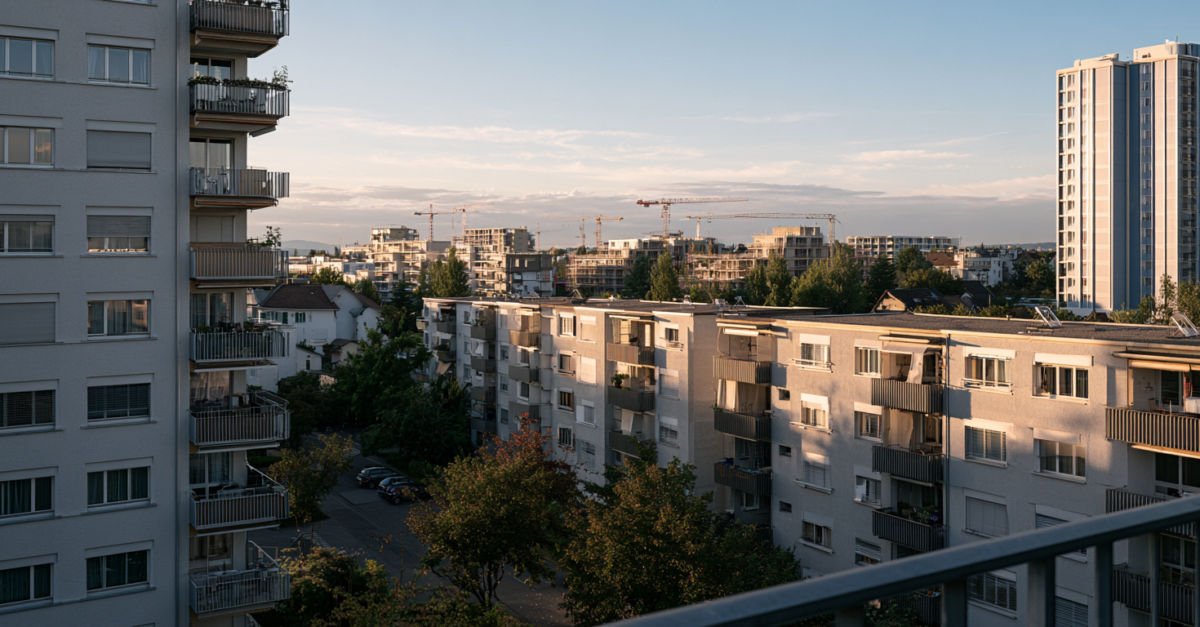

Around 52,000 housing units approved over the past twelve months is more than just a modest success. It marks the highest level since the end of 2018. For those looking for a home, however, something else matters. The additional construction is only partly taking place where the shortage is greatest, and a growing proportion of planning and construction activity is being channelled into refurbishments rather than new homes.
This explains why the statistical turnaround in the market is doing little to ease the pressure. Wüest Partner does, however, report rising numbers of planning permissions and an increase in building applications for rental flats. At the same time, construction activity is shifting regionally. In the Bern region, building applications for rental flats rose by 44 per cent within a year, whilst they fell by 14 per cent in the Lake Geneva region and by 10 per cent each in Zurich and north-western Switzerland. This means that it is not necessarily the tightest markets that automatically receive the greatest supply.
Refurbishment eats into new-build capacity
Furthermore, the crowding-out effect within the construction industry is intensifying. In the second quarter of 2026, applications for refurbishment and renovation were practically on a par with those for new-builds. Whilst this represents a quality improvement for the existing housing stock, it does little to increase the supply of housing. On 1 April 2026, the Federal Council decided to bring forward the abolition of the imputed rental value to take effect from 1 January 2029. Until then, many owners are likely to bring forward maintenance and renovation work, as the current tax relief options remain in place until the end of 2028.
This is a delicate situation for the rental market. Replacement new-builds may take older, affordable flats off the market, whilst refurbishments and renovations create hardly any additional units. Even where new builds are taking place, supply is therefore not growing at the same rate as demand.
Rents are diverging
This is particularly evident in prices. Rents for existing tenancies fell slightly again following last year’s cuts to the reference interest rate. Those looking to rent a new property, on the other hand, are paying more. Asking rents have recently risen once more by 1.5 per cent. This gap is discouraging people from moving house, reducing tenant turnover and keeping the volume of property listings low. Wüest Partner compiles its quarterly rental price indices for Switzerland based on data as at 30 June 2026; the latest update is dated 2 July 2026.
The property market also remains stagnant
There is no sign of a broad easing in the owner-occupied housing market either. According to Wüest Partner, planning applications for detached houses are stagnating at a very low level, whilst those for flats have continued to decline. At the same time, the decision to abolish the imputed rental value is likely to make the purchase of owner-occupied property even more attractive from 2029 onwards. The key question for the housing market therefore remains whether construction output will rise quickly enough to even begin to make up the shortfall that has built up since 2020 relative to population growth.