Maag halls instead of a residential tower in Zurich West
Swiss Prime Site is halting the Maaglive project and withdrawing its appeal before the Federal Supreme Court. On the Maag site in Zurich West, the focus is now shifting to the refurbishment of the halls at a cost of around 60 million Swiss francs, with the possibility of the University of Zurich using the space as a museum.
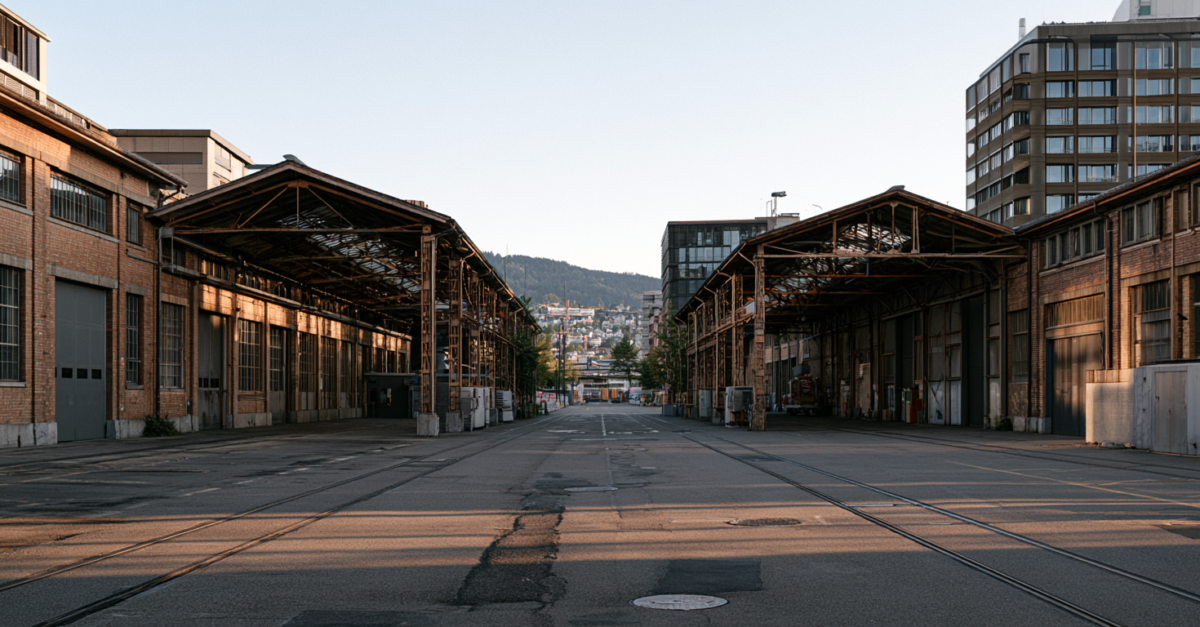

The development strategy for the Maag site in Zurich West is being scrapped. Swiss Prime Site is no longer pursuing the planned residential tower as part of the Maaglive project; it is withdrawing the legal proceedings that have been pending at the Federal Supreme Court since the end of September 2025 and is instead focusing on preserving the Maag halls. This transforms a controversial new-build project into a regeneration scheme with a cultural focus.
Plans are in place for a comprehensive refurbishment of the halls, with investment of around 60 million Swiss francs. According to available information, a planning application is due to be submitted by the end of 2027. Renovation work is scheduled to begin in mid-2029. For the owners, developers and the city, this is more than just a change of project: it demonstrates how protracted objections can force even well-advanced site developments to take a different direction.
From development project to existing property strategy
The Maaglive project was intended as a further building block in the transformation of the former industrial site at Zurich’s Hardbrücke. The plans included residential, cultural and public-facing uses. Swiss Prime Site has now decided against pursuing this development path. The existing development is no longer being treated as an interim stage, but as a long-term use scenario. This shifts the focus from further densification towards preservation, repurposing and predictable implementation.
This shift is also significant for the site from an urban planning perspective. The area surrounding Prime Tower, Cubus, Diagonal and Platform has been gradually reorganised in recent years. With the withdrawal of Maaglive, another key element of densification is no longer on the cards. Instead, the question of how existing industrial halls in Zurich West can be put to lasting public use is gaining in importance.
Museum as a potential anchor tenant
The project is taking a new direction thanks to the University of Zurich. It has signed a letter of intent to lease the Maag Halls as a potential site for the Natural History Museum. The museum has existed in its new form since 2024 and is currently housed in the city centre. Should the relocation go ahead, the site would gain an institutional user attracting visitors all year round. From a property perspective, this would mean long-term stabilisation of the site’s use rather than a further phase of legal uncertainty.
Until the refurbishment takes place, the site will remain in temporary use. The lease with Maag Music & Arts was last extended until May 2029. The next crucial question is therefore no longer whether the residential tower will be approved after all, but whether the letter of intent will result in a viable cultural and museum project for the existing building.