
The proposal has been out for consultation since 19 June 2026 and the consultation period runs until 12 October 2026. At the heart of the proposal is a new entitlement for tenants and flat owners, provided they live in the property themselves and the parking space was let by the same landlord as the flat. Furthermore, the obligation is to apply only if the installation of the infrastructure is reasonable.
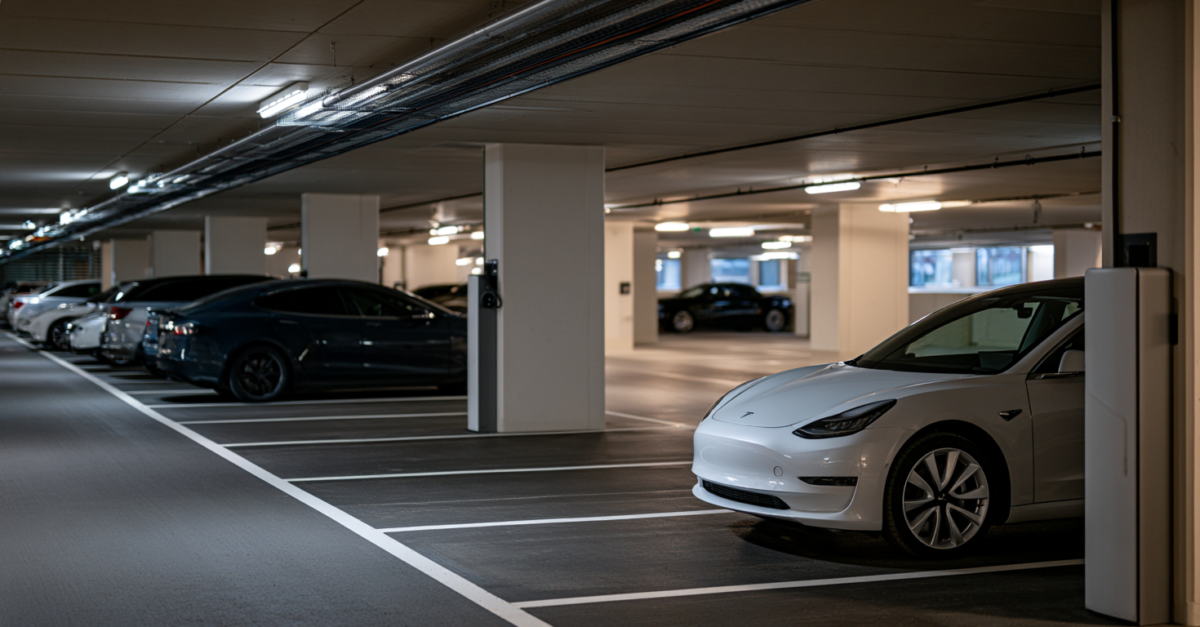
For owners, therefore, the focus is not on the individual wallbox, but on the preparatory work required within the building. The basic installation required includes the electricity supply line to the parking space, the allocation of consumption and, in the case of larger systems, load management. The user pays for the charging point itself. In a tenancy agreement, the costs of the basic installation can usually be passed on as part of the parking space rent.
The conflict lies in existing properties
The proposal is particularly contentious in multi-occupancy buildings and existing multi-storey car parks. It is precisely in these settings that the initial installation often has little bearing, whereas the subsequent one determines grid connection, load management and the allocation of additional costs. The Federal Council also justifies the intervention on the grounds of preventing a subsequent proliferation of individual solutions, which would subsequently have to be converted at great expense to a common system.
Focus on residential properties leaves commercial buildings out
The draft is limited to residential properties. This significantly narrows its impact on the existing property stock. Experts in the field of electric mobility criticise the fact that office and commercial buildings are excluded, even though vehicles are parked there for long periods and the solar power generated during the day could be used on site. At the same time, the Swiss Federal Office of Energy is already providing separate tools for businesses and legal guidelines for cantons and municipalities through its LadenPunkt programme.
The right to charge, but with loopholes
Politically, the mandate is clear. It was triggered by Motion 23.3936 tabled by Jürg Grossen, which Parliament passed in June 2025. However, it remains unclear to what extent the federal government should intervene in existing property and participation rights when it comes to energy issues. According to the draft, disputes over the obligation to install the basic infrastructure are to be adjudicated by civil courts. For owners, property managers and owners’ associations, this marks the start of a debate – even at the consultation stage – which is likely to have direct implications for property management and investment decisions later on.