High up or closer to the action
Zurich is debating building regulations. The discussion centers on housing, open spaces, the character of neighborhoods, and the question of what a growing city should look like. On September 27, 2026, voters will choose between two proposals for new high-rise building regulations.
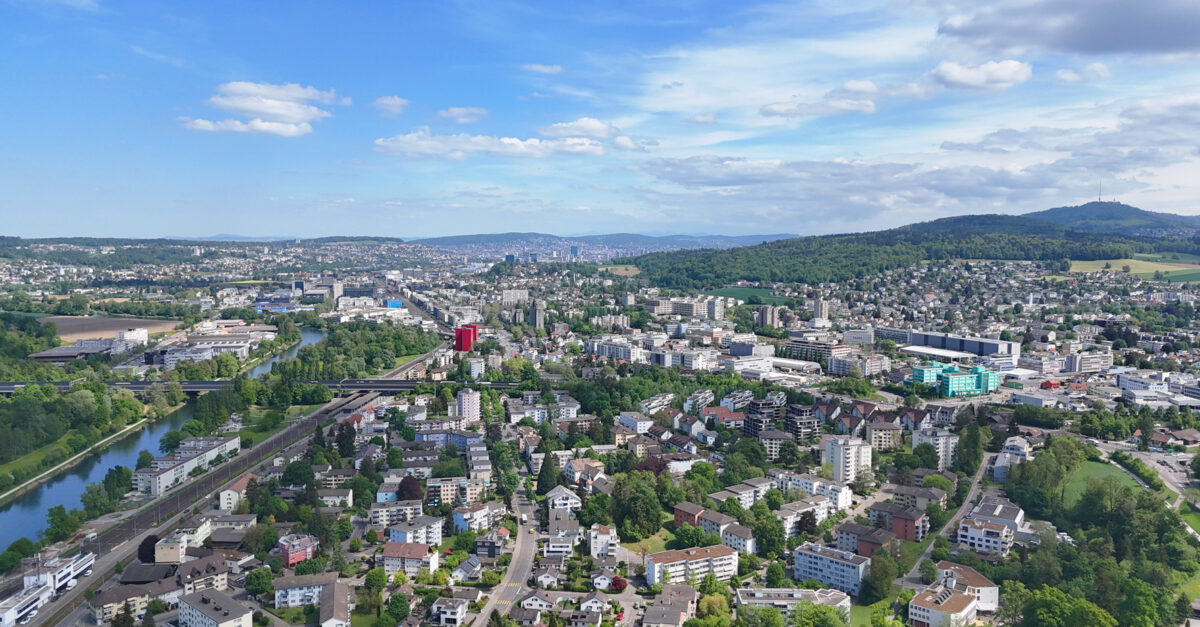
The current high-rise building guidelines date back to 2001. The City Council wanted to fundamentally revise them and focus more on ecology, social spaces, and urban planning. The Municipal Council subsequently made significant changes to the proposal. A parliamentary referendum was filed against that decision. Now, the Municipal Council’s version and the City Council’s original proposal are up for a vote.
The city’s proposal uses three height tiers: 40, 60, and 80 meters. The principle is simple: as height increases, so do the requirements for public ground floors, open spaces, local climate, and gray energy.
Greater height does not automatically create more space
A high-rise zone does not constitute a building permit. It merely indicates where a high-rise building would, in principle, be possible. Each specific project must demonstrate that it is suitable for the location in terms of urban planning, ecology, and functionality.
The new guidelines do not, on their own, create any additional square meters of floor area. High-rises are therefore not an automatic solution to the housing shortage. However, they can concentrate density and thereby free up space for green areas, paths, or plazas.
Where Zurich Can Grow
The City Council wants to exclude sensitive hillside areas and neighborhood preservation zones from high-rise zones. At the same time, the area designated for buildings up to 40 meters would be expanded. High-rises up to 80 meters would be possible on fewer sites because a new category for buildings up to 60 meters would be introduced.
The Municipal Council goes further and restricts the eligible areas even more. Its supporters want to concentrate high-rises primarily where rail lines and major development corridors already shape the city. Critics see this as a barrier to infill development and new forms of housing.
The real consideration
High-rises can shape neighborhoods, cast shadows, and alter wind patterns. But they can also help to strategically develop existing buildings rather than taking up space on the city’s outskirts. Height alone is not the decisive factor. What matters are location, use, open space, and the quality of the ground floor.
The vote therefore does not define a fixed skyline. It determines the toolkit with which Zurich can respond to growth in the future. The central question is not “yes” or “no” to high-rises. It is where urban density actually makes a difference.