The heat is causing a shift in priorities when buying a house
Temperatures of 39 degrees in German-speaking Switzerland and tropical nights in the cities are shifting the focus when it comes to home ownership. Prospective buyers are paying closer attention to shade, greenery and protection from the summer heat, whilst overheated locations and poorly insulated buildings are becoming less attractive.
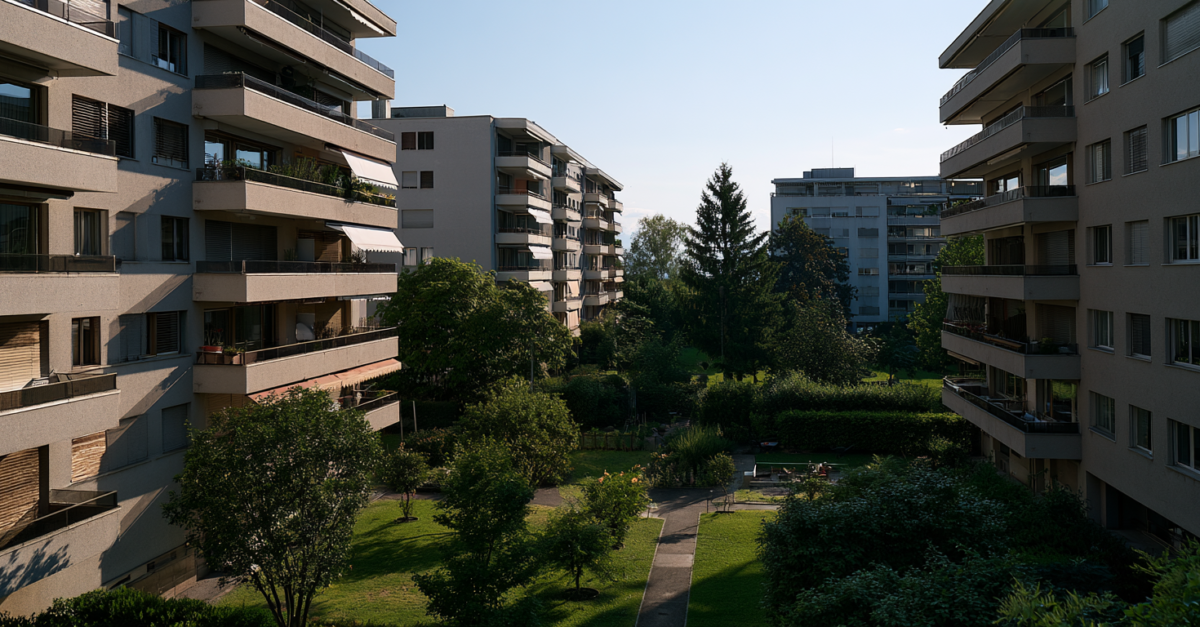

The heatwave in the summer of 2026 occurred remarkably early in Switzerland and lasted for an above-average length of time. MeteoSwiss had already classified the heatwave in June as an unusually early and prolonged spell of hot days. As a result, how a building copes with several hot days and warm nights is becoming a more important factor in purchasing decisions.
The pressure is mounting, particularly in cities. MeteoSchweiz shows that tropical nights occur significantly more frequently in urban areas than in the surrounding countryside, because densely built-up areas cool down more slowly at night. For buyers, it is therefore becoming increasingly important to consider whether bedrooms cool down at night, whether façades and roofs are shaded, and whether outdoor spaces remain usable.
Summer heat protection is becoming a pricing factor
What was long regarded as a matter of comfort is now becoming a key selection criterion. There is demand for buildings with effective shading, well-designed window areas, cross-ventilation, green surroundings and structural measures to prevent overheating in summer. Conversely, locations that are heavily sealed, have few trees or where upper floors lack adequate heat protection are rated less favourably.
Cities pay the price in higher temperatures
The difference between cities and their surrounding areas is measurable. MeteoSwiss points out that the number of tropical nights is significantly higher in cities than outside densely populated areas. Anyone considering buying a home in an urban area therefore no longer assesses just the floor plan, the view and public transport links, but also the greenery in the courtyard, shade provided by trees, the orientation of the façade and the thermal quality of the building envelope.
Climate adaptation becomes a selling point
The public sector, too, has long recognised the need for action. In its guidelines on climate adaptation, the federal government highlights the growing heat stress in built-up areas and the particular vulnerability of older or inadequately protected buildings. For the market, this means one thing above all else. Heat protection is shifting from a ‘soft’ selling point to a verifiable feature, with implications for refurbishments, project development and the marketing of residential property.