FDP Challenges Zoning Policy
One week after the “No” vote on the 10-million initiative, the FDP is shifting the housing policy debate to building land, objections, and land-use conversions. For planners, property owners, and municipalities, this once again raises the question of whether densification alone can still solve the housing shortage.
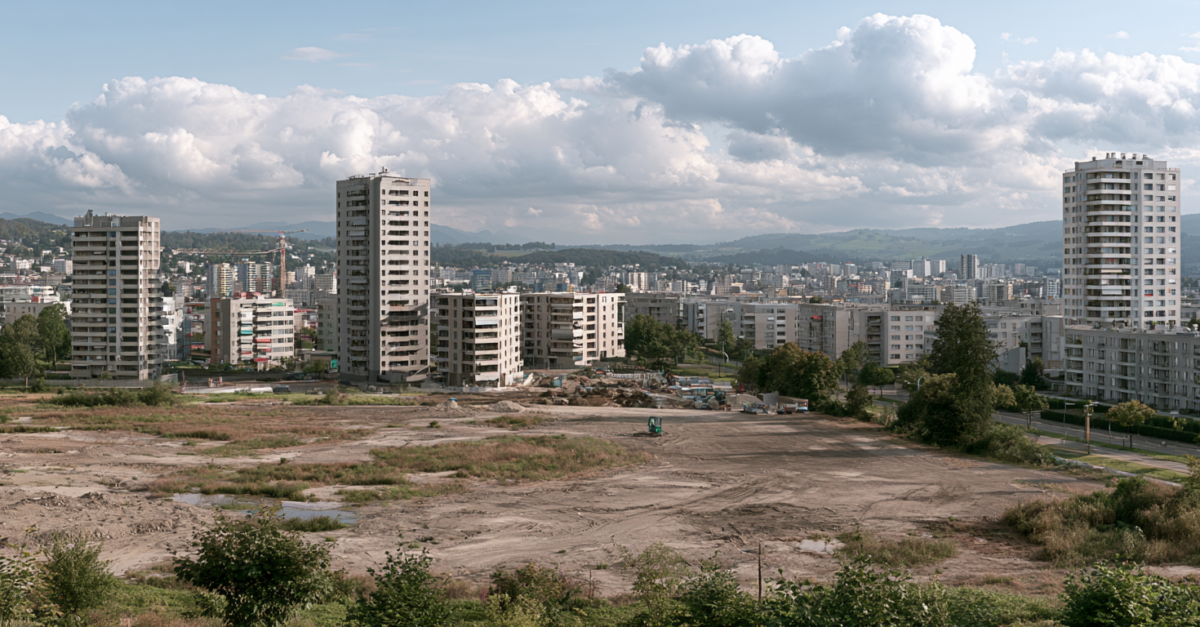

The housing policy debate in Bern is already shifting again. Following the rejection of the 10-million initiative on June 14, 2026, FDP Co-President Susanne Vincenz-Stauffacher is calling for more flexibility regarding new building zones, thereby openly questioning a fundamental principle of recent spatial planning.
The proposal addresses a bottleneck that has been evident to the real estate industry for months. The housing market remains tight, supply is scarce, and the search for housing is difficult for many households. At the same time, policymakers are seeking to address the pressure not only through immigration policies but increasingly through building regulations, procedures, and land mobilization.
From the FDP’s perspective, densification alone is noten
Vincenz-Stauffacher argues that inner-city densification alone is no longer sufficient. In addition to better utilization of existing building zones, he says, there is a need for new zoning designations, fewer hurdles in conservation regulations, and more restrictive rules for objections. For developers and municipalities, this would send a powerful political signal, as it directly addresses the balance between development pressure, landscape conservation, and the length of the permitting process.
The timing is no coincidence. Available federal data continues to show a tight housing market, and the federal government’s Action Plan on Housing Shortages is also proceeding under significant pressure. The FDP’s political interpretation is now that if the shortage persists despite densification, the supply must grow more broadly and more quickly.
Repurposing Returns to the Forefront
In addition, the FDP is bringing the conversion of vacant office space into housing into the discussion. The issue is not new, but it is taking on new significance due to the oversupply in the office market. According to available market data, the amount of office space available throughout Switzerland stood at just over 2 million square meters at the beginning of 2026; recent listings even showed more than 3 million square meters. The political leverage therefore lies less in the idea itself than in the question of how quickly such conversions can actually be made possible from both a planning and economic perspective.
For the industry, the outcome of the proposed legislative initiatives in the fall session will be decisive. Should the FDP stick to its position, the discussion on the housing shortage is likely to focus more on building land reserves, procedures, and opportunities for repurposing. It is precisely there that it will be decided whether the political pressure will ultimately result in more apartments or merely spark the next fundamental debate on spatial planning.