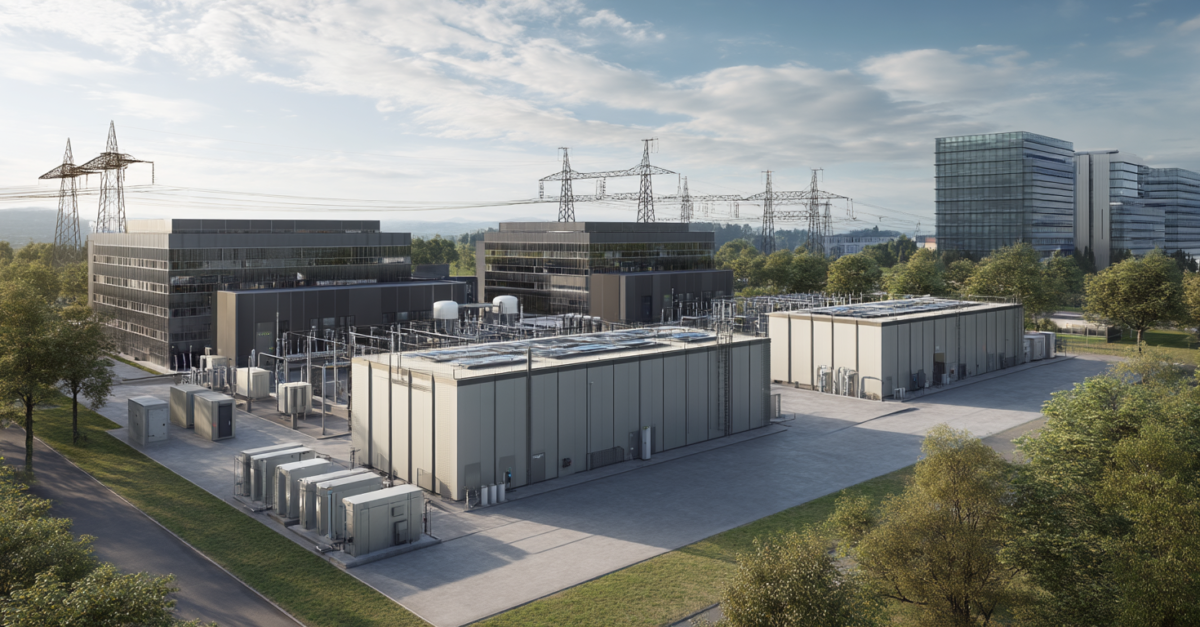

According to a recent study by EnergieSchweiz from May 2026, Swiss data centers consumed around 2.1 TWh of electricity in 2024, which corresponds to 3.6% of the country’s total consumption. Consumption has risen by 18% since 2019, driven primarily by large commercial providers and the AI boom. By 2030, experts anticipate an increase to 2.5 to 3.2 TWh, and even to 3.5 TWh in the worst-case scenario. A single new data center in Winterthur-Hegi alone requires half as much electricity as the entire city of Winterthur with over 119,000 inhabitants.
Schaffhausen sets new standards
In May 2026, the Schaffhausen Cantonal Council adopted a motion by 38 votes to 17 that sets clear conditions for new data centers. Anyone wishing to operate a data center with more than two gigawatt hours of waste heat per year must in future reuse at least 50 percent of this heat economically. There are also requirements for water supply. At least half of the cooling water must be recycled. In Beringen SH, the first data center was approved without such requirements, as data centers do not require an environmental impact assessment according to federal regulations. It is precisely this loophole that is now to be closed.
Zurich has already gone further
Canton Zurich recognized the problem earlier. The Zurich Cantonal Council already wants to oblige data centers in the canton to make their waste heat available for heating purposes. A prime example shows how this works. The data center in Dielsdorf supplies waste heat to the local district heating network and uses it to heat 3,500 apartments and offices. A Zurich guideline for building technology in data centers has also been in place since 2018 and stipulates minimum standards for energy efficiency.
Free space, hardly any workplaces
The issue of space remains a key problem. Data centers take up large areas in commercial zones, but create hardly any local jobs or tax revenue in comparison. This exacerbates the pressure to use scarce building land and pushes out businesses with higher added value and job density. The Schaffhausen initiative therefore also demands that new facilities must demonstrate local value creation.
What building permits can do
As long as there is no legal basis, building authorities cannot impose any further conditions. A building permit is a so-called police authorization. Anyone who complies with the applicable laws is entitled to a permit. The efficiency potential is huge. According to a SFOE study, almost 38 percent of electricity consumption in Swiss data centers could be saved through targeted measures. This would provide scope for action. What is still missing in many cantons is the legal framework.