The construction site also wants flexibility
Part-time work alone won’t solve the problem. At the event “We’re Counting on You!” held on March 26, 2026, at CAMPUS SURSEE, it became clear that the construction and infrastructure sector is facing a cultural shift. Anyone who wants to succeed in the competition for skilled workers must view work-life balance as a strategic management priority, not as a peripheral social benefit.
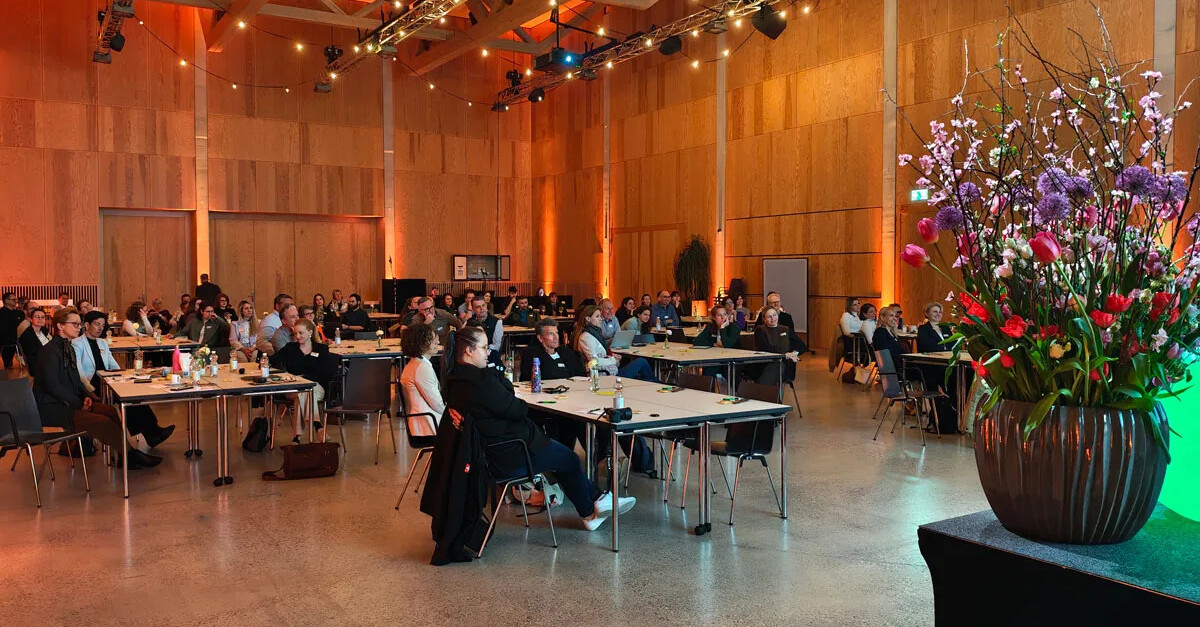
Image: CAMPUS SURSEE, Bildergalerie «Wir bauen auf dich!» 2026
Adrian Dinkelmann, Managing Director of Infra Suisse, put it in a nutshell. Compatibility is not achieved through individual measures, but through a fundamental anchoring in the corporate culture. Two projects funded by the federal government highlight specific areas for action. The framework must be designed in such a way that it accommodates the different realities of employees’ lives.
Not everyone wants the same
Jan Malmström, CEO of the JMS Group, asked around in his company. The result is surprising. The desire for part-time work is strong in the office, but much less so on the construction site. But even there, there is a clear need for more flexibility in everyday life. Standard models fall short. Anyone who treats all employees the same is missing the point.
Co-CEO as a reality check
Sandra Werneyer and Lea Ott at werneyer ott architektur gmbh demonstrate what is possible: shared leadership in the co-CEO model. This works with high organizational and communicative requirements. Their presentation made it clear that new forms of work are not a sure-fire success. They require clarity about which responsibilities can really be shared.
Stereotypes slow down the industry
Dörte Resch, Professor of Applied Psychology at the FHNW, made it clear that image campaigns alone do not change anything. Stereotypes that no longer correspond to the reality of the construction professions must be actively addressed. Authentic career marketing is needed that makes the attractive aspects of the industry visible to everyone. Caroline Farberger, Swedish entrepreneur, added a personal perspective. Inclusion begins with questioning existing thought patterns.
Culture beats concept
The panel made it clear what makes the difference. Olivier Imboden, CEO of Ulrich Imboden AG, describes it like this. When employees share a company’s values, this has a direct impact on its attractiveness as an employer. Sven Stingelin from Frutiger AG added to the construction site perspective and addressed the framework conditions, which are different to those in the office. Thomas Weber from Walo Bertschinger pointed out that project processes have a significant impact on the scope for action. Cornel Müller, founder of Work-ID AG, showed how targeted career marketing opens up new target groups, including through early career guidance.