The Federal Council is reversing its stance on solar energy
Starting January 1, 2027, a new compensation system for solar power fed into the grid will take effect in Switzerland. The decision made by the Federal Council in May 2026 fundamentally changes the rules of the game for thousands of PV operators. Those who have simply generated and fed electricity into the grid up to now will have to think strategically in the future; otherwise, they risk real financial losses. The Swiss solar industry is facing a systemic shift.
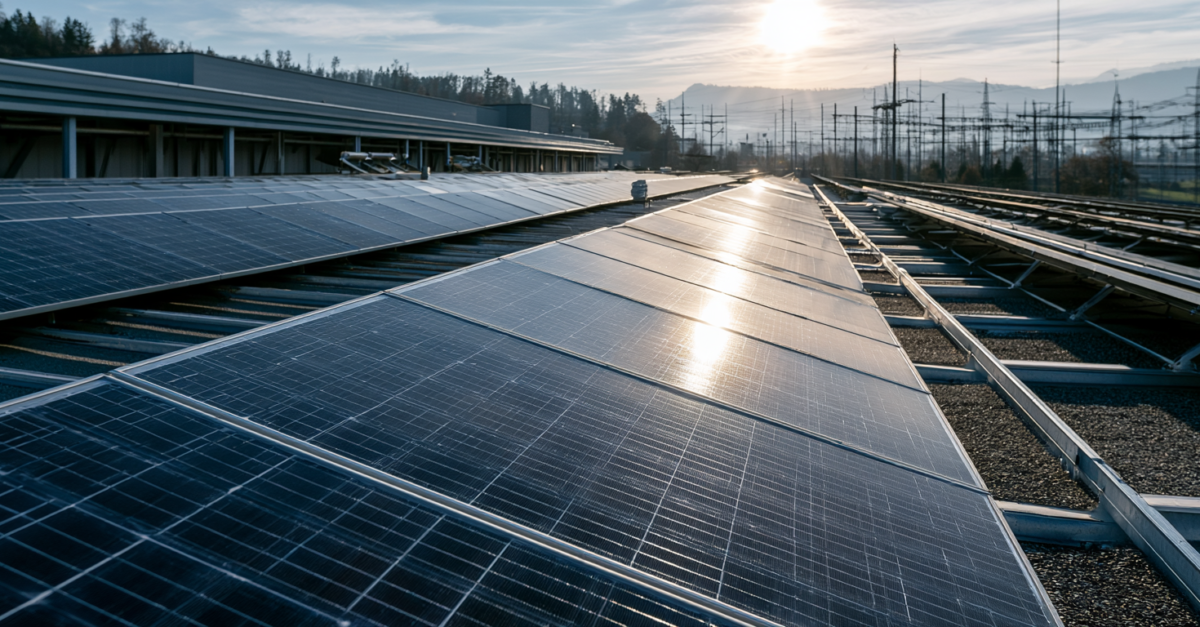

The Federal Council has revised the energy ordinances. If grid operators and producers cannot agree on a remuneration rate, it will in future correspond to the market price at the time of feed-in, including negative values. The revised ordinances will take effect on July 1, 2026, with the new purchase regulations following on January 1, 2027. This is the Federal Council’s response to a structural problem. Switzerland already achieves a solar power share of around 14 percent of total consumption, and expansion continues.
Too much sun is becoming a problem
Negative electricity prices occur when supply exceeds demand. In Switzerland, the number of hours with negative prices has risen sharply in recent years—from under 100 hours annually to at times over 200 hours. This primarily affects sunny afternoons and weekends, when a lot of solar power is produced and little is consumed. What grid operators have absorbed up to now will be passed directly on to producers starting in 2027. Anyone who feeds power into the grid in an uncoordinated manner will then bear the financial risk themselves.
Systems over 150 kWp particularly exposed
Not everyone will be hit equally hard by these changes. For smaller residential rooftop systems, the feed-in tariff will remain more stable for now. Larger systems of 150 kWp or more, on the other hand, are already more exposed to market prices today; for them, the timing of feed-in becomes a decisive economic factor. The classic operating model—produce, feed in, collect—will no longer work for these systems starting in 2027 without active management.
The End of Passive Operation
In the future, a PV system must do more than just generate electricity. It must respond flexibly to market prices, time feed-in, and incorporate storage capacities. These three strategies are considered effective: intelligent curtailment during periods of negative prices, maximized self-consumption, and the temporary storage of electricity for hours with higher returns. Those who fail to implement any of these measures risk having to pay for their own solar power.
Solutions are available
The market is responding. The Swiss companies sun2wheel and convoltas are expanding their “Profit-Plus” product to include an automatic protection feature against negative prices, free of charge for existing and new customers. The system detects critical price situations early on and automatically reduces feed-in before losses occur. In addition, Profit-Plus bundles PV systems into a virtual power plant and markets their flexibility on the Swiss balancing energy market, generating additional revenue of around 10 francs per installed kilowatt. Providers are also responding internationally. The German company energy2market launched a comparable automation product in 2025. However, in the Swiss market—with its specific balancing energy architecture under Swissgrid—local solutions clearly have the advantage. 2027 is coming. Those who wait will pay.