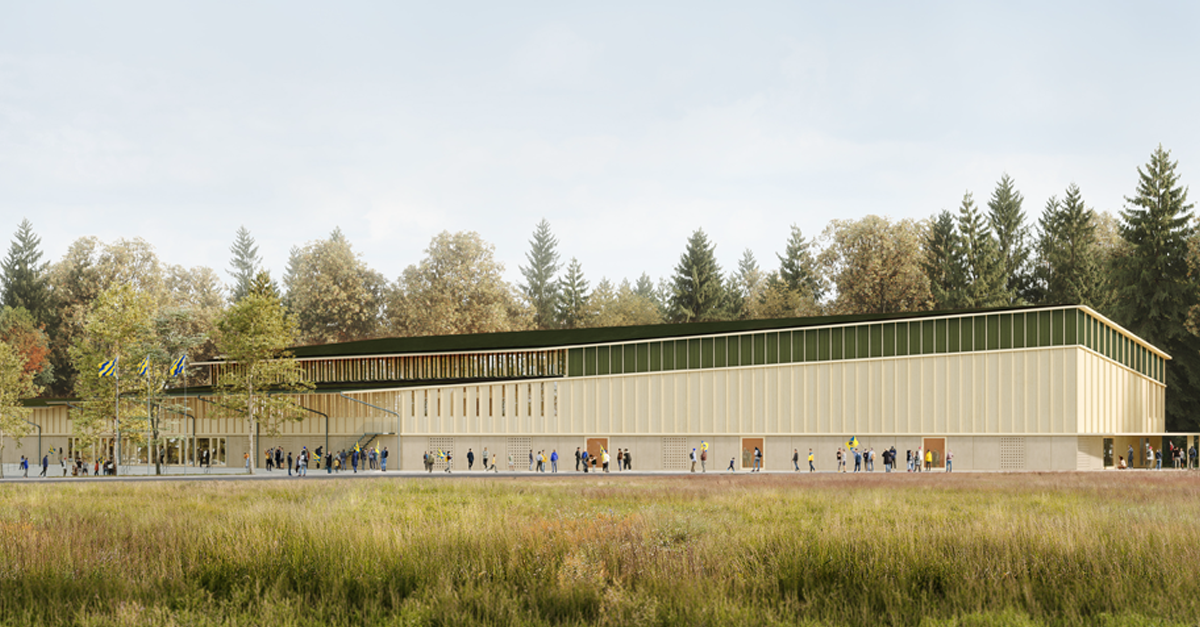
From a competition venue to a facility for leisure and exercise
Over the last five decades, the sporting behaviour of the population – whether on an individual basis or in organized sport – has changed dramatically. New training habits, a significant rise in population figures, increasing professionalization in club sport and changing social needs have led to facilities having to perform significantly better today than they did 50 years ago. This also includes aspects such as gender and age equality, which are now taken for granted.
Accordingly, at the beginning of every infrastructure project, the focus should not be on the structural solution, but on the question of a suitable utilization and operating concept (including a profitability analysis). All too often, however, a planner is hastily commissioned before the project fundamentals and dependencies on other institutions and projects have been identified. The result is then the development of volumetric options, but not strategic options for the communities concerned. As a specialist in strategic utilization and operational concepts, BPM Sports has more than 20 years of experience in this field.
So what characterizes a good utilization and operating concept? In principle, it comprises three key levels:
- Strategic-conceptual: purpose, target groups, offer, business case, strategy, sponsorship
- Operational-conceptual: Maximum utilization and use with added value
- Operational: staffing requirements, maintenance, visitor management, self-financing of maintenance
At the strategic level, the question of the raison d’être – the purpose of the facility – must be answered. This needs to be sharpened and clearly defined for all stakeholders. The better this is done, the easier it will be to communicate with taxpayers and the parties ultimately involved in the planning.
The key elements include
Political leadership: sports facility projects require broad support. Perceptible, continuous and strong political leadership is therefore essential.
Addressed target groups: The user groups and their needs must be identified. This includes recording routines and expectations, but also future developments. Frequencies and capacities derived from this are key to optimally utilizing the facility for both users and operators.
Sharpened offer: The available space and functionalities are formulated in a targeted manner, with a focus on energy and personnel costs. These are based on the formulated needs, with a direct impact on the follow-up costs of a facility.
Construction costs vs. follow-up costs: The latter are (too) often overshadowed and only tend to come into focus in a later project phase. An early consideration of the follow-up costs is helpful to ensure the financial viability of a system.
System strategy: An effective lever for predicting operating costs and earnings potential. Particularly in the case of seasonal facilities such as outdoor pools or ice sports facilities, complementary or supplementary offers can increase income and influence resource requirements.
Operator model: There is a wide variety of models here. Different organizational forms (administrations, public limited companies, private-public partnerships) offer different advantages, whereby PPPs have become increasingly established in recent years and offer new opportunities, especially for less profitable club and popular sports.
Other success factors at operational and conceptual level are
Utilization: Generating high utilization is a challenge. This is because it does not always go hand in hand with profitability due to the different purchasing power of the target groups and unavoidable wear and tear. Checkrooms and loading areas are also a decisive factor. If they were neglected during construction to save money, this has a negative impact on capacity and therefore on maximum utilization.
Staff: Employees of sports facilities are identification factors. In order to optimally promote this potential, it is important to keep operating routes short and clear and to design efficient work processes. This can be ensured with the appropriate layout of the facility and the individual rooms.
Conclusion: A utilization and operating concept for sports facilities is a complex interplay of strategic, operational and economic factors. Correctly compiled and applied, it forms the basis for the long-term success and profitability of a facility.
BPM Sports is a specialist for public sports infrastructures operating throughout Switzerland and based in Bern. With over 20 years of experience in consulting, monitoring and supporting a wide range of sports facility projects and operations, the company, founded in 2006 by owner Rainer Gilg, is one of the leading service providers in this field.