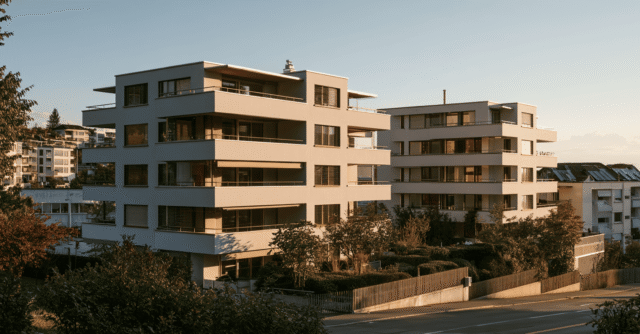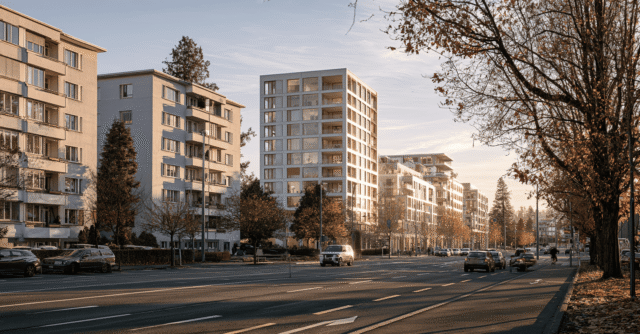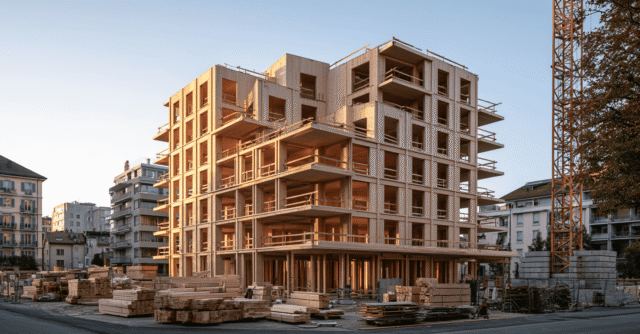

The Buchs City Council has adopted the 2025 Building Standard as the new mandatory framework for new construction and renovations of city-owned buildings. It replaces the 2015 Building Standard and more closely integrates energy efficiency, climate adaptation, and sustainability into municipal building practices.
For real estate development in Buchs, this step is more significant than the title suggests. The requirements are to apply not only to the city’s own buildings but also to be taken into account in special-use plans, site developments, and land sales and transfers under building rights. In this way, the city is directly integrating its climate policy goals into procedures and real estate transactions.
A Change of Course with a History of Progress
Buchs has been an “Energy City Gold” since 2013 and was recertified in 2021 with 82.4 percent of the maximum score. The city’s energy policy direction is already set out in the municipal structural plan and the 2021–2035 Energy Concept. By 2035, the city aims to increase the share of renewable energy to 80 percent and reduce energy-related greenhouse gas emissions to 3 metric tons per person. For city-owned buildings and facilities, the city has also set a goal of achieving climate neutrality by 2040.
The new 2025 building standard is based on established benchmarks such as Minergie, the Swiss Sustainable Building Standard, and the SIA Climate Path. In terms of content, it focuses on renewable energy, summer heat protection, climate-resilient construction methods, and requirements for electric mobility. For building owners and planners, this means one thing above all else: the scope for conventional solutions is narrowing.
Greater Impact Beyond Administrative Assets
The resolution becomes relevant wherever the city is not only the owner but also a key player in planning or land use. When sustainability requirements are incorporated into site development plans, special-use plans, or building lease agreements, the standard shifts from an internal guideline to a market-effective lever. Especially in early project phases, this can significantly advance requirements for energy supply, heat protection, mobility, and material selection.
In its energy strategy, Buchs has already identified the building sector as a key area. Plans for this sector include, among other things, building envelope renovations, the replacement of fossil-fuel heating systems, the expansion of charging infrastructure, and the increased use of renewable heat. The 2025 Building Standard now turns this approach into a concrete structural benchmark for future projects.