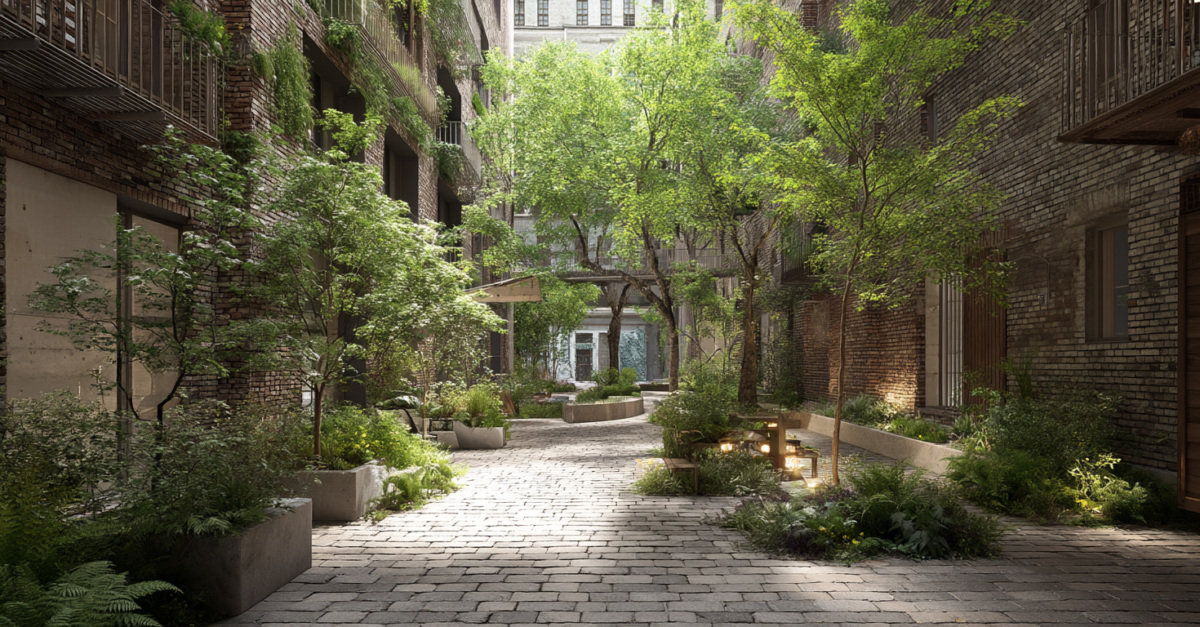

According to its press release, the city of Baden is taking part in a canton-wide initiative to reduce land sealing. In collaboration with the Zurich-based organisation ‘Asphaltknackerinnen’ and the Mobiliar Cooperative, it is supporting private individuals, building cooperatives and small businesses with up to 20 employees in the regeneration of sealed areas of up to 100 square metres. The project is expected to run for one to two years.
The idea behind it stems from the ‘sponge city’ principle: rain should be retained where it falls. This requires more unsealed and greened ground that can absorb the water. Furthermore, these areas have a cooling effect and relieve the burden on the drainage system during heavy rain, thereby helping to prevent flooding. At the same time, they create near-natural habitats for plants and animals.
The Asphaltknackerinnen offer free advice to interested parties during an on-site visit and help with planning the removal of concrete or asphalt from sealed areas. “We are particularly targeting private car parks, backyards and also company premises,” say the six award-winning communications and environmental specialists from Zurich in their self-presentation. They are now active throughout the canton of Aargau, in the St. Gallen Rhine Valley and in Bülach, as well as continuing their work in Zurich, Winterthur, the canton of Lucerne and Liechtenstein. Further cities are in the pipeline.
The city and Mobiliar will cover the cost of disposing of the removed surfacing, provided the area is subsequently permeable and designed to be close to nature. The participants themselves bear the costs of construction work and planting. Where there is a particular benefit to biodiversity, up to 50 per cent of the costs will be reimbursed, up to a maximum of 1,000 Swiss francs per project and 1,000 Swiss francs per tree planted.