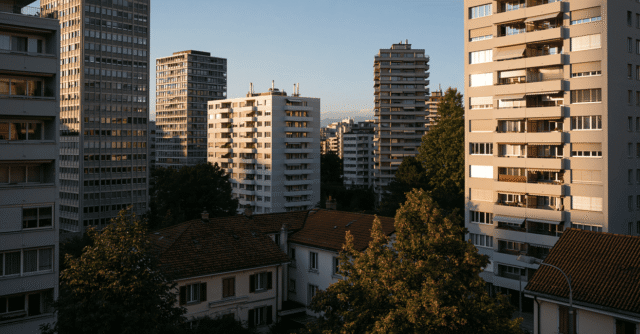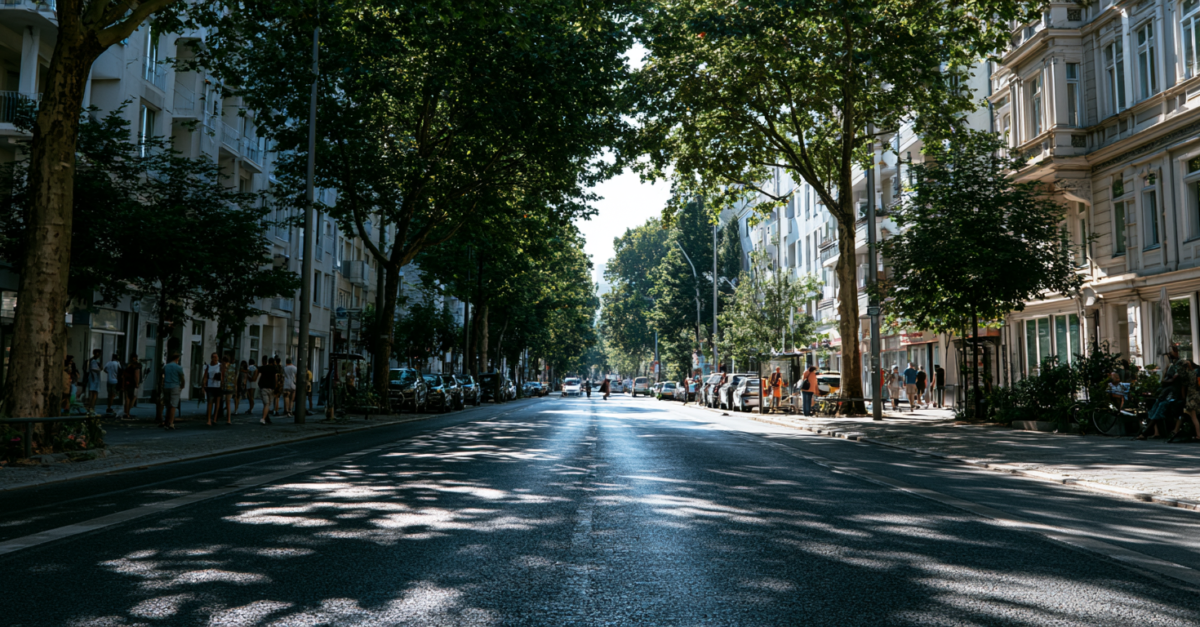

Cities are warmer than their surrounding areas. This effect, known as the urban heat island effect, is caused by impervious surfaces, dark roofs, concrete structures, and waste heat from traffic and air conditioning systems. Rainwater immediately drains into the sewer system instead of cooling the area through evaporation. The result is tropical nights. Nights when the temperature does not drop below 20 degrees. For older adults, children, and people with health conditions, this poses a constant health risk.
The Legacy of the Car-Friendly City
For decades, mobility was considered the top planning priority. Roads were widened, parking lots were built, and trees were cut down. What worked in the transportation model fails when it’s 38 degrees in the shade. Trees displaced, asphalt heated, no air circulation. Barcelona is doing it better. With its so-called “superblocks,” the city has freed entire city blocks from through traffic and gained vast areas for trees, shade, and natural evaporation.
Sponge City Instead of Sewer Systems
The sponge city principle turns the old planning logic on its head. Instead of draining rainwater, it’s stored, allowed to seep into the ground, and used as a coolant during heat waves. Plant-filled depressions, exposed soil, and underground reservoirs gradually release moisture during extreme heat. Medellín has transformed heavily trafficked streets into green corridors, thereby reducing the heat island effect by about 2 degrees Celsius, according to the C40 Cities Network. Paris operates a network of over 1,400 public cooling spaces and an underground district cooling network. There, heat management is viewed as a public service.
Trees are infrastructure, not mere decoration
A mature deciduous tree provides more cooling than any technical measure. Nevertheless, according to the 2026 Heat Check by Deutsche Umwelthilfe, over 900,000 trees disappeared in 195 German cities between 2018 and 2025. A young replacement tree takes decades to achieve the same cooling effect as an old tree that has been cut down. If you want long-lived urban trees, you must consider root space, water supply, and protection against soil compaction from the very beginning—not as an afterthought.
The Battle for Space
The knowledge of the right measures is there. The problem is political. Every infiltration basin, every tree, every strip of shade requires space. Where parking lots and traffic lanes dominate today, climate adaptation becomes a source of conflict. Singapore solves this with centralized neighborhood cooling. Cooling is generated and distributed centrally, rather than each apartment running its own electricity-guzzling air conditioner. Heat protection is no longer just a matter of comfort. It is the fundamental prerequisite for livable cities in the 21st century.