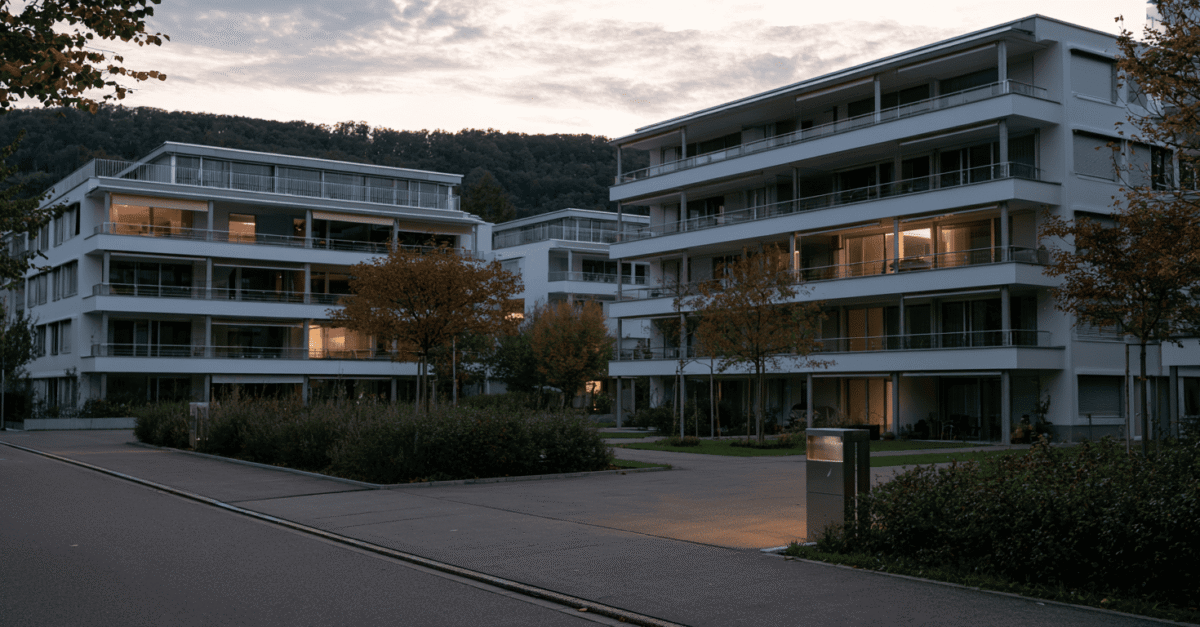

The case stems from a large housing development in Kaiseraugst, where around 100 flats were let as Minergie-certified properties from 2010 onwards. In 2014, the development lost its certification after an expert found that the ventilation system did not meet the requirements. A court later confirmed that the withdrawal of the label was lawful.
The dispute has evolved from an isolated case into a series of similar cases. A pilot case before the Rheinfelden District Court concluded on 24 November 2021 with a retroactive rent reduction of 5 per cent from the start of the tenancy. The decision became final in May 2023, as no further appeal was lodged.
A promised standard became a defect
For tenancy law, the case is delicate because it does not involve mere advertising claims, but rather a specifically promised property characteristic. The District Court ruled that the lack of the Minergie standard constituted a defect under tenancy law. Other tenants in the development are now relying precisely on this judgement.
Following the pilot case, other affected tenants took action against the landlord. According to SRF, around 70 tenants are pursuing additional legal proceedings, and one of these trials began in Rheinfelden on Friday, 16 October 2026. This means the issue is no longer merely about a single correction, but rather a risk with far-reaching implications for returns, marketing and property management.
Technical specifications are financially binding
The case illustrates how quickly technical quality promises can backfire financially. In Switzerland, Minergie stands for a protected building standard with requirements relating to efficiency, comfort and building services. If such a standard is guaranteed in a tenancy agreement and subsequently not met, this can result in a permanent reduction in rent.
For owners, developers and property managers, the lesson goes beyond energy labels. What is crucial is that advertised characteristics are demonstrably maintained during operation. In Kaiseraugst, the Rheinfelden District Court will now determine in further proceedings in 2026 whether the first legally binding ruling will effectively set a precedent for a whole wave of litigation.