37 degrees outside, 25 inside—no trick
The summer heat takes its toll on roofs, facades, and workplaces. Indoors, people find it harder to concentrate, energy consumption rises, and the desire for air conditioning grows. But buildings can do more than just combat the heat. They can absorb it, store it, and effectively slow its spread.
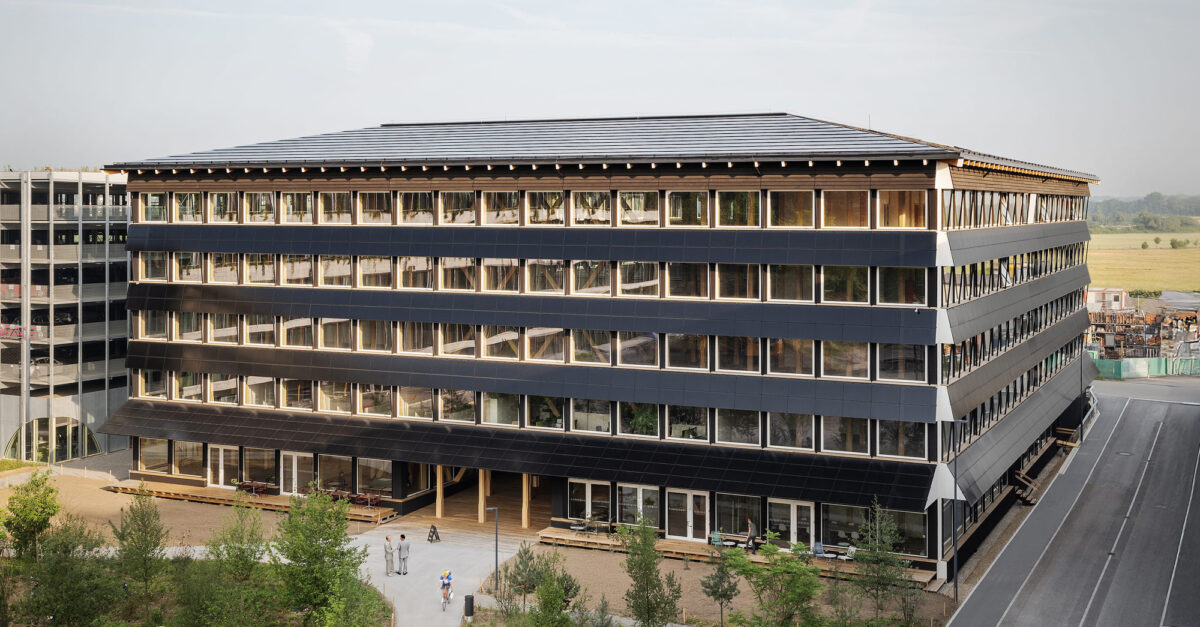
Photo: Maris Mezulis
Climate-resilient construction takes the new reality seriously. The goal is to design buildings so that they remain functional and comfortable during heat waves, heavy rainfall, or droughts.
Switzerland is under pressure to act. Climate scenarios predict rising temperatures as well as more frequent, more intense, and longer heat waves. This alters the indoor climate and, without countermeasures, increases the need for cooling.
A House as a Heat Shield
In Allschwil, the Hortus office building demonstrates what this shift in perspective can look like. According to project managers, even with an outside temperature of 37 degrees, the temperature inside the wood-frame building remained around 25 degrees—without traditional air conditioning. The key is not a single device, but the interplay of materials, shading, greenery, and energy supply.
A clay ceiling absorbs excess heat and releases it gradually over time. At the same time, clay can regulate humidity. When additional cooling is needed, geothermal energy from the ground provides support.
Facades are becoming active
The building envelope is also changing its role. Vertical photovoltaic systems can generate electricity while simultaneously shading windows. Movable solar panels from the Winterthur-based company Solskin not only track the sun’s position but can also adjust to the building’s lighting needs. The technology has already been installed on five buildings, but still requires explanation in many communities.
This is an important point. In the construction industry, innovation often fails not because of the concept itself, but because of procedures, routines, and skepticism toward unfamiliar ideas.
Value Stability Requires Summer Comfort
For investors, heat resilience is becoming a key factor in a building’s value. Location remains central. However, a building’s long-term rentability increasingly depends on whether people can work productively and feel comfortable inside during heat waves.
Climate resilience is therefore not an afterthought. It is an integral part of good project development. Those who plan today with shade, thermal mass, water, and greenery aren’t just building more sustainably. They’re creating spaces that will still be compelling tomorrow.