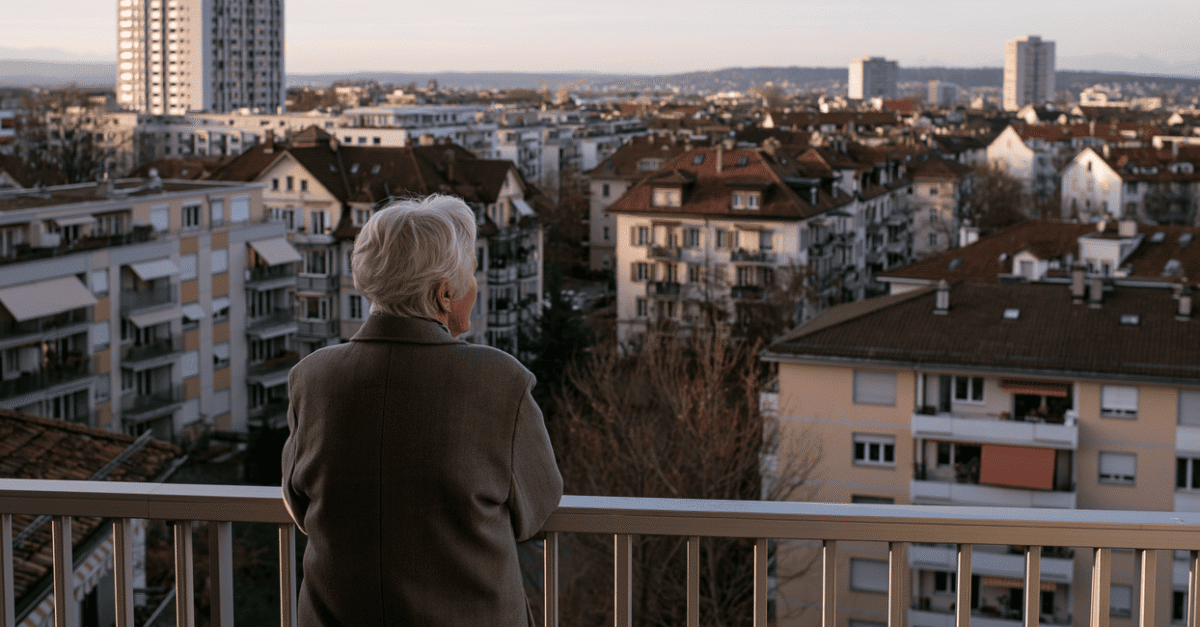

The vote is scheduled for November 29, 2026. Up for a vote are a citizens’ initiative that seeks to allocate 20 percent of apartments in municipal housing to people aged 60 and older, as well as a counterproposal. The City Council had already recommended rejecting the initiative in June 2025 and simultaneously presented a counterproposal.
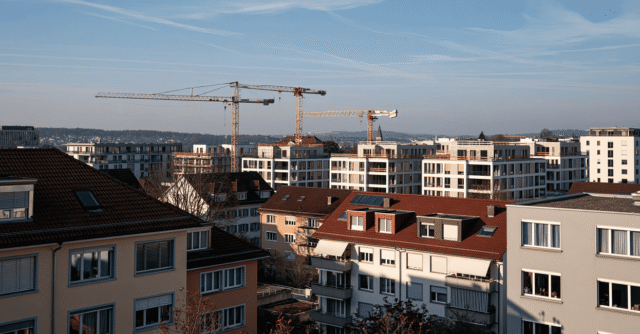
The debate is taking place against the backdrop of a housing market that remains tight despite high levels of construction activity. In the city of Zurich, the housing stock increased by a net total of 2,070 units to 238,472 apartments in 2025. At the same time, however, 1,379 apartments were demolished in 2025. Approval was granted for 79 new residential construction projects, with approximately 3,000 apartments planned. This shows that supply is being created, but often takes time to become effective.
More Capital Instead of a Fixed Quota
The counterproposal does not rely on a rigid occupancy quota in every urban development, but rather on additional financing options. It calls for an increase in the endowment capital of four municipal housing foundations by a total of 300 million Swiss francs. Of this amount, 100 million Swiss francs will go to the City of Zurich’s Foundation for Senior Housing and another 100 million Swiss francs to the PWG Foundation. For the industry, this is more relevant than the symbolic nature of the quota, because it is intended to directly support the purchase, development, and construction of affordable housing.
There is no doubt that there is a need for age-appropriate housing. With its “Aging Strategy 2035,” the city aims to provide 1,000 additional apartments through the Foundation for Senior Housing. In the Seebach neighborhood, a concrete project is already planned for this purpose, featuring 115 senior housing units for approximately 140 people. About three-quarters of the units are to be subsidized. Construction was scheduled to begin in 2026, with occupancy and completion planned for 2028.
The bottleneck also lies in implementation
In parallel with the political debate, the city is continuing to expand its land and housing strategy. From 2022 to 2025, it invested 1.3 billion Swiss francs in 47 properties. Twenty-nine of these properties, comprising 527 apartments and offering potential for approximately 661 additional units, directly contribute to the one-third target for nonprofit rental housing. At the same time, the city’s evaluation report shows that development takes time and that high initial costs, additional organizational burdens, and socially responsible transformation are slowing down expansion.
Additional quotas would therefore be most convincing if they demonstrably led more quickly to more affordable and barrier-free housing. It is precisely this proof that is politically controversial. For now, the only certainty is that at the end of November 2026, Zurich will not merely be voting on a social housing quota, but on two different approaches to housing policy. One redistributes the limited housing stock differently. The other seeks to expand the housing stock in the first place.