What is the biggest challenge facing the Swiss construction industry?
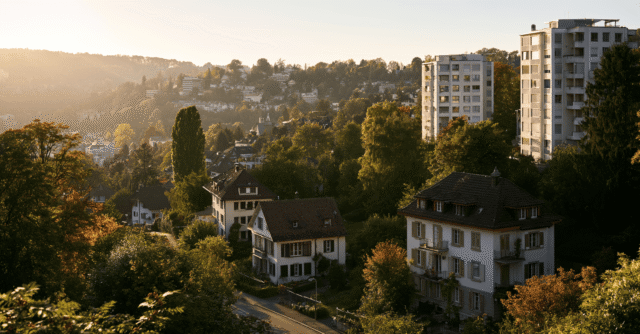
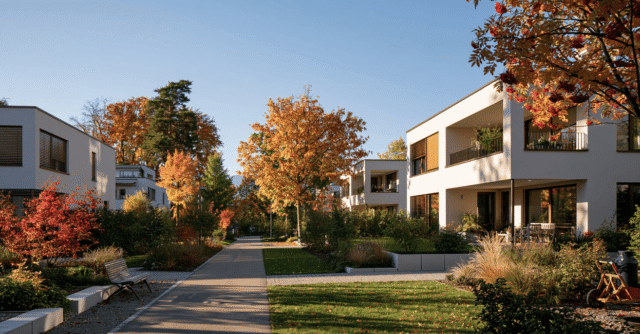
The construction industry is facing numerous challenges: A shortage of skilled workers, increasing regulation, climate neutrality and digital transformation. The SBC is therefore actively investing in young talent, digitalization and the circular economy. However, the biggest challenge, which has far-reaching consequences for society, is the implementation of the Spatial Planning Act, i.e. structural densification. There is no alternative if we want to protect our living space and manage population growth at the same time. The cantons and municipalities have largely failed in this respect. We are progressing far too slowly.
In your opinion, what are the main reasons for the shortage of skilled workers in the construction industry and how can the sector be made more attractive to young people?
Many experienced specialists will soon be retiring, while there is a shortage of future generations. In addition, working in construction is seen as demanding and is associated with prejudices. Yet the construction industry offers very attractive working conditions: Around 5,000 francs starting wage and the highest tradesmen’s wages in Europe, early retirement from 60 and very good career opportunities. To make these strengths visible, we invest in career marketing(bauberufe.ch) and are constantly developing our training and further education program. This is having an impact: the number of apprentices rose by 10 percent in 2024.
What strategies and initiatives does the Master Builders Association want to use to strengthen and expand the construction industry’s contribution to Switzerland’s climate targets?
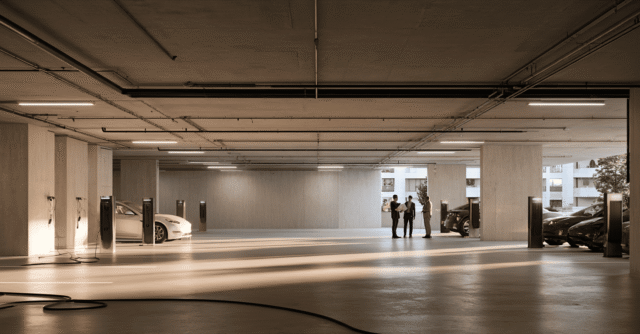
The construction industry is central to a sustainable Switzerland and has already halved its per capita footprint in the last 30 years! The SBC supports its members in exploiting sustainability opportunities and transferring knowledge from research into practice. The focus is on the circular economy with a life cycle approach. Concrete is the world’s recycling champion and can make a significant contribution to climate neutrality with CO₂ storage. To ensure that recyclable building materials and construction methods are used, building owners must tender accordingly. The SBC Sustainability Toolbox helps to integrate ecological, economic and social criteria into tenders. Energy-efficient renovations and replacement buildings remain important in the building stock, where appropriate.
How digital is the construction industry and what are the future trends in the construction industry in the digital age?
The construction industry is more digital than is often assumed, but there is still a lot of potential. Many companies now use digital tools for organization and construction site documentation. Building Information Modeling (BIM) is a key lever: model-based information can already be used in specific use cases on the construction site. In addition, more and more clients are demanding model-based tenders. Due to the lack of binding standards, SBV is developing component-based calculation bases. We also support companies with the digital AI assistant Construix.ch, which answers legal and normative questions in a matter of seconds. This is the new chat GPT of the Swiss construction industry, soon to be indispensable for every construction specialist.
What opportunities do you see for the construction industry through the increased use of 3D printing technologies?
3D printing is no longer a new technology. We are following it closely, particularly with regard to sustainability, efficiency and construction time. However, it is currently not widely applicable due to a lack of technical, regulatory and economic requirements. Some SBC members are testing pilot projects, but many are still questioning the practical benefits. The SBC positions itself as a mediator between hype and reality and sees 3D printing as one of many means of increasing productivity. As an association, we consciously focus on topics that are having a broad impact today, such as BIM or the use of AI. Where the leverage is greatest.
In your view, what political reforms are urgently needed to accelerate the planning and approval processes?
For us, this is the top priority on the road to successful densification! We need three key reforms to achieve this: Firstly, faster procedures. Solar systems or heat pumps, for example, should be subject to the notification procedure and digital processes should be implemented consistently. Secondly, objections must be restricted. Too many objectionable cases are currently blocking construction. Only those with vested interests worthy of protection should be permitted and abuse should be prevented with cost requirements. Thirdly, there needs to be a better balance between residential construction and monument protection: inner densification, replacement new builds and a reduction in protection inventories are crucial to ensure that residential construction is not blocked. We are driving these reforms forward, hand in hand with our cantonal sections, at all three federal levels.
How does the sector assess the international political situation and what specific effects are you feeling?
The global uncertainties are above all an opportunity for the Swiss real estate industry. As a safe haven, Switzerland attracts wealthy foreigners to the country, who demand real estate and infrastructure. Of course, we also have risks in supply chains, rising material and energy costs and more regulation, but the industry can deal with these and is therefore resistant to crises.
What motivates you personally to work so hard for the further development of the Swiss construction industry?
I live the Swiss militia system with conviction. Our civil society needs pragmatic practitioners at the levers and not ideologues with mere theoretical knowledge. The construction industry plays a central role in our social future, and that motivates me. It creates living space, infrastructure and secure jobs for many families.