How the old real estate market is slowing down the new China
China is at a turning point. While electric cars, AI and green tech dominate the headlines, a deep-seated real estate crisis is eating away at the foundation of the economy. Major developers are faltering, provinces are groaning under debt, deflation is eating away at confidence and yet Beijing is sticking to its goal of robust growth. The question is no longer whether the crisis will hit the economy, but for how long and how deeply.
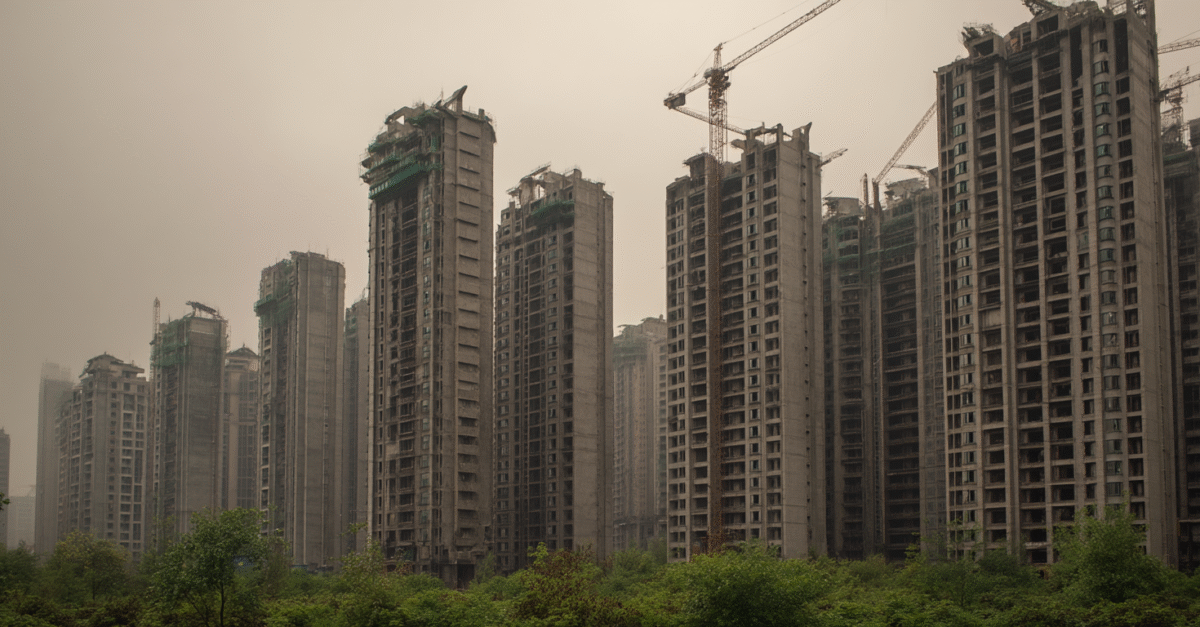

For years, the real estate sector was China’s most important growth engine. Build, sell, keep building. This was the simple formula that at times accounted for up to a third of economic output. With stricter requirements to limit debt, the leadership put the brakes on this model, triggering a creeping but persistent crisis.
Evergrande was the visible turning point in 2021. The former industry star missed interest payments, became a global warning figure and suddenly made it clear how vulnerable the growth model was. Since then, developers such as Country Garden and now Vanke, which had long been considered stable, have come under pressure. A signal that the real estate sector has not yet bottomed out.
Deflation, wealth shock and insecure households
The real estate crisis is eating deep into the real economy. Residential real estate is the central store of wealth for Chinese households. When prices fall in series, the sense of security erodes. Those who see their own apartment as a retirement provision become reluctant to consume, invest and make major life decisions.
Domestic consumption is correspondingly weak. Retail trade is growing at a rate well below previous levels and the economy is struggling with persistent deflationary pressure. Falling or stagnating prices may seem attractive in the short term, but they increase the debt burden in real terms and prolong the clean-up process in the real estate and financial system.
Provinces in the debt shadow
The situation of local governments is particularly delicate. Provinces and cities have accumulated a gigantic mountain of debt through land sales to developers and off-balance sheet financing companies. Land sales were the most important source of income, but were never enough to sustain the credit-financed construction boom and infrastructure programs. Now that sales are collapsing, the hidden debts are coming to light.
Many regions are being forced into a silent diet. Investments are being postponed, spending cut, new infrastructure delayed. This has direct consequences for growth, employment and local businesses. The crisis is therefore less a loud crash than a slow pressure that weakens the system for years and restricts the scope for action.
Old real estate-driven economy meets new tech power
At the same time, China is presenting itself as a high-tech superpower. Electric car manufacturers, AI companies and internet companies that are reinventing themselves represent the “new China”. Politicians are focusing on a long-term technology strategy with a focus on electromobility, semiconductors, AI, renewable energies and robotics.
However, this new economy is built on a foundation of the old, real estate-driven economic structure. Without stable domestic demand, reliable credit channels and household confidence, the tech sector will not be able to fully develop its dynamism. The path to success therefore does not lead past an orderly dismantling of the real estate sector, but through it.
Growth targets as a boomerang
Beijing is sticking to its ambitious growth targets. The target of “around 5%” is achievable because the state and state-owned companies are taking countermeasures in many areas. For conscious cadres on the ground, the signal remains clear: the numbers have to add up, if necessary with additional projects that have little economic impact.
The result is new infrastructure and construction projects that support GDP in the short term but do not solve the structural problems. On the contrary, they prolong the debt cycle. This creates a tension between the official growth story and the real need for deleveraging in the real estate and local debt complex.
What is at stake until 2026
The coming years will determine whether China manages the transition from a debt-driven, real estate-heavy model to an innovation-based growth path. If a controlled contraction of the real estate sector can be achieved while at the same time strengthening consumption, productivity and future-oriented industries, the country can remain robust despite dents. If this balancing act fails, a scenario of sustained low growth with recurring bouts of deflation and growing mistrust among investors looms.
The real estate crisis is not a marginal issue, but the central test of China’s ability to correct its economic course. The decisive factor will be whether the political leadership and administration find the courage to put short-term growth targets into perspective in favor of a more sustainable, less property-driven model and thus not allow the new China to be crushed by the old.