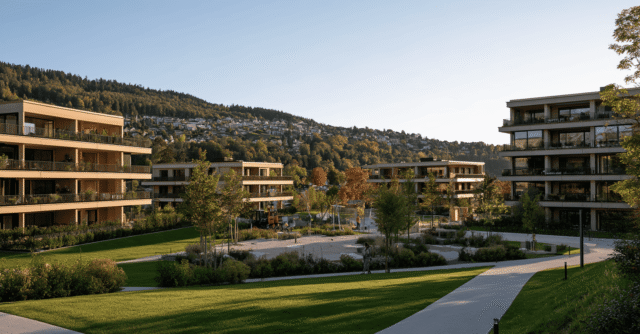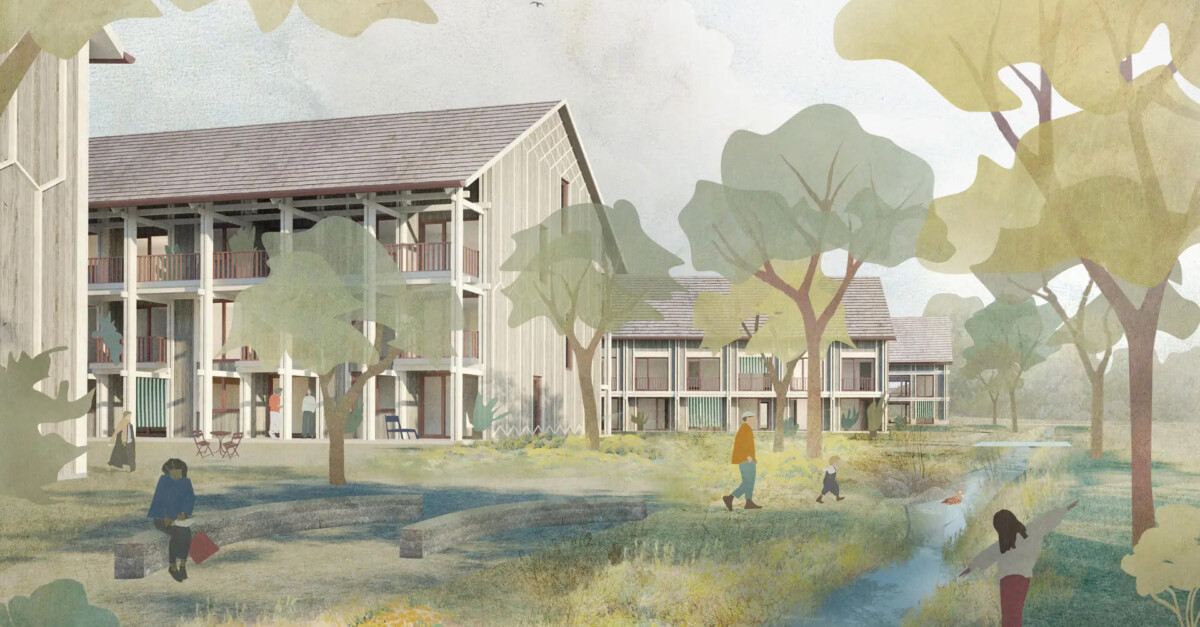
The Neugut site marks the southern entrance to Rickenbach and is located in the municipality’s core zone. The project proposal by Fischer Architekten and Uniola groups seven new residential buildings around two courtyards, while an existing eighth building is integrated into the neighbourhood. A new building with commercial use on the ground floor will be constructed on the site of the existing restaurant, addressing the entrance to the neighbourhood and the village.
urban planning classification
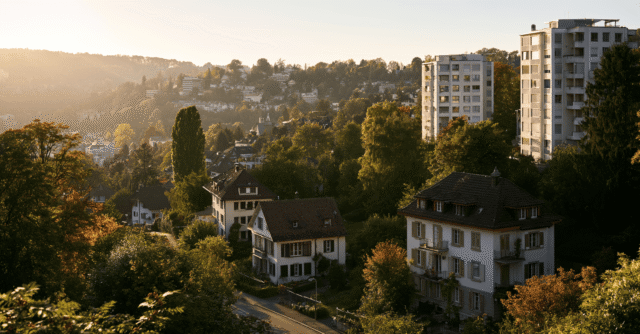
The alignment of the new buildings is based on the existing building and Haus Wiesental on the one hand, and on the almost parallel alignment of the surrounding village buildings on the other. This creates a settlement pattern that takes up the existing structure instead of creating a foreign body.
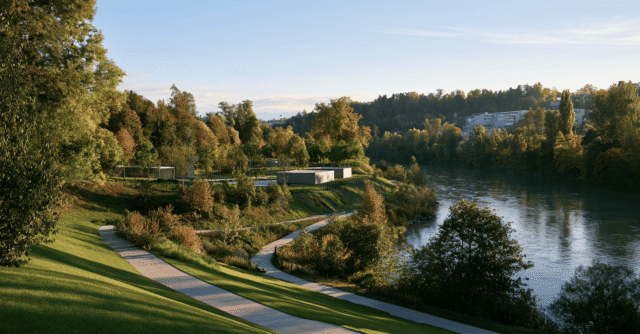
A narrow stream separates the residential area from the open field and at the same time forms a clear landscape edge. The large lime tree and the position of the “Wiesental” are retained in the new concept, which strengthens the continuity of the townscape.
interlocking landscape and settlement
Two use-intensive courtyards form the inner backbone of the new settlement. Opposite them, green spaces are pushed into the development structure from the west, linking the landscape and settlement areas.
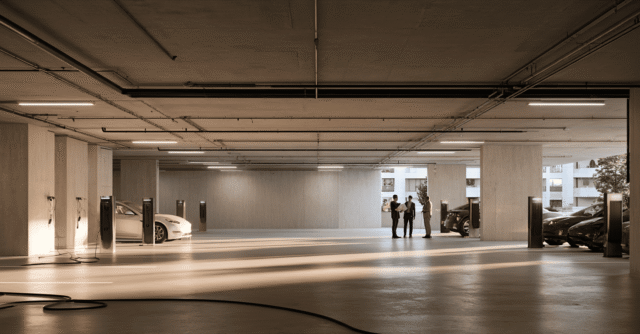
Thanks to the targeted arrangement of the underground car park, the majority of the green space remains unbuilt. This improves planting, infiltration and the water cycle and is in line with the spatial planning objectives of functionally securing and enhancing green spaces.
Neighbourhood for pedestrians and bicycles
Garage access, deliveries and above-ground visitor parking spaces are bundled together at the southern edge of the perimeter. There, the neighbourhood opens up to the street space with a square in front of Haus Wiesental, marking the transition from traffic to the residential-oriented inner area.
The interior of the area is reserved for pedestrians and cyclists. The project thus sends a clear signal in favour of the quality of life within the neighbourhood and a traffic-calmed residential environment.
Timber construction and expression
With the exception of the basement floors and stairwells, the buildings are designed as timber structures. The façade consists of an insulated timber frame construction with rear-ventilated timber cladding, thus combining energy efficiency with reduced CO₂ emissions.
vertical double supports structure the façades primarily in terms of height, but vary depending on the building type. In this way, the material appearance remains harmonious, while the structure subtly refers to the internal spatial system and gives the ensemble a lively character.
from study commission to design plan
The project was preceded by a study commission with five invited teams, from which Fischer Architekten and Uniola emerged as the winners. The jury particularly recognised that the proposal “naturally” fits into the existing development structure and strengthens the character of the entrance to the town.
The next stage is the private design plan, which is expected to become legally binding in 2027. Only then will the specific construction project be developed – with the aim of transforming the Neugut site from a specialised use with equestrian facilities to a finely networked residential quarter with a clear address at the entrance to the village.