Thun Nord doesn’t just build apartments
Thun Nord was set to evolve from an industrial and military area into a diverse neighborhood. Now, the federal government is setting a new guideline: the military base’s land will remain reserved for the army and national defense. The space that was expected to be used for civilian development will instead become a strategic site for training, logistics, and security-related innovation.
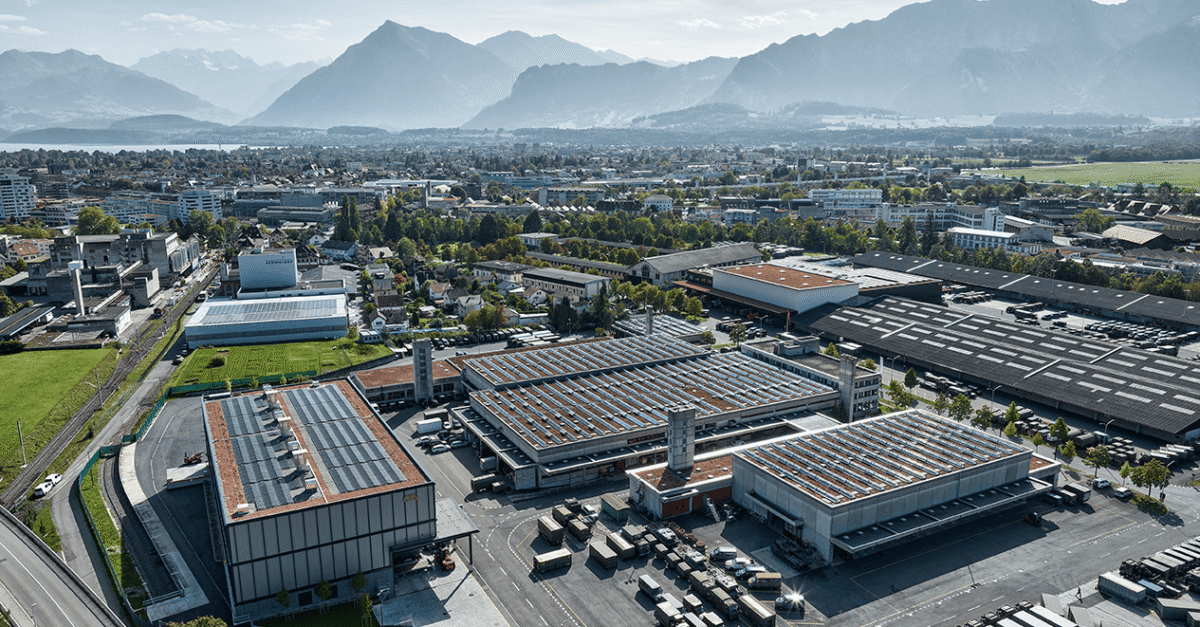
© VBS-DDPS
The Thun North development area covers approximately 60 hectares. Since around 2000, the city has been pursuing the idea of gradually transforming the area from a military and industrial site into an internationally oriented high-tech hub. The 2014 municipal master plan provides the spatial framework for this.
Today, approximately 2,300 people work in the area. In the long term, the city envisions space for up to 8,500 jobs there. The plan has always been to create new development sites for businesses, research, commerce, and services, complemented by residential areas, attractive open spaces, and improved access to public transportation.
Development Was Planned
The urban development already has specific names. The B5 Campus Thun is expected to create approximately 40,000 square meters of floor area and will house Empa as its anchor tenant. The planned Tryber neighborhood along Uttigenstrasse is also part of the development strategy. At the same time, the Aare riverfront is to be enhanced as a natural and recreational area.
The infrastructure should grow along with it. A new Thun Nord S-Bahn station is planned as part of the STEP AS 2035 expansion phase. Since December 2025, a tangential bus route has also been testing new connections in the Thun and Steffisburg area.
The Federal Government Draws the Line
The Federal Department of Defense, Civil Protection, and Sports has now communicated a clear decision. It does not intend to release any further federally owned land in this development priority area for purely civilian uses. The military training area will remain available for military purposes in the long term.
This does not mean the site development has been canceled. However, it is taking on a new geographical scope. Civilian uses can only expand where land is not owned by the federal government or where military and defense-related functions are compatible. Hopes for a broad repurposing of military sites as they become available are dwindling.
From Military Base to Network
At the same time, the federal government aims to position Thun more strongly as a hub for defense and innovation. A “Defense Cluster” is intended to bring the military, the defense industry, universities, and research institutions closer together. The focus includes drones, robotics, and cyber technologies, among other areas.
This could create new skilled jobs and foster research collaborations. However, it also shifts the urban planning perspective. Thun North is evolving less into a typical mixed-use neighborhood and more into a specialized technology hub with heightened security requirements.
Planning is now starting
The city remains committed to this development priority. However, because coordinating ownership, military use, mobility, open spaces, and civilian development is complex, the area was initially excluded from the local planning revision that has been in effect since February 2025.
The city and the DDPS now intend to jointly clarify the long-term development plan. For Thun, this is about more than just land. It raises the question of how a city can grow when a large portion of its most important development area simultaneously remains a national security reserve.