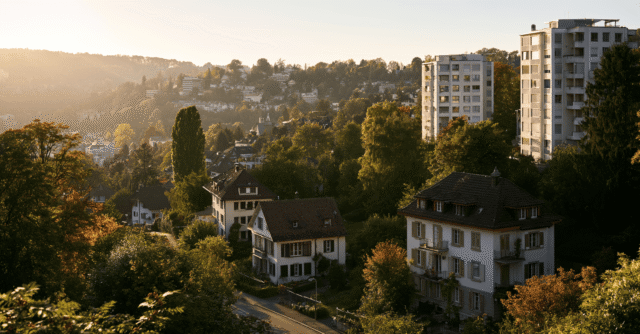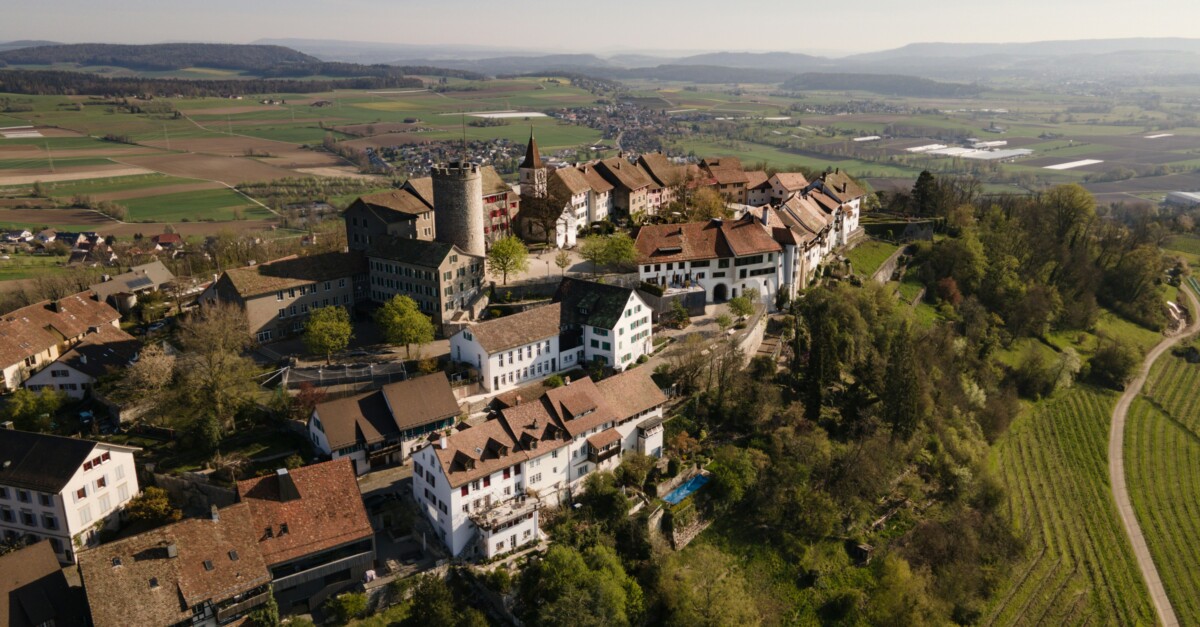
Regensberg has exactly 477 inhabitants at the end of 2024. Despite two tax increases in recent years, there is not enough revenue to finance the municipality’s tasks. The structural deficit threatens the independence of the medieval country town on the rocky spur above Dielsdorf. A merger with a neighboring municipality is on the cards, a scenario that many Regensberg residents want to avoid.
A meadow as a turning point
The impetus came in April 2024 at a Future Day, where the population openly discussed the fate of their municipality for the first time. On the agenda was the Pünt meadow, the last major building site in the village. This discussion gave rise to the idea of a cooperative. In July 2025, the Pünt Regensberg building cooperative was officially entered in the commercial register.
40 apartments, 80 new people
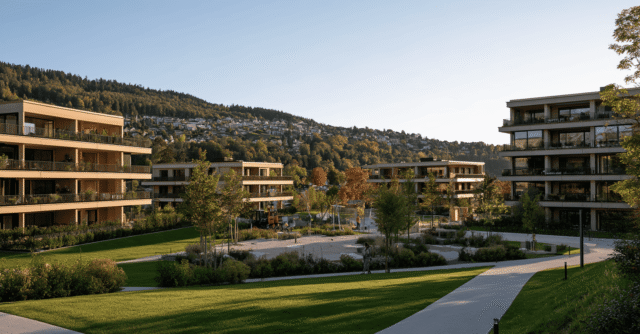
The project, a four-storey building with 41 apartments, is to be built on the Pünt, around three quarters of which will be large family apartments with 4.5 to 5.5 rooms, the rest smaller units with 2.5 to 3.5 rooms. The cooperative anticipates 60 to 80 new residents. For a community the size of Regensberg, this corresponds to a population increase of around 15 percent. A competition to find the project team was held back in 2025.
More than taxes
The goal is not just fiscal. Regensberg has the fourth-highest average age of all Zurich municipalities. Younger families should come and thus also secure the elementary school, because without a school there are no families and without families there is no village life. The flexible usage concept also allows older people to move from their single-family home to a suitable smaller apartment without having to leave the village.
non-profit instead of speculative
If the project had ended up in private hands, the apartments in the attractive location would have primarily been investment properties. In contrast, the cooperative lets on a cost-rent basis, i.e. without the intention of making a profit. The project is being financed via share certificates, member loans, state subsidies and bank mortgages, with a target equity ratio of 35 to 40 percent.
the cranes will rise in 2028
Because Regensberg is listed in the federal inventory of sites worthy of protection, particularly strict conditions apply to construction. The building permit is due to be issued in 2027, with construction scheduled to start in 2028. The first apartments could be occupied one or two years later. Whether the cooperative can solve the structural deficit on its own remains to be seen. But it proves that sometimes a village saves itself.