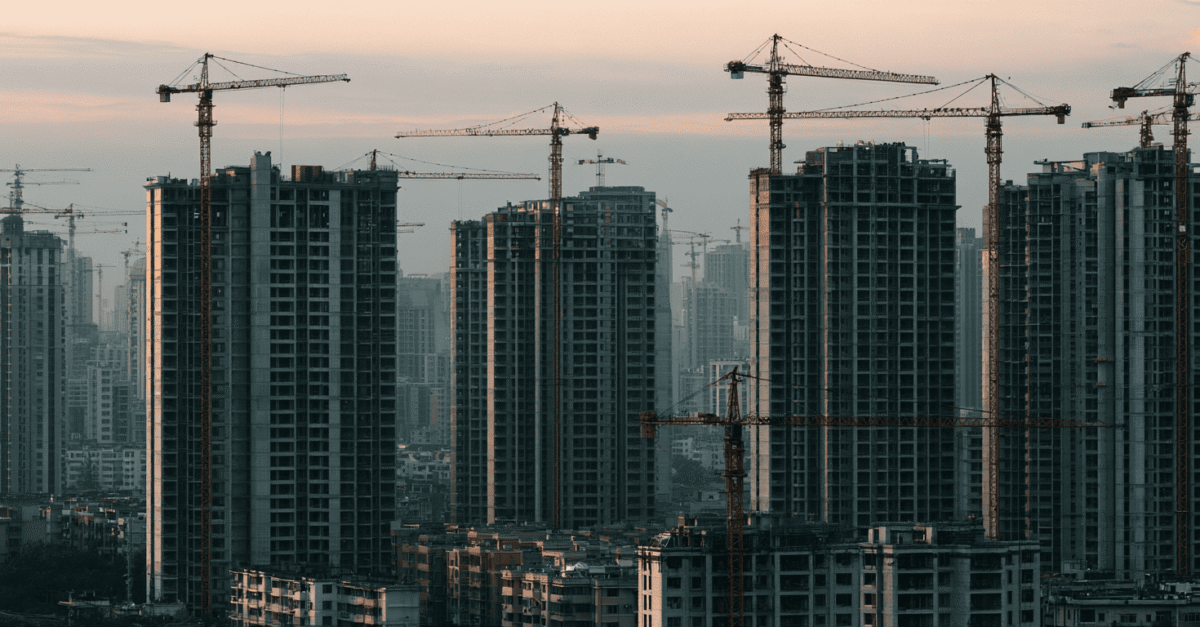

The new regulations strike at the very heart of Chinese project financing. Whilst flats may still be marketed through pre-sales, banks are only to disburse mortgage funds once completion has been registered. At the same time, deposits and further purchase payments must remain in supervised accounts. This means developers lose early access to the funds they have used for years to refinance at low cost.
The sharp fall on 1 September 2026 is consistent with this shift. According to the underlying market report, numerous property developer shares on the mainland stock exchanges fell by the permitted 10 per cent on Monday, whilst the CSI HK Real Estate Mainland Index lost more than 6 per cent. The market is thus pricing in the fact that cash flows will be delayed and that the risk to already fragile business models is set to intensify further.
Pre-sales remain, but under compulsory supervision
The reform does not put an end to the Chinese pre-sale model, but it does turn its logic on its head. Under the rules published on 29 August 2026, projects are generally only to go on sale once the structural framework has been completed. For pre-sold flats, the disbursement of mortgages will also be deferred until the formal completion certificate has been issued. At the same time, the authorities are pushing more strongly for the sale of flats that are already completed.
For buyers, this is more than just a technical change. The rules are a response to years of eroded trust, as households financed flats that, in some cases, were never handed over. China is now linking the flow of funds more closely to actual delivery. This is intended to reduce the risk of customer funds being diverted to other projects or used to secure general liquidity.
Evergrande remains a cautionary tale
The Evergrande case illustrates just how deep the legacy issues run. Founder Hui Ka Yan was sentenced to life imprisonment in China on 20 August 2026. The company had defaulted on its payments in 2021 and was later ordered into liquidation. The collapse became a symbol of a system in which sales, debt and construction progress had diverged dangerously.
For the property sector, the message is clear. Beijing is sacrificing developers’ short-term access to finance in order to restore confidence in new-build purchases. Those who are heavily in debt and remain reliant on client funds before construction is complete will therefore come under even greater pressure. Those who actually complete their projects should find it easier to sell.