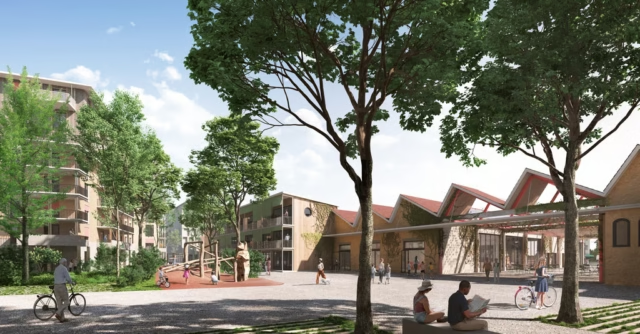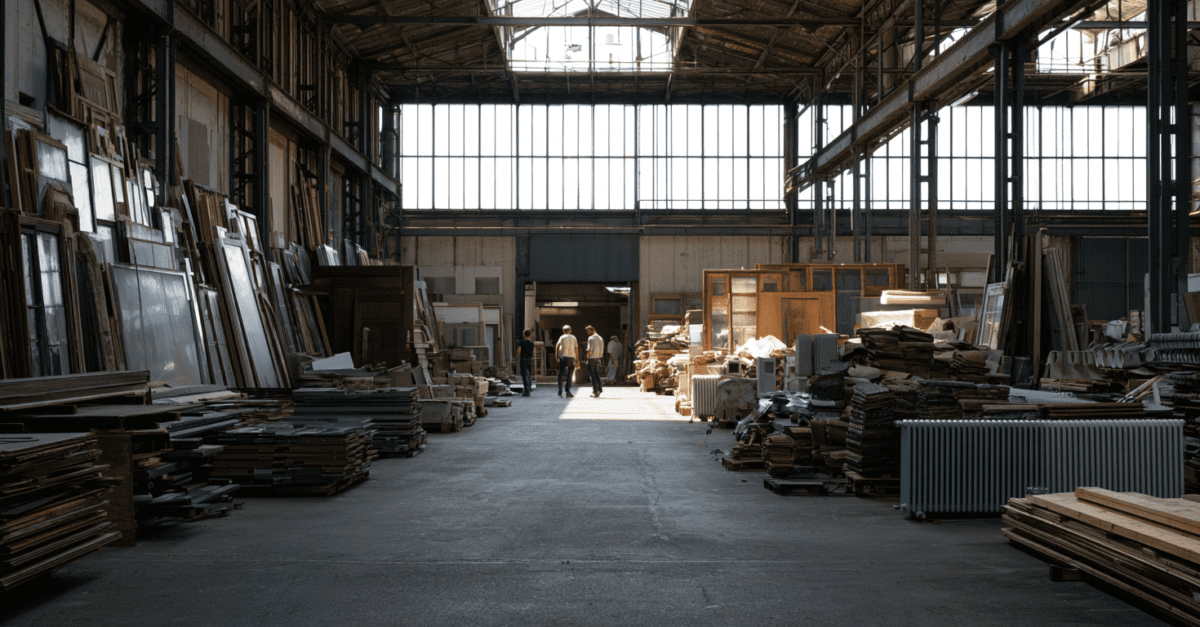

The site in Beaulieu was specifically designed with the construction sector in mind. The city opened the resource centre on 28 October 2024, in partnership with Beaulieu SA and Matériuum Lausanne, as a logistics hub for reusable building components. According to the town, the facility behind the Halles Nord covers an area of around 800 square metres and was specifically designed to make larger building components accessible to professionals.
Private customers dominate sales
In practice, however, the model has worked differently so far. According to the assessment provided by City Councillor Natacha Litzistorf, the platform did indeed end 2025 with a surplus, recording 71 sales and 20.5 tonnes of recycled material. On the buyer side, however, around 70 per cent come from the private sector. Architects account for 15 per cent, businesses for 5 per cent, with cultural organisations and public institutions each accounting for 5 per cent.
For the property and construction sectors, this is more than just a footnote. From the outset, the Ressourcerie was conceived as a tool to steer demolition, renovation and public construction projects more firmly towards reuse. However, when individual buyers in particular demand small and very specific quantities, there is a lack of precisely the kind of predictable demand that would be crucial for recurring applications in construction projects.
Too few predictable batches
Lausanne cites the difficulty in sourcing batches of suitable quality as the main problem. What is needed are batches whose quantity and quality match the recurring needs of the construction market. In fact, the platform is reliant on materials that partners actually offer in the first place. This tends to result in opportunistic trading in individual items rather than a structured, predictable flow of materials from construction, renovation and demolition projects.
Added to this is cost pressure. Careful dismantling, transport, storage, packaging and, in some cases, refurbishment prevent rock-bottom prices. For professional users, therefore, it is not only the environmental benefits that count, but also the question of whether tenders, building owners and specialist planners factor in reuse early enough and provide organisational support for the additional work involved. It was precisely for this reason that the city had already trained its architects ahead of the 2024 opening and announced internal guidelines for sustainable construction.
Initial projects demonstrate the potential
Lausanne is already providing concrete evidence that reuse works in building construction through individual projects. At the renovated Ferme de Rovéréaz, old windows from the Beau-Rivage Palace were reused, amongst other things. Such examples demonstrate the potential. However, they do not yet resolve the bottleneck in the building materials market as long as quantity, quality and predictable demand for the professional market do not align.