Münchenstein is making a fresh start in the blocked-off neighbourhood
Development of a large residential estate on the Van Baerle site in Münchenstein is getting back on track. Five years after the referendum result – a ‘no’ vote by a margin of just ten votes – the site has been redeveloped, but a new neighbourhood plan is only just getting off the ground and must win back the trust lost within the community.
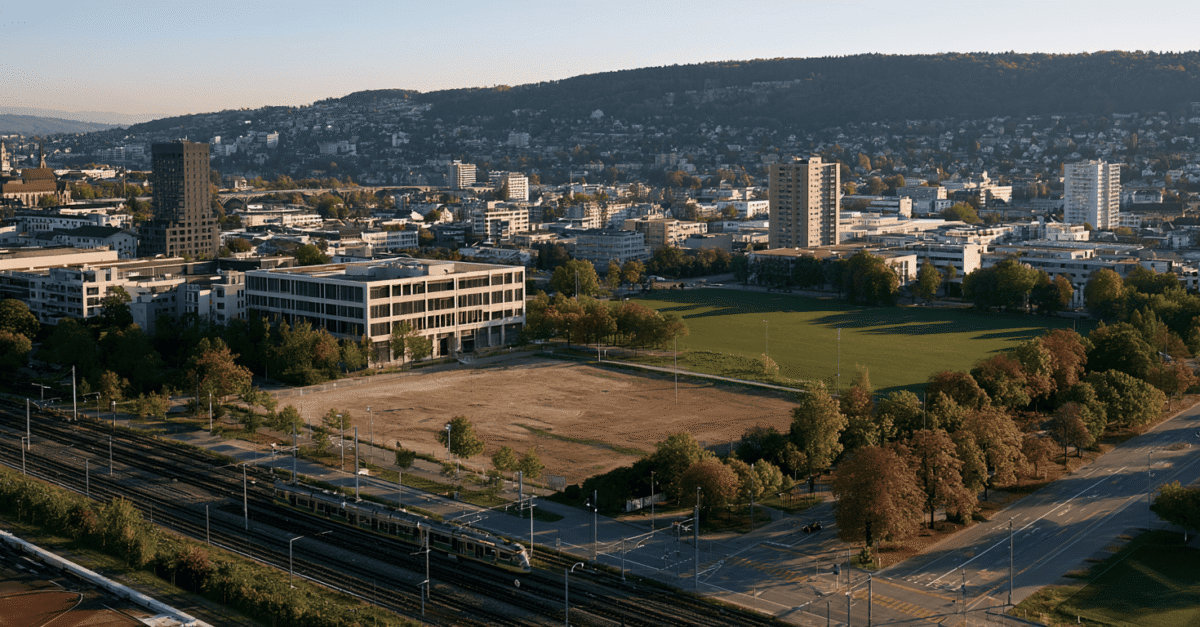

The fresh start comes in the wake of a political near-miss. The neighbourhood development plan for the Van Baerle site was rejected at the ballot box on 26 September 2021 by 1,908 votes to 1,898, after the municipal assembly had approved it on 22 March 2021. Since then, it has remained unclear what the future holds for the 22,000-square-metre industrial wasteland.
The site has now largely been prepared for a new use. According to the municipality, all buildings were demolished in 2023. Decontamination work on the southern part of the contaminated subsoil took place from April to September 2024. At the same time, the municipality states on its site platform that no planning process is currently underway and that no statement on the project’s status is possible at present.
Second attempt with a tricky legacy
This is precisely what makes this new attempt so controversial. The previous project envisaged around 415 flats on the site, as well as space for commercial use and local amenities. This scale made the development significant for Münchenstein in terms of urban planning, but also sparked opposition to the proposed density. Anyone planning the project now must therefore do more than simply present visualisations. The key question is whether a failed referendum can be turned into a viable neighbourhood plan.
The surrounding area continues to argue in favour of densification at this location. The Van Baerle site is situated in the Gstad development area, in the immediate vicinity of other regeneration sites such as the rolling mill and close to the Uptown Basel innovation campus in Arlesheim. The area is well connected via the railway station, trams and road links. It is precisely in such locations that the question becomes particularly pressing: can additional housing in the conurbation be politically viable if the building density has a visibly urban character?
Housing yes, consensus still pending
For the property sector, the project is therefore more than just a local issue. It illustrates how narrowly site developments can fail, even in well-connected locations, and how long the delay is following a ‘no’ vote. Several years have now passed since the referendum defeat, demolition and remediation of contaminated sites. Only then can negotiations resume at all regarding land use, density, mobility, open spaces and the political viability of a new neighbourhood plan.
It also remains unclear under which ownership and within what timeframe the next step will take place. The local authority now identifies Rietpark AG as the owner of the site and notes that the landowners are not currently initiating any immediate development of the site. A second attempt is thus recognisable as a direction, but not yet as a submitted project.