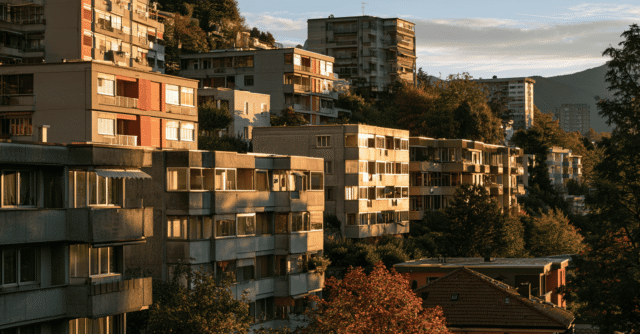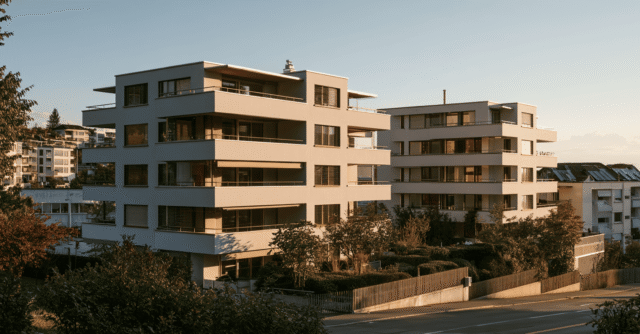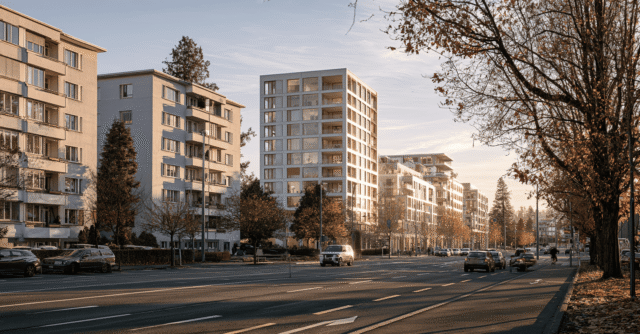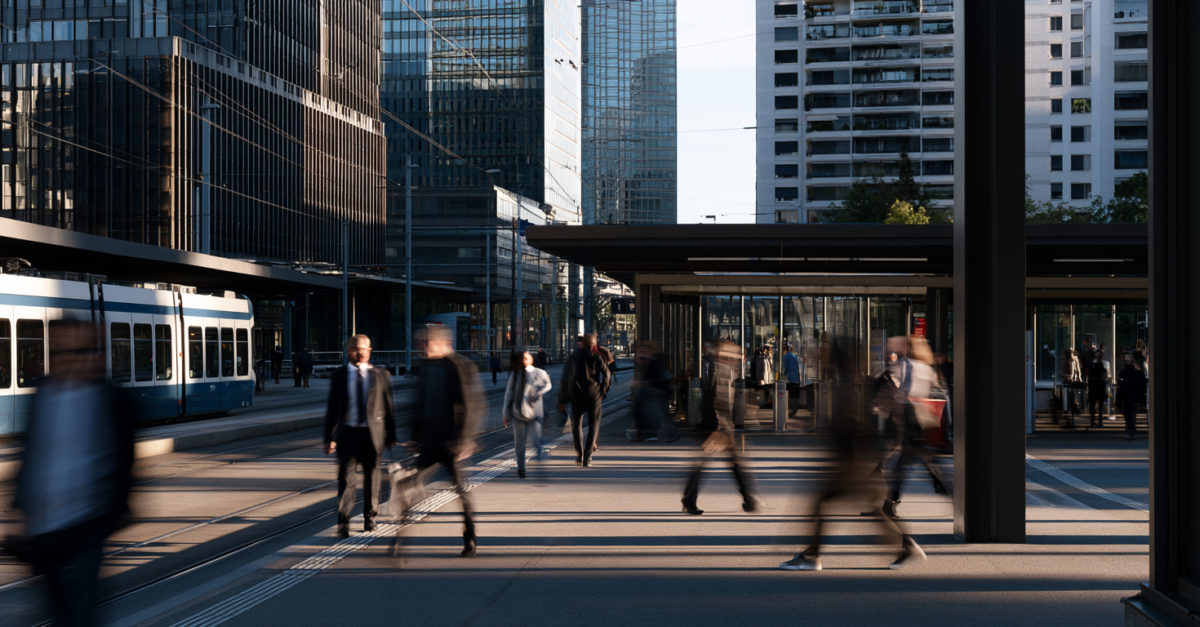

This frequently cited lever has only a limited effect. A Metron study analysed by the City of Zurich concludes that the ratio of workers to residents at the place of work has only a minor influence on the length and duration of commutes for both inbound and local commuters. The widespread assumption that more housing directly in the centre of the workplace automatically shortens commuting times cannot, therefore, be conclusively substantiated.
This strikes a political nerve, because large cities in particular often link their housing shortage to the high number of workers commuting into the city. Zurich itself points to significant differences within the city centre. In the city centre, there are around 35 jobs per resident, whilst residential areas such as Leimbach, Witikon and Affoltern present a very different picture. At the same time, functional links have long extended beyond the city limits, for example into the Limmat Valley and the Glatt Valley.
The indicator loses its impact
The Zurich documents explicitly present the so-called ideal ratio of work to housing as a contentious issue. What matters is not only how many homes are being built within the city limits, but also the extent to which the labour market, residential areas and transport networks are interconnected across the wider metropolitan area. This is precisely where the simple calculation becomes politically sensitive. Anyone seeking to solve the commuting problem solely through a local housing ratio is missing the mark.
National commuter data also show how deeply ingrained this pattern is. According to the Federal Statistical Office, in 2022 around 3.6 million people with a fixed place of work were employed outside their home municipality. 71 per cent of them commuted beyond their home municipality. On average, a commute was 14 kilometres long and took 30 minutes. Basel-Stadt and Zug attract a particularly high number of commuters from other cantons relative to their size.
Cities remain magnets
For Zurich, this has long been the norm. Of the just under 320,000 people who worked in the city in 2020, 62 per cent were commuters. Around 38 per cent lived and worked in Zurich. The city therefore functions not simply as a place to live with a shortage of flats, but as a labour market hub for a much larger functional area. This is precisely why, whilst additional housing construction does have an impact on the housing market, it has only a limited effect as a direct solution to long commutes.
For project developers, public authorities and location planners, this shifts the focus. Anyone wishing to reduce traffic congestion must not only create housing, but also manage the interplay between mixed-use development, accessibility and the regional labour market structure more precisely. The next debate will therefore centre less on a magic target figure and more on the question of which spatial structures actually reduce commuting times.