The pressure from Hypozins is only briefly dampening the shopping frenzy
The cost of home ownership in Switzerland continues to rise in July 2026, but at a significantly slower pace. Flats are still up by 0.3 per cent month-on-month, whilst detached houses have risen by just 0.1 per cent. At the same time, fixed-rate mortgages rose noticeably up to 25 July, making financing more difficult.
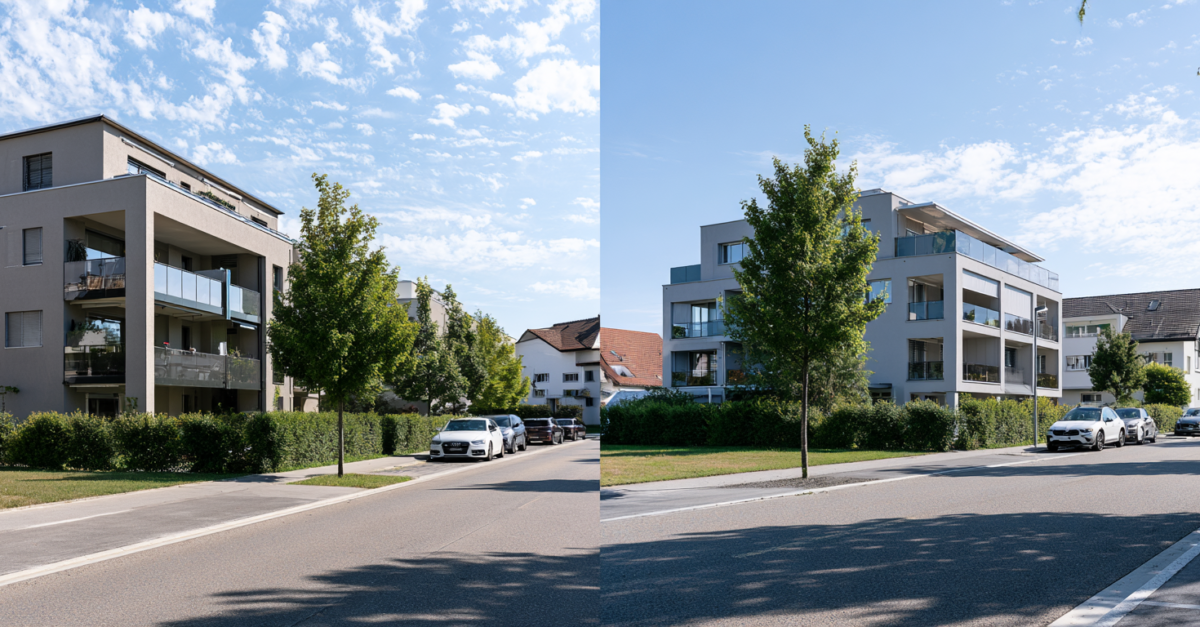

The Swiss residential property market slowed down in July 2026. According to the purchase index compiled by ImmoScout24 and IAZI, asking prices for flats rose by 0.3 per cent compared with June, whilst prices for detached houses remained virtually unchanged, rising by just 0.1 per cent. Year-on-year, however, the rise in prices is striking. Condominiums are 4.7 per cent higher than last year, and detached houses 3.2 per cent higher.
For prospective buyers, the situation became even more difficult in the same month, as the cost of financing had risen in the meantime. Moneyland.ch reports benchmark interest rates of 1.51 per cent for two-year fixed-rate mortgages, 1.73 per cent for five-year mortgages and 1.97 per cent for ten-year mortgages as at 25 July 2026. The platform also notes that the rates are updated twice a day and that offers can vary significantly depending on the lender.
Central Switzerland pulls ahead
Regionally, the market is anything but uniform. For detached houses, asking prices rose by 1.3 per cent in Central Switzerland, by 1.1 per cent in the Mittelland and by 0.7 per cent in the Lake Geneva region. By contrast, there were declines in Eastern Switzerland (down 2.0 per cent) and in Ticino (down 1.3 per cent). For flats, the sharpest rise was also seen in Central Switzerland. There, asking prices climbed by 2.2 per cent within a month, whilst the Greater Zurich area saw a fall of 0.9 per cent.
Energy is having an impact on pricing
Alongside location, energy efficiency features are becoming increasingly important in pricing. This applies in particular to modernised buildings with upgraded heating systems or energy-efficient refurbishments. For owners and buyers, this means that the level of ongoing energy costs and a property’s vulnerability to new fluctuations in oil and gas prices are becoming increasingly relevant.
A monthly dip rather than a break in the trend
From an industry perspective, July is therefore less a turning point than a stress test. Monthly momentum is levelling off, but price levels remain high and financing has become more volatile. Anyone involved in developing, marketing or valuing residential properties must analyse price psychology, interest rate sensitivity and energy efficiency more closely than was the case just a few quarters ago.