Hybrid is the new normal
Some media are proclaiming the end of the home office. The figures tell a different story. In Switzerland and Germany, hybrid working has not only persisted, but established itself as a structural constant of the modern working world. A new CBRE analysis shows that what is currently happening is not a trend reversal, but a fine-tuning with a clear direction.

77% of Swiss companies now rely on hybrid working models. That is more than twice as many as before the pandemic. In Germany, 79% of companies offer hybrid working, while the proportion of employees working from home remains stable at between 23% and 24%. At the same time, the analysis of job advertisements, a reliable seismograph for medium-term corporate decisions, shows that hybrid working has been consistently communicated as a working model in around 20% of German and 15% of Swiss job advertisements since 2023.
Recalibration, not capitulation
Yes, the average time spent working from home has fallen slightly. In Switzerland from 1.36 to 1.15 days per week, in Germany from 1.0 to 0.85 days. Anyone who sees this as the end of flexibilization is misreading the data. Only 4 to 5 percent of German companies are considering doing away with the home office completely. 74 percent plan to retain hybrid models, while 11 percent even want to increase flexibility. Adjusting entrepreneurial thinking, not turning back.
Rethinking the office
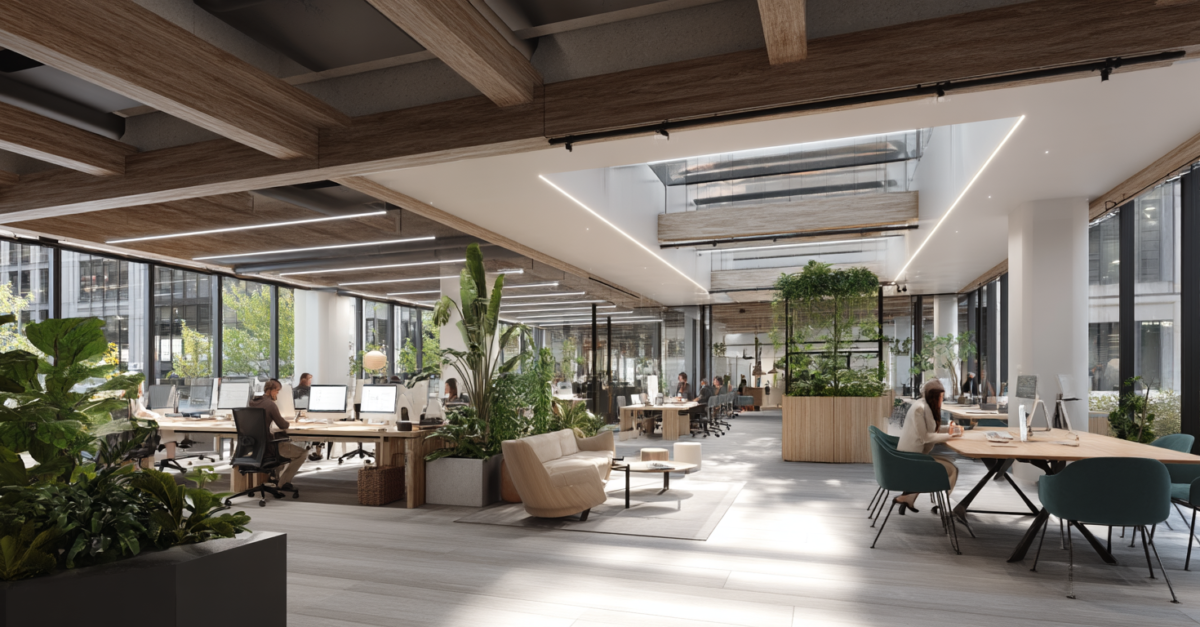
The real question is not how many days someone spends in the office. It is why someone should come to the office. 75 percent of employees see the office as a better place for social interaction, 58 percent for networking and career development, 49 percent for creative interaction. The office is changing from an obligatory place to a meeting point for things that don’t work remotely. CBRE speaks of the “office as an attractor”, a place that must offer tangible added value in order to justify the journey. Globally, office occupancy has now recovered to 53%, the highest level since March 2020.
What companies need to do now
The data is clear, as are the areas for action. 72% of the companies surveyed have set themselves the goal of improving office space utilization. 66 percent want to sustainably improve the office experience. In other words, spaces that enable collaboration instead of hindering it. Concepts that make team days meaningful and a corporate culture that makes presence attractive rather than enforcing it. Anyone who views the office as a mere cost problem is missing the real strategic question. What value does it create for people and the organization?
Flexibility as a competitive factor
Hybrid working has long been more than just an HR issue. It is a factor in the battle for skilled workers. Companies that credibly embrace flexibility have a measurable advantage in recruiting. The ISG study on the future of the Swiss workplace shows that employee experience has become a key lever, from collaboration and onboarding to the availability of space. Hybrid working is the new normal and those who strategically shape it now will position themselves as employers of the future.