The Brisgi has roots. In the 1940s, the site was home to a shanty town for up to 1500 employees of the former BBC industrial group. Many of them were guest workers with their families. In the 1960s, a high-rise building and two apartment blocks followed, which still stand today and are carefully embedded in the new development. What was once a workers’ housing estate is now becoming a modern urban building block.
Three sponsors, one goal
The project is backed by three non-profit organizations that are jointly developing the 6.5-hectare site: Wohnbaustiftung Baden, Logis Suisse AG and Graphis Bau- und Wohngenossenschaft. Each will take over one of the three buildings and design them independently. The rents are calculated to cover costs. Profit is not the goal, but affordable living is.
Wood, concrete and sun
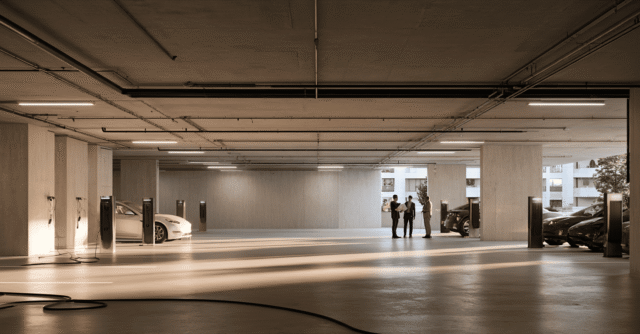
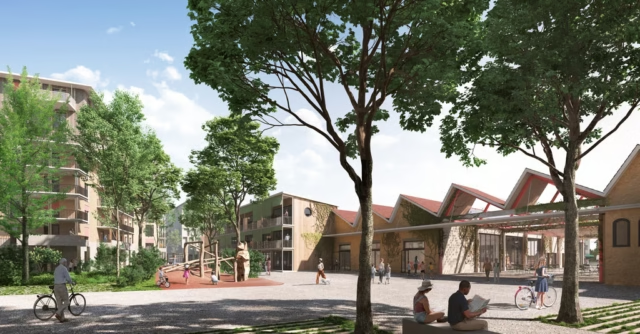
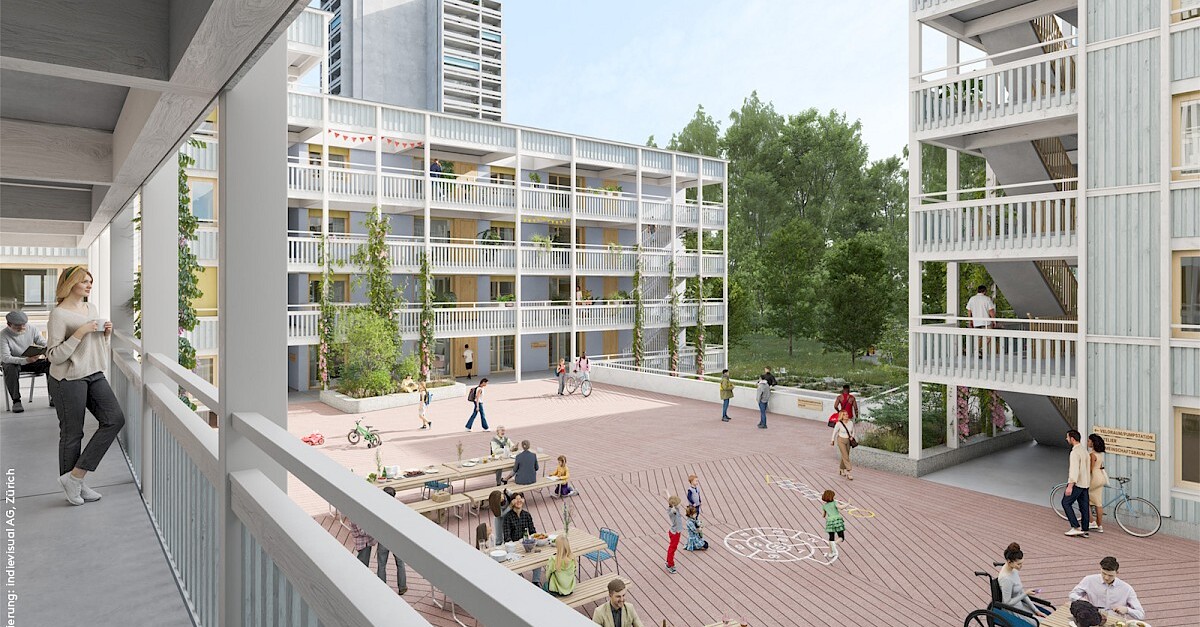
Nine five- to six-storey buildings, pergolas, green inner courtyards and a central square will characterize the future Brisgi. The hybrid construction method combines wood and concrete. Concrete only where it is really needed. Solar panels will produce electricity on around half of the roofs and the site will be connected to the district heating network of Regionalwerke Baden. The aim is to achieve the gold certificate of the Swiss Sustainable Building Standard.
Values carved in stone
Five stones, found during the excavation of the building pit and engraved by a stonemason, represent the self-image of the development. Common ground, the future, sustainability, affordability and living. City President Markus Schneider, who carried the stone with the inscription “Future”, summed up the 14 years of planning work: “Now the lively Kappi is becoming even livelier. A neighborhood within a neighborhood is being created here.” The five stones will be clearly visible in the development in future.
Milestones on schedule
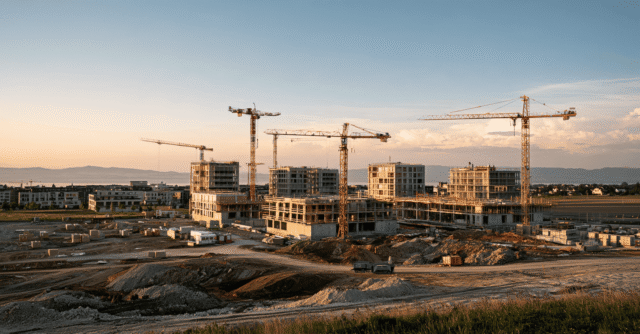
After years of objections and a planning process since 2012, things are now picking up speed. The building permit for all three courtyard buildings was granted in April 2025 and construction started on schedule in the fall of 2025. Letting will start in the second half of 2027, with occupancy scheduled for the first half of 2028. The design architects are the Baden-based firm Meier Leder Architekten together with the Zurich firm Müller Sigrist, whose “Kandalama” project was chosen as the winning project in 2016.