Parking was a marginal topic for a long time. Today, it is seen as the key to optimizing the value of properties. This is because outdoor spaces, once pure infrastructure, are becoming strategic earnings factors thanks to digital technology. “Parking space is no longer a necessary evil, but an integral part of the value chain,” says Jakob Bodenmüller, CEO of Wemolo. His company operates over 3,500 locations across Europe with 2.5 million parking transactions every day and sees an industry that is reinventing itself.
1.Free-flow technology, the farewell to the barrier
Cameras instead of barriers with license plate recognition enable parking management without physical barriers, ticket loss or maintenance costs. User vehicles are digitally identified and authorized users park automatically. This reduces operating costs by up to 60 percent while improving the customer experience.
Mixed-use districts benefit in particular. Retailers, service providers and residents can manage spaces as required, for example on a time-limited or quota-based basis. Third-party parkers are automatically recognized and sanctioned. According to Wemolo, their share drops by up to 85 percent within the first few months.
2.Shared parking – new sources of revenue through cooperation
What is a supermarket during the day can become a residential area at night. Shared parking uses free time slots in private spaces and opens them up to third parties in a controlled manner. Supermarkets, office buildings or retail parks can generate additional revenue of up to 80 euros per parking space per month without any structural investment.
The model is a liberating blow for cities. Around a third of inner-city traffic is caused by the search for a parking space. If private parking space can be managed digitally, traffic volumes can be reduced and space efficiency increased. “We orchestrate instead of opening up and control always remains with the operator,” emphasizes Dominic Winkler
3.E-mobility as a business model
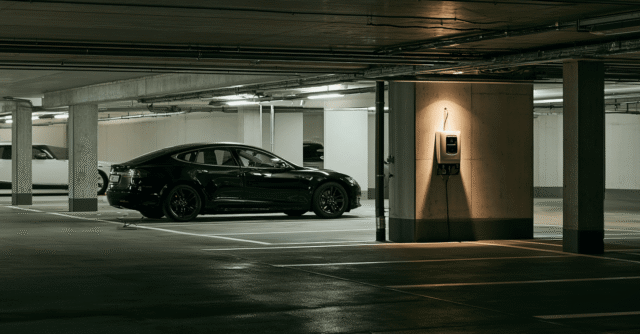
Charging points are not only a regulatory obligation, but also a revenue driver. Those who charge stay longer, a measurable advantage for retailers. Studies show that every additional minute of charging extends the length of stay and increases sales by over one percent.
By linking e-mobility and smart parking, charging infrastructure can be dynamically controlled, priced or offered as a premium service. Integration into the parking management system significantly reduces costs and at the same time boosts the ESG performance of a property.
4.Parking Intelligence uses data as a management tool
Parking data becomes corporate intelligence. Automatically recorded key figures provide information on occupancy, dwell time, customer frequency and seasonal patterns. Facility and asset managers can use this information to adapt rental models, optimize personnel planning or develop targeted marketing strategies.
For the first time, Parking Intelligence creates a data-based foundation for location decisions. This turns parking space into a mirror of actual asset performance, making it measurable, comparable and controllable.
5.AI space monitoring, from parking space to portfolio sensor
The next stage of digitalization lies above the asphalt. 360-degree cameras and AI analytics monitor outdoor areas in real time, detect garbage, vandalism or snow and automatically report service tickets to facility managers.
This drastically reduces monitoring costs, maintenance contracts are evaluated objectively and standards can be managed centrally. This is a particular advantage for portfolios with hundreds of locations. The first operators are already testing how monitoring data can also be used to optimize locations.
Parking space as a new asset
The future of the real estate industry no longer lies just in buildings, but in front of them. Expo Real 2025 showed that thinking digitally about parking space changes the business model of a property.
“The challenge is not to be aware of trends, but to implement them,” says Bodenmüller. Parking management is becoming the interface between mobility, ESG and value creation. A dynamic market in which standing still is finally a thing of the past.