Renewable electricity plus water produces hydrogen and oxygen, and water is produced again during use. In reality, however, over 90 percent of the hydrogen used today comes from fossil sources, primarily natural gas. Green hydrogen from electrolysis currently costs around twice as much as conventionally produced hydrogen.
Problem zone electrolyzer
The materials used in the electrolyzer are an important cost driver. The Empa project focuses on PEMWE technology, which can be easily combined with fluctuating renewable energies. Inside, however, there is a highly corrosive, acidic environment in which untreated steel literally “disappears”. Even components outside the acid zone suffer when the smallest metal ions get into the high-purity water.
Titanium and platinum as cost drivers
In order to control the aggressive environment, components for the supply and discharge of water and gas are now made of titanium. Titanium is expensive, difficult to process and must also be coated with platinum so that it does not oxidize and impair the performance of the electrolyser. This combination of special metal and precious metal makes the hardware expensive and limits the scaling potential.
Steel plus titanium oxide instead of titanium plus platinum
Materials scientist Konstantin Egorov and his team are pursuing a different approach. They replace the titanium carrier material with steel and protect it with a special titanium oxide layer. Highly crystalline, low-oxygen rutile is used. The lack of oxygen atoms ensures electrical conductivity, while the high crystallinity provides corrosion resistance. This creates a conductive, stable protective layer on a significantly cheaper substrate.
Industrial-grade coating
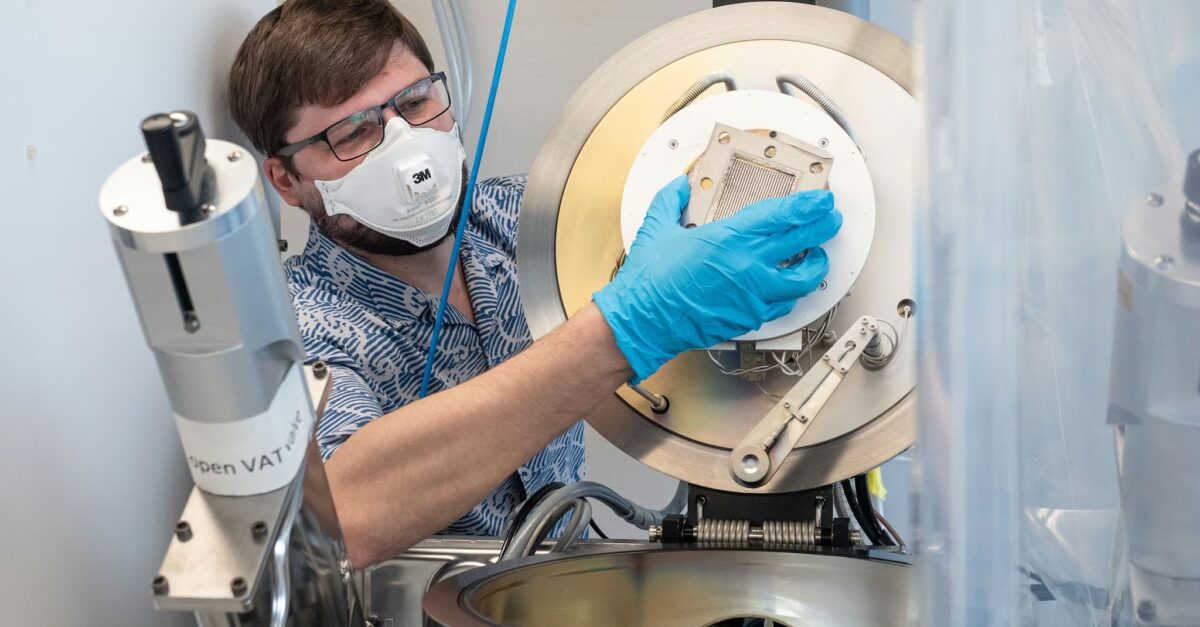
The team uses physical vapor deposition, an established industrial process, for the coating. Initial applications on the so-called bipolar plate show that the coated components pass demanding corrosion tests in the laboratory and in a functioning electrolyser. The steel components are also easier to machine, which enables new, streamlined designs and can further increase the efficiency of the cell.
The next hurdle
Next, the researchers will tackle the porous transport layer. Here, the titanium oxide coating must penetrate deep into the pores without clogging them. If this succeeds, two central components of the PEMWE electrolyser would be placed on a cheaper, scalable material basis. The project will run until the end of 2026, after which an industrial partner will help move the technology towards commercialization.