

Already today, more than 100,000 vehicles pass through the Reussport Tunnel every day. By 2030, this figure is expected to rise to more than 111,000, and to 124,000 by 2040. The A2 and A14 motorways will therefore reach their capacity limits not only at peak times but also structurally.
This is also evident in the traffic congestion patterns. At the Rotsee junction, the national north-south axis, traffic from Zurich and Zug, and regional routes all converge. Traffic jams can quickly spread from there into the local road network.
A network with clearer roles
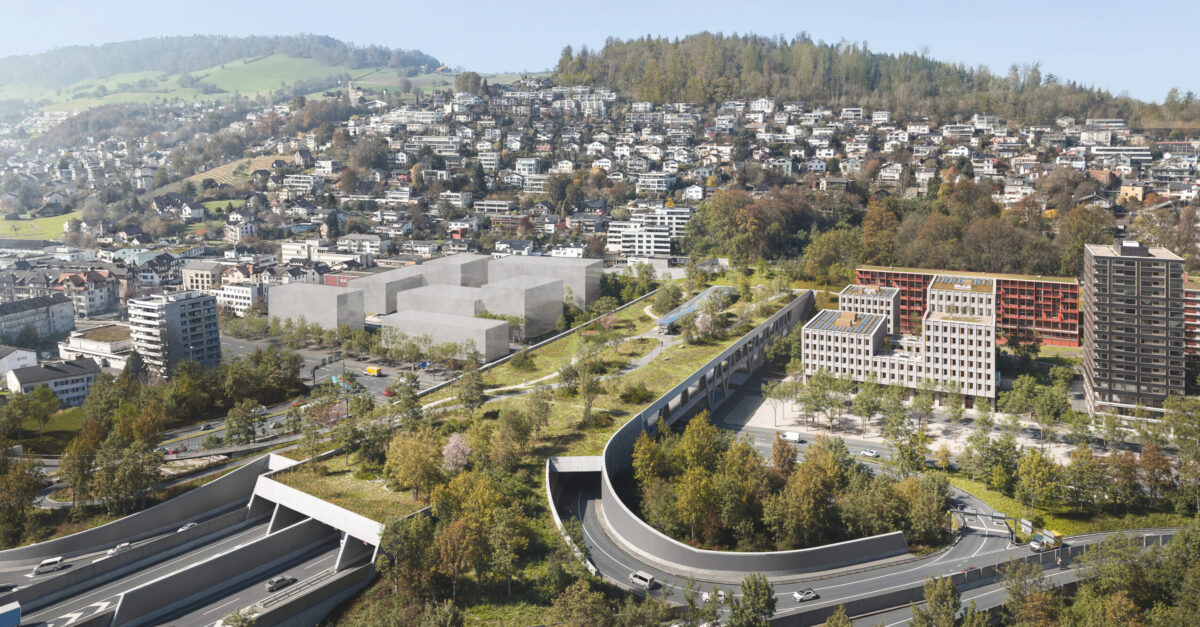
The new bypass runs from Ibach in Lucerne North to Grosshof in Kriens. Two separate tunnel tubes, each with two lanes, are designed to divert through traffic underground, bypassing the city centre. The current route through Reussport and Sonnenberg will remain available as an urban motorway for journeys to destinations within the conurbation, as well as for local and internal traffic.
In the north, the A14 will be widened from four to six lanes between the Rotsee junction and the Buchrain slip road. To this end, the Rathaus Tunnel will be fitted with a third tube. In the south, the overall system includes modifications to the A2 as far as the Lopper junction.
Operational redundancy is key. The bypass and the urban motorway create parallel routes that can be used interchangeably. This makes the network less vulnerable to accidents, roadworks and maintenance operations. A single incident should no longer have the potential to bring the entire region to a standstill.
Kriens regains space
In Kriens, the transport solution becomes a town planning issue. Near the Arsenal, plans are in place to cover the A2 over a length of 250 to 300 metres. The Schlund tunnel is to be extended by 130 to 150 metres. Together, the two covers will span 380 to 450 metres and enable new connections between residential areas that are currently separated.
Above ground, green spaces, meeting places and safe routes for pedestrians and cyclists are to be created. This is more than just noise protection. It creates scope for Lucerne South, one of the region’s most important development areas. The motorway remains, but it loses some of its divisive impact.
The cost of the link
According to the current project status, the national road project ‘Lucerne Bypass Integrated System’ is estimated to cost around 1.8 billion Swiss francs and will be funded by the federal government. The additional Arsenal and Schlund covers will cost around 186.5 million Swiss francs. The Federal Roads Office (ASTRA) will cover 60 per cent, the Canton of Lucerne 26 per cent and the town of Kriens 14 per cent.
The voters of Kriens will decide on the town’s contribution on 27 September 2026. If the vote is in favour, a cantonal referendum on the canton’s share will follow on 29 November 2026.
The DETEC granted planning approval for the entire bypass system in February 2024. Appeals were lodged against the decision, which are currently being resolved in court. The overpasses in Kriens are a supplementary, stand-alone project. Following an extended planning phase, their completion is expected from 2037 at the earliest – coordinated with the bypass.
More than just a clear run
The bypass is not merely a project to increase capacity. It is a project designed to relieve congestion in the Lucerne conurbation and city: vehicles that currently travel on cantonal and local roads will use the motorway in future. As a result, traffic on many roads around the new bypass will be noticeably reduced. The partial coverings will also create added spatial value in the Lucerne South development priority area, improving quality of life and providing strong connections across the motorway.
The A2 is becoming a local issue
More Articles
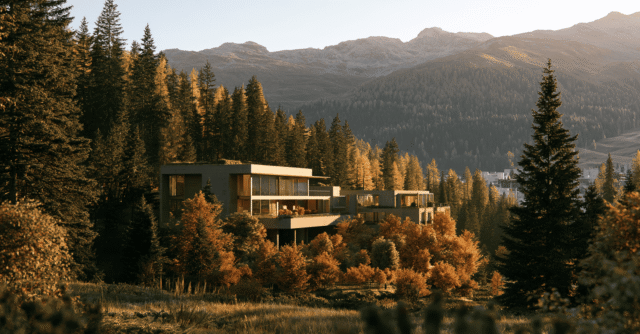
Davos is fighting to secure 210 flats for local residents
In Davos, two of the largest housing developments for local residents have come to a standstill at the same time. Objections have been lodged against the Valbella development, comprising around…
Attiger’s change of sides continues unabated
Stephan Attiger, a member of the Aargau Cantonal Government, is set to join a property developer on 1 January 2027, but according to the cantonal government, he will not be…
Housing shortage will drive prices even higher in 2027
Despite an increase in new-builds, housing in Switzerland will remain in short supply and expensive in 2027. Wüest Partner anticipates around 50,000 additional flats, but nevertheless expects rents to rise…
Zurich is striving to provide housing for the elderly rather than take on new debt
On 29 November 2026, Zurich’s eligible voters will vote on a 20 per cent quota for people aged 60 and over in council flats and on a counter-proposal providing 100…
Geneva’s Push for Disclosure of Purchase Prices Blocked
Geneva continues to grapple with the issue of publishing names and purchase prices in real estate transactions. Following the committee report of August 18, 2026, the Grand Council has once…