
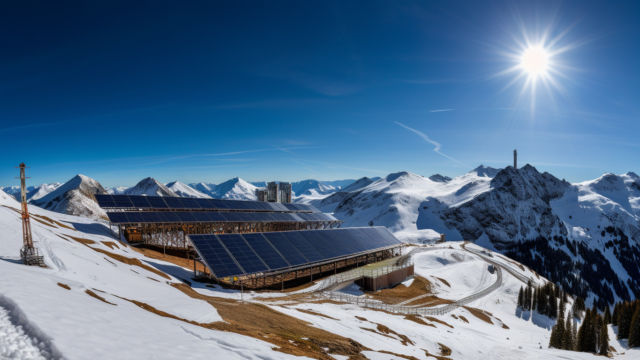
Construction of a solar plant at 2000 metres
EKZ, Repower and the municipality of Klosters officially started construction work on the Madrisa Solar power plant on 4 June. Located at an altitude of around 2000 metres, it will have a production capacity of 12 megawatts. It is intended to help close the winter electricity

Building culture in focus, NRP 81 begins
The National Research Program "Baukultur" (NRP 81) was officially launched with an inspiring kick-off meeting in Thun. The participating research teams and practice partners have clearly positioned themselves as a community that wants to tackle the ecological and social challenges of the built

New findings from 45,000 building permits
With its new white paper, the Center for Risk Management at HEC Lausanne (CRML) provides precise insights into the Swiss real estate industry's progress towards climate neutrality. By evaluating over 45,000 building permits in 2024, it becomes clear where the industry is already making progress and

Monument becomes a home with history
Strüby Holding AG has successfully completed the conversion and renovation project of the listed Gütsch farmhouse. The result of nine months of construction work is a modern detached house that preserves the 530-year history and the face of the building that characterizes the

| 23. September 26 - 30. September 26 | Gute Projekte. Schlechte Margen? Warum viele Planungsbüros viel leisten – und trotzdem kämpfen. |
| 29. September 26 | 10th EESC Liberal Professions Day: Conference – Preparedness in the EU: the role of the liberal professions |
| 29. September 26 | Prix de l’immobilier romand 2026 |

Clean energy from the summer for the winter
A pioneering project in Bassersdorf ZH shows how green methanol can be used as seasonal energy storage. Thanks to innovative technologies, surplus summer electricity is efficiently stored and used in winter for climate-neutral heat and power supply. The new permanent exhibition in the Umwelt Arena

Insight into building permits and renovation dynamics
The new white paper from the Center for Risk Management at HEC Lausanne reveals the hidden trends in the Swiss real estate sector. With more than 45,000 building permits from 2024, the analysis provides valuable insights into the pace, cost and type of renovations and shows how much still needs to

ProKilowatt 2025 tenders set new standards
30 projects that save electricity with innovative efficiency measures have already been approved. Simplified application procedures and a high degree of flexibility provide companies with attractive funding opportunities and make an important contribution to Switzerland's energy

Cham Swiss Properties optimizes “Rocket & Tigerli”
A pioneering timber hybrid high-rise ensemble is being built in the middle of the locomotive town of Winterthur. The owner, Cham Swiss Properties AG, is appealing against the building permit itself. A formal interim phase to meet the city's stringent requirements and perfect the

Geothermal energy in underground structures
A team from the Swiss Federal Institute of Technology in Lausanne (EPFL) has teamed up with Amberg Engineering to investigate the geothermal potential of subway stations and underground data centers. In the first case, the focus was on heat recovery, in the second on


First Zurich cantonal building to be awarded platinum
For the first time, the canton of Zurich has been awarded the platinum label in accordance with the "Swiss Sustainable Building Standard" for a public building. The new asylum center in Adliswil is a flagship project that sets standards in terms of architecture, ecology, economic efficiency and


ETH uncovers vulnerability in Intel architecture
Researchers at ETH Zurich have discovered a serious security vulnerability in Intel processors that allows access to sensitive data across CPU boundaries. The vulnerability has affected all Intel processors since 2018 and poses a serious risk for data centres, cloud providers and technology-based

Location opportunities for Switzerland in the face of global change
The technological transformation brought about by artificial intelligence marks an economic upheaval of historic proportions. According to the PwC study "Value in Motion", AI could increase global GDP by up to 15 percentage points by 2035. However, the full potential can only be realised if it is
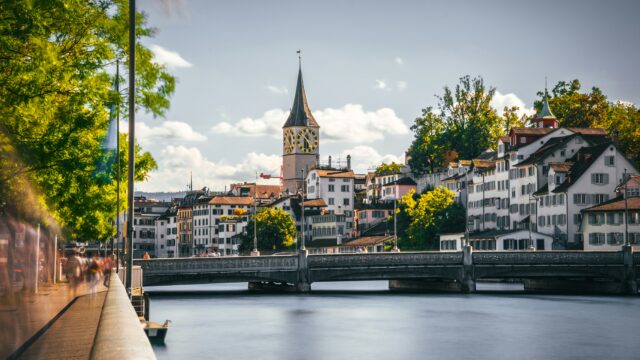
Spatial concept Switzerland without substance
The revised Spatial Concept for Switzerland fails to fulfil its objective of providing a forward-looking model for spatial development up to 2050. It remains vague on key issues, ignores real challenges and lacks political support. Investors and project developers therefore lack reliable guidelines



New construction technology stores CO2 in buildings
Holcim and the ELEMENTAL architecture firm of the multi-award-winning Chilean architect Alejandro Aravena have developed a biochar technology that transforms buildings into carbon sinks. It will be presented at the Architecture Biennale in Venice from 10
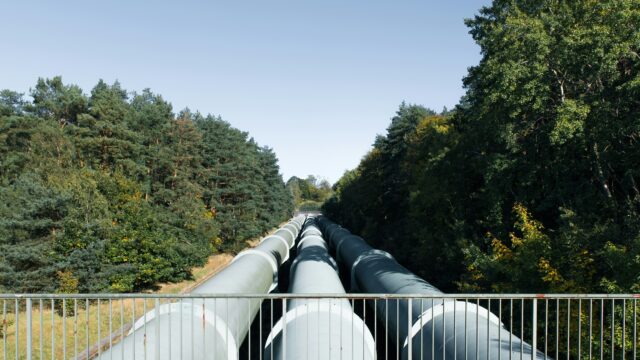
Large-scale decarbonisation through district heating expansion in Zurich
The city of Zurich wants to achieve its net-zero target by 2040. To achieve this, the city council is pushing for the expansion of district heating under the umbrella of the city's electricity utility (ewz) and is applying for a framework credit of CHF 2.26
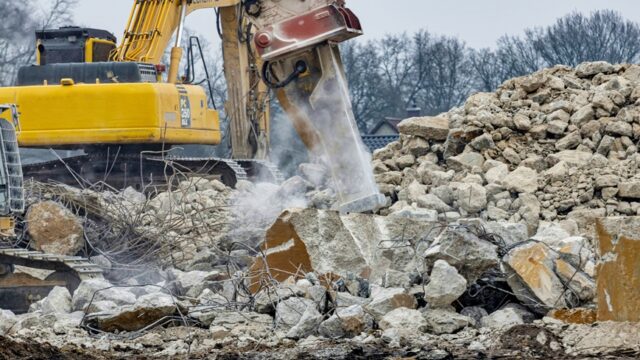
Construction of new soil treatment plant for more sustainable concrete
STRABAG has started a modernisation project in Bürglen with a ground-breaking ceremony. A plant for soil preparation for the production of recycled concrete is being built there. A new building for the subsidiary Beton AG is also being

Preliminary project cantonal school Ausserschwyz in Nuolen
The cantonal school in Ausserschwyz, located in the centre of Nuolen, will undergo an impressive transformation as a result of the preliminary project. The historic buildings will be renovated and complemented by a modern new building. This new building will include a gymnasium, ancillary rooms and

House of wood in Sursee shows the future
The Haus des Holzes in Sursee sets new standards in timber construction. It combines sustainable materials, digital planning and modular construction in one building. It is an exemplary combination of ecological responsibility and technological innovation and opens up new perspectives for the

Schwamendingen gets its Ueberlandpark
The Schwamendingen motorway enclosure and the new overland park mark a milestone in urban development. The successful covering of the motorway has succeeded in banishing noise, creating green space and sustainably upgrading the neighbourhood. The project is an example of future-orientated

Researcher investigates solar reflection for better yields
Researcher Anja Mödl from the Institute for Snow and Avalanche Research (SLF) has investigated how snow-covered terrain reflects sunlight near Davos. Her findings should make photovoltaic systems more efficient. Optimally positioned systems can also use light from opposite

Study shows potential for renewable energy in Frauenfeld
The Swiss Federal Laboratories for Materials Testing and Research and Frauenfeld's public utility company, Thurplus, have presented the city's energy prospects for 2050. The conclusion is that a net-zero solution with district heating and heating replacement would be


FORUM UZH Centre for Education and Research
The FORUM UZH will have a lasting impact on the University of Zurich and the university area. As UZH's largest single construction project, it will be a state-of-the-art education and research centre with space for around 6,000 people. The building brings together various faculties, creates space