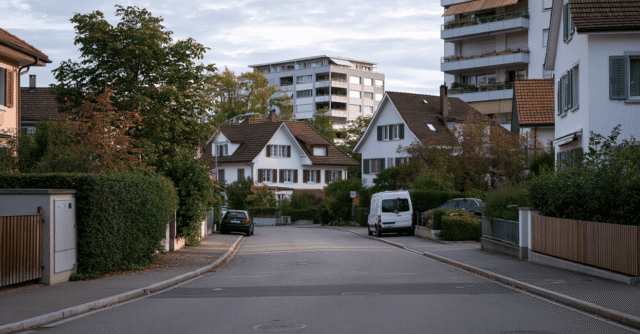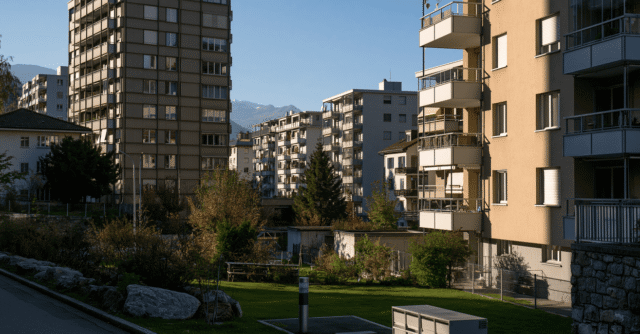

The federal government attributes the problem primarily to a housing supply that is not keeping pace with the growth in the number of households. According to the updated Housing Market Monitor, the situation worsened further in 2025 and the first half of 2026. It remains particularly tight for home seekers with low and moderate purchasing power, as well as in regions such as the greater Zurich area, Central Switzerland, and several mountainous regions.
As of June 1, 2026, there were 45,493 vacant apartments nationwide. That was 2,962 fewer than a year earlier. The vacancy rate thus fell for the sixth consecutive time, dropping to 0.93 percent. The supply of rental apartments also declined. The 34,690 available rental apartments represented a 6.7 percent decrease from the previous year.
More Building Permits, Delayed Impact
The Federal Office for Housing continues to expect insufficient growth in the housing stock for 2026. At the same time, according to the Monitor, an increase in building permit applications and approvals suggests that the housing stock could begin to grow more strongly again starting in 2027. But this is precisely where the problem lies for owners, developers, and municipalities. A larger pipeline does not yet mean relief in the short term, while the pressure for affordable rental housing remains high even today.
Affordable housing is also lacking in tourism
A new study by the University of Lausanne on Adelboden, Leysin, Saas-Fee, and Villars-sur-Ollon illustrates the concrete impact of this shortage. For seasonal workers, high housing costs are the biggest housing problem. They are looking for accommodations close to work, with sufficient privacy, and leases that match the duration of their seasonal employment. For tourism communities, housing thus becomes a location factor in the competition for staff.
Reference Rate Offers No Relief
There is also no change in the mortgage reference rate. It has remained unchanged at 1.25 percent since September 2, 2026. This does not give rise to any new general entitlement to rent adjustments. The next publication is scheduled for December 1, 2026.
At the same time, federal housing promotion is losing a long-standing key figure. Felix Walder, deputy director of the Federal Office for Housing and head of housing promotion, will remain at the helm of the division through the fall of 2026. His announced departure comes at a time when the promotion of affordable housing remains under significant political and practical pressure.