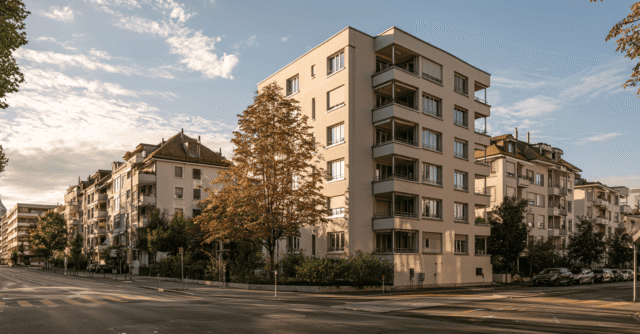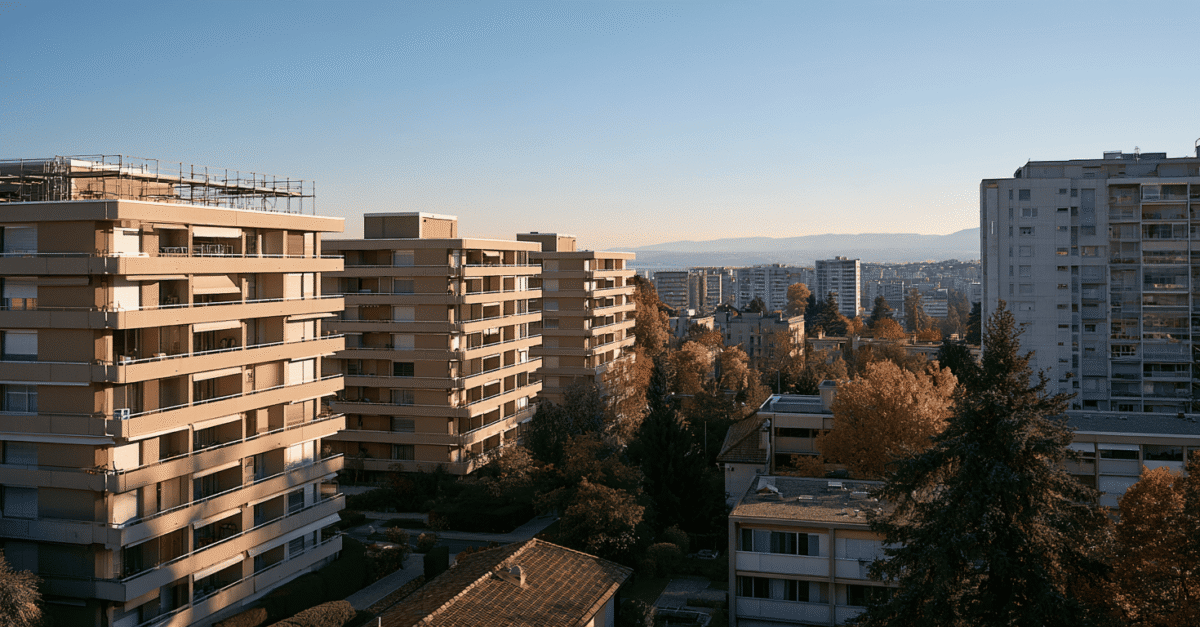

The growth is coming from two sources. New acquisitions generated 2.2 million Swiss francs in additional rental income, whilst organic growth of 1.7 per cent was also recorded. At the same time, mortgage costs fell by almost 13 per cent, which further boosted the operating margin.
In the 2025/26 financial year ending 30 June 2026, the property fund, which focuses on French-speaking Switzerland, increased its rental income by 5.9 per cent to 79.3 million Swiss francs. The rental default rate remained very low at 0.92 per cent, down from 0.94 per cent in the previous year. The EBIT margin improved from 66.2 to 67.7 per cent, whilst net profit rose by 11.8 per cent to CHF 38.0 million.
Portfolio value exceeds two billion
Together with realised capital gains, primarily from the sale of residential properties in Lausanne, the realised profit amounted to 42.7 million Swiss francs. The distribution rises to 5.45 Swiss francs per unit, up from 5.40 Swiss francs in the previous year. At the same time, the portfolio grew strongly. Solvalor 61 acquired 14 properties for 181 million Swiss francs during the reporting year. As at the end of June, the portfolio comprised 131 properties with a market value of 2.11 billion Swiss francs. According to the fund manager, the portfolio remained clearly residential-focused, with residential properties accounting for 93 per cent of the total.
Capital increase to finance projects
The next step is already scheduled for October 2026. The subscription period for the capital increase runs from 19 to 30 October 2026, with the payment for the new units due on 6 November 2026. The issue price is 258.50 Swiss francs per unit, with a maximum issue volume of 546,672 new units. In its announcement of 29 September 2026, the fund management put the target at around 141 million Swiss francs; an earlier announcement dated 30 July 2026 had referred to a figure of around 145 million Swiss francs. The fresh capital is intended to finance properties that have already been secured or transferred, ongoing construction and refurbishment projects, and the reduction of mortgage debt.
Growth amid a low vacancy rate
For the property sector, this is above all a sign of demand for residential stock suitable for densification in the centres of French-speaking Switzerland. The fund also highlights eleven ongoing renovation projects and three projects involving the addition of storeys and refurbishment that were completed during the financial year. The capital increase is therefore not merely a balance-sheet measure, but also a lever for further construction work on the existing portfolio.