Renens gives construction waste a new lease of life
At the Les Palettes site in Renens, excavated material from building sites is processed into fertile substrate. The project utilises 7,000 square metres of a development site that has been temporarily set aside and demonstrates how interim uses can simultaneously reduce pressure on landfill sites, cut transport volumes and lower future landscaping costs.
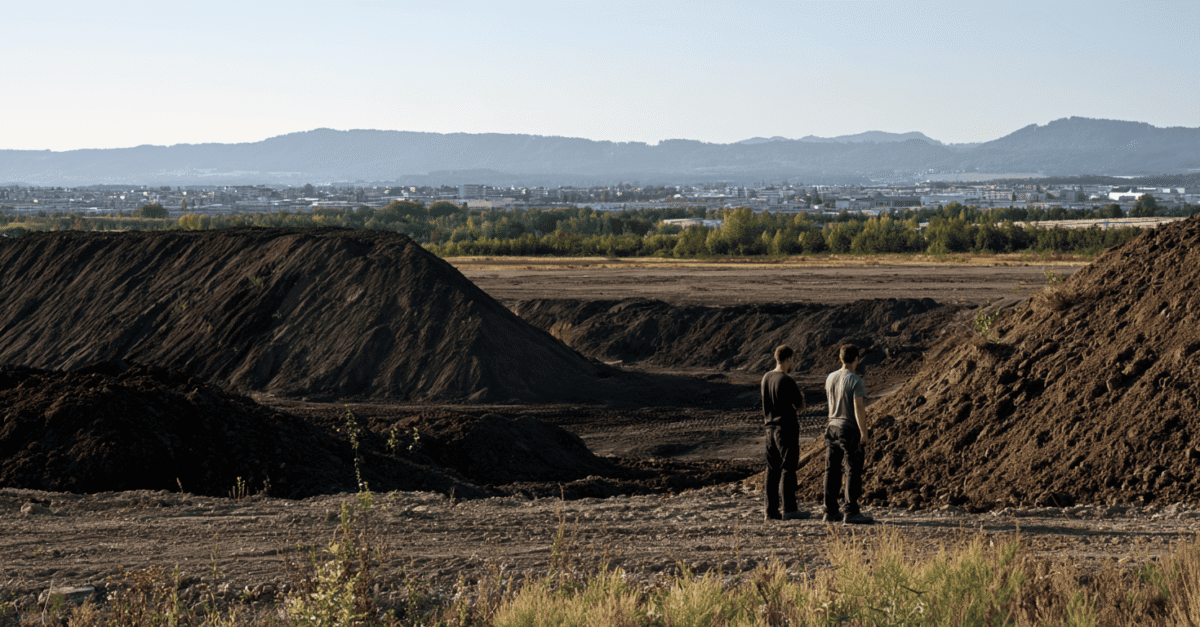

The choice of Renens as a location is no coincidence. Due to its designation as a municipal reserve zone, development of the Les Palettes site has effectively been on hold since the public consultation. New construction is, in principle, prohibited there for five years from the date of approval, with an option to extend this by three years. It is precisely this pause that creates the scope for a temporary use which would otherwise find little room in the densely built-up west of Lausanne.
The reserve zone covers an area of around 43,359 square metres, equivalent to just over 4.3 hectares. According to the information available, the owner is making 7,000 square metres available for soil preparation on this site, formerly home to Pépinières Meylan. There, Terasol mixes uncontaminated excavated material with organic matter and seeds to produce, over a period of months, a reusable substrate for greening, open spaces and roofs.
Interim use with a genuine link to construction
For the property and construction sectors, the benefits are tangible. Otherwise, building sites often have to pay to have excavated soil removed and later purchase new substrate for landscaping or green roofs. The Renens model shortens this chain. The soil remains in the region rather than being transported across the canton, and a plot of land blocked off for development is temporarily given a productive function.
Les Palettes remains open for the time being
The town of Renens continues to treat the Les Palettes area as a special case in its current land-use plan. In the 2024 PACom dossier, the perimeter is expressly excluded from the general plan because detailed planning is envisaged for the site. As early as the 2022 municipal annual report, a future use as a park along the Baumettes stream was identified as the intended direction for the site. Until these planning issues are resolved, the site remains a rare experimental ground for circular land management in the heart of a built-up area.
Pressure from two sides
The model is receiving further impetus from the high level of construction activity in the region. Several major infrastructure and development projects are underway in the greater Renens area. These include the tram extension from Renens to Villars-Sainte-Croix, for which planning approval was granted in summer 2026 and construction is set to begin in 2027. Such projects generate excavated material, whilst local authorities and developers are simultaneously calling for more unpaved and green spaces. It is precisely at this juncture that the project in Renens comes into play.