The world is raising interest rates. Switzerland keeps them low
Interest rates are rising significantly again in the U.S. and Europe. Switzerland remains an exception for now. The Swiss National Bank is keeping its key interest rate at zero percent because inflation, at 0.8 percent, remains within the target range. This remains favorable for mortgages. For savings accounts and bonds, however, real returns remain meager.
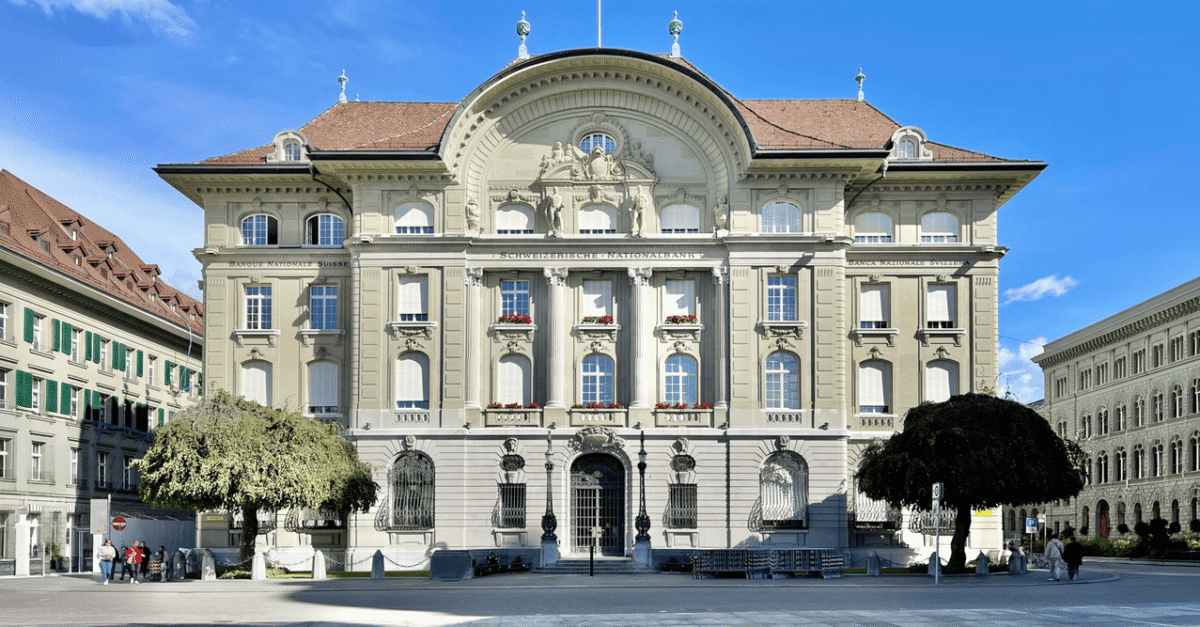
Swiss National Bank in Bern. Photo: Robbie Conceptuel / Wikimedia Commons
In mid-September, the U.S. Federal Reserve raised its target interest rate range by 0.25 percentage points to 3.75 to 4.00 percent. It was the first rate hike since 2023. The Fed is responding to persistently high inflation and cited ongoing price pressures.
The European Central Bank also tightened its monetary policy. It raised its three key interest rates by 0.25 percentage points on September 10. The deposit rate now stands at 2.50 percent. Inflation in the eurozone rose to 3.3 percent in August, while energy prices increased by 14.3 percent compared to the previous year. The rise in interest rates is not driven solely by higher oil and gas prices. High government spending, growing debt, and the enormous capital requirements for infrastructure, digitalization, and artificial intelligence are also pushing long-term yields higher. This makes financing more expensive for governments, businesses, and households.
Switzerland remains the exception
The Swiss National Bank left its key interest rate at zero percent on September 24. It expects average inflation of 0.7 percent for 2026 and 0.8 percent for both 2027 and 2028. This keeps inflation within the SNB’s target range of zero to two percent.
Switzerland is therefore not out of step with global trends. Higher energy prices have also caused inflation here to rise from 0.6 to 0.8 percent since May. However, the underlying situation is different. The strong Swiss franc is dampening imported inflation. At the same time, public finances remain solid by international standards. The result is evident in the capital market. Swiss 10-year government bonds yield significantly less than comparable bonds from the U.S. or the eurozone. This difference makes Switzerland an “interest rate island” and supports financing costs for the economy and the real estate market.
Mortgages remain affordable
This is good news for mortgage borrowers. Saron mortgages are closely tied to the SNB’s key interest rate. As long as this rate remains at zero percent, short-term financing will stay comparatively affordable.
Long-term fixed-rate mortgages are more closely tied to capital market and swap rates. As a result, they can fluctuate even if the SNB’s key interest rate remains unchanged. Nevertheless, Swiss interest rates remain low by international standards. Homeowners should therefore not only focus on the next SNB decision but also carefully balance the loan term, affordability, and their own risk tolerance.
Saving Loses Ground to Inflation
The low-interest-rate environment has a downside. Savings accounts typically yield very little. With a key interest rate of zero percent and inflation at 0.8 percent, idle money loses purchasing power in real terms. Even Swiss bonds often offer only limited return prospects after accounting for costs and inflation.
Anyone looking to build wealth over the long term therefore needs a broader perspective. Stocks offer higher potential returns but are significantly more volatile in the short term. The past few years have clearly demonstrated this difference. The Swiss Performance Index doubled over ten years, while the S&P 500—including dividends and denominated in Swiss francs—rose even more sharply. Savings accounts and Swiss bonds lagged far behind.
Returns Require Risk Awareness
Switzerland’s high-interest-rate environment does not shield investors from global market turbulence. However, it creates an environment in which debt financing remains relatively inexpensive and safe investments yield virtually no real returns. This does not imply a blanket recommendation for stocks. Rather, it presents a clear task.
Investors should clearly separate their liquidity reserves, investment horizons, and risk tolerance. Those who need money in the short term should not expose it to the stock market. Those investing for the long term can hardly avoid a broadly diversified portfolio with productive investments. The world is becoming more expensive. In Switzerland, money remains cheap for the time being.