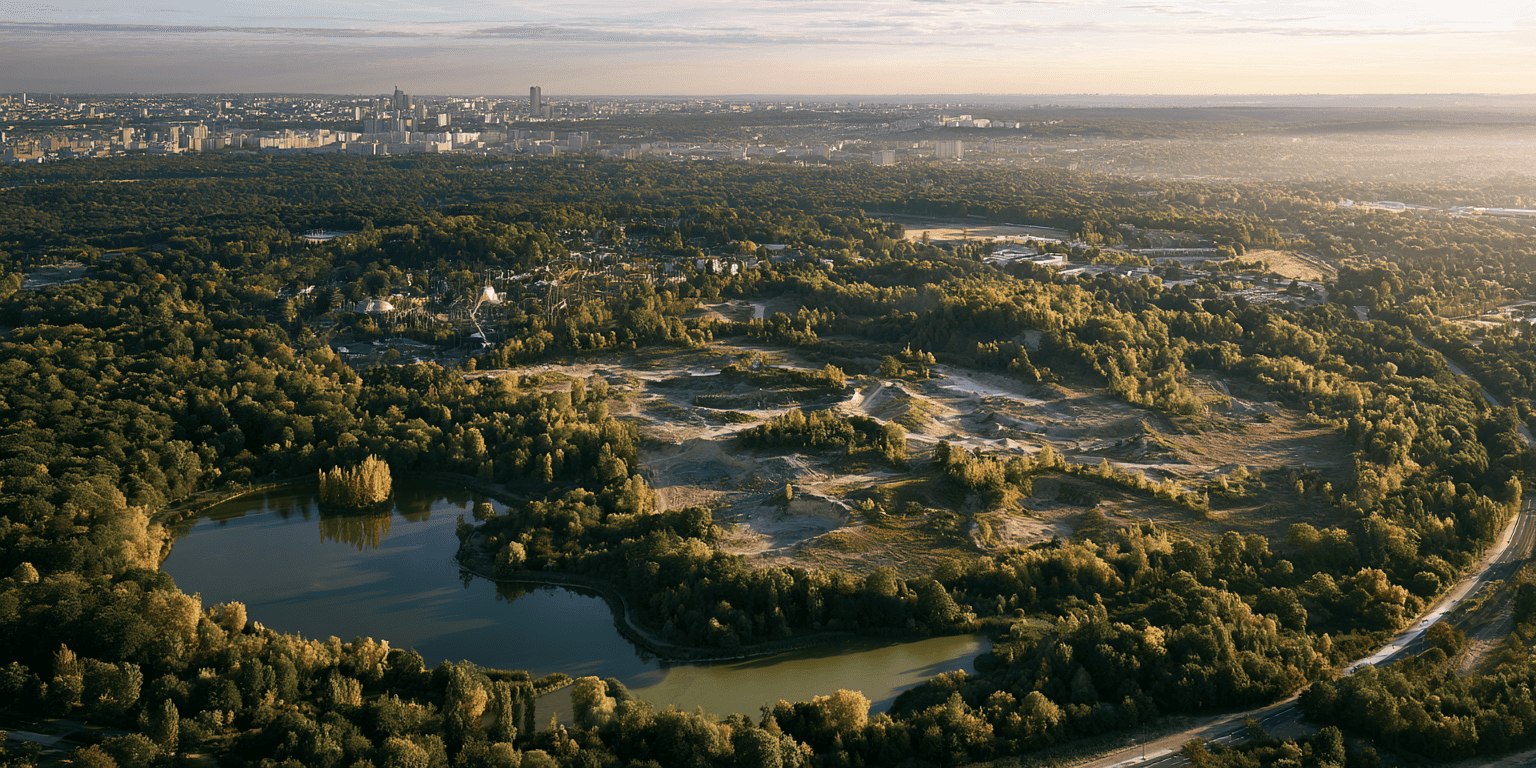

The political impact of the announcement was felt straight away, but the legal framework is still lacking. On 24 August 2026, France and Saudi Arabia unveiled a memorandum of understanding for three theme parks in Cergy-Pontoise, representing an investment of 6 billion euros. One of the parks is to be built in Courdimanche on the former Mirapolis site and will be based on the Dragon Ball manga universe.
For property and site development, it is precisely this distinction that is crucial. The scheme is positioned as a major project, but according to Le Monde, the key brand for the first park has not yet been finalised because approval from the Japanese rights holders for the use of characters and the brand is still pending. It therefore remains to be seen whether the project’s intended promotional appeal can actually be realised in the form announced.
Site with a history of leisure use
The Île-de-France region describes this as one of the largest foreign investment initiatives of recent years. It is estimated that the project will create between 20,000 and 22,000 direct jobs. The project ties in with a leisure site in Courdimanche that has lain fallow for decades, where the former Mirapolis park failed in the early 1990s. For owners, planners, authorities and infrastructure providers, the debate is thus shifting from a purely visionary perspective to the question of how transport, environmental regulations and land-use planning are to be managed within an already sensitive area.
Saudi capital spreads its wings
The project is being spearheaded by the Qiddiya Investment Company, which is part of the Saudi Public Investment Fund (PIF). For Europe, this is not just a minor trial run, but a further step in a broader investment strategy. According to PIF documents filed in the US in 2025, around 84.7 billion dollars flowed into Europe between 2017 and 2024, of which 8.6 billion dollars went to France. What is particularly new here is the scale of a new leisure-oriented development project with a direct impact on land use, hotels, infrastructure and tourism-related value creation.
Lots of hype, little in the way of a timetable
The opening date, the themes of the two other parks and the specific design of the accompanying hotels and ancillary facilities remain to be determined. It is precisely these gaps that are crucial for the industry. As long as the utilisation concept, the chain of rights and the implementation timetable remain unclear, this billion-franc project will remain a politically highly charged development promise with considerable potential in terms of land and infrastructure, but still without a definitively secured operational concept.