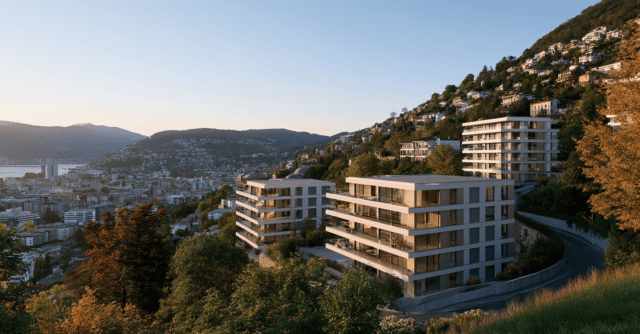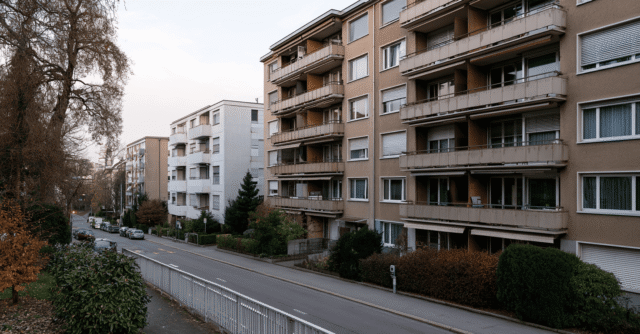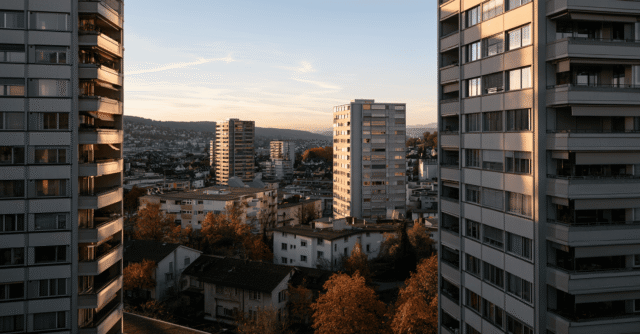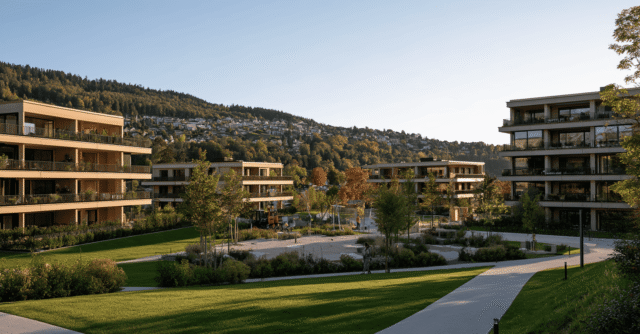
The City of Zurich is expanding its role as an active player in the real estate market. An initial evaluation report from the Finance Department shows the scale of the real estate purchases made between 2022 and 2025. The city invested 1.3 billion Swiss francs in 47 properties with a total floor area of 224,072 square meters. In addition to residential space, it also secured strategic parcels of land for future public projects.
With these purchases, the city is pursuing three goals: securing land for future needs related to municipal facilities, making better use of existing properties by acquiring adjacent parcels, and supporting the “one-third” housing policy target. By 2050, one-third of all rental apartments in Zurich are to be nonprofit. To this end, the City Council has committed to providing approximately 3,000 additional municipal apartments by 2040—an average of about 50 per year through property purchases.
More Than Twice as Many Apartments Acquired
This target was significantly exceeded between 2022 and 2025. Of the 47 properties acquired, 29 are residential properties with a total of 527 apartments. They are located in nine city districts and were purchased for approximately 870 million Swiss francs. This means the city acquired, on average, more than twice as many apartments as the annual target stipulates.
The significance of these purchases extends beyond the existing housing stock. According to the report, the 29 residential properties have development potential for approximately 661 additional apartments. However, this potential cannot be realized in the short term. Rather, it demonstrates that, through these purchases, the city is not only acquiring immediate housing stock but also securing development opportunities for the coming years.
In addition, the city purchased 18 other properties as strategic land reserves, spending just under 440 million Swiss francs. These areas are intended for public purposes, the exact needs for which will in some cases only become apparent later. They may, for example, become important for urban infrastructure or other municipal uses.
Many Evaluations, Few Successful Bids
Since 2021, the City Council has been able to acquire properties for the city’s financial portfolio without the approval of the Municipal Council. At the same time, the city established an acquisition team. Its goal is to act more quickly in the real estate market and to position itself as a reliable buyer.
The number of offers reviewed illustrates just how competitive the market is. In 2024 and 2025, the city reviewed 324 properties for potential purchase. No corresponding data is available for 2022 and 2023. The offers are based on independent appraisals. In most cases, however, another party was awarded the contract.
Development with Conflicting Goals
The report also makes it clear that real estate purchases do not automatically lead to affordable housing that can be made available quickly. Many of the new acquisitions have development potential. Given the high market prices, this is already reflected in the purchase price. If additional apartments are built, the initial rents may therefore be higher than for older city-owned apartments, even under the cost-based rent model. In the long term, however, rents will rise in line with actual costs and thus, as a rule, more moderately than market rents.
Unutilized development potential incurs costs that cannot be covered by rents. Nevertheless, the city intends to handle existing tenancies in a socially responsible manner. Climate protection, historic preservation, and biodiversity also often call for a phased approach. Taking over numerous properties and tenancies also requires additional personnel resources and well-established processes.
Through its purchases, the City of Zurich is strengthening its non-profit housing stock and expanding its strategic options. However, it will take time, planning, and a careful balancing of various interests before these properties are converted into additional housing or public infrastructure.