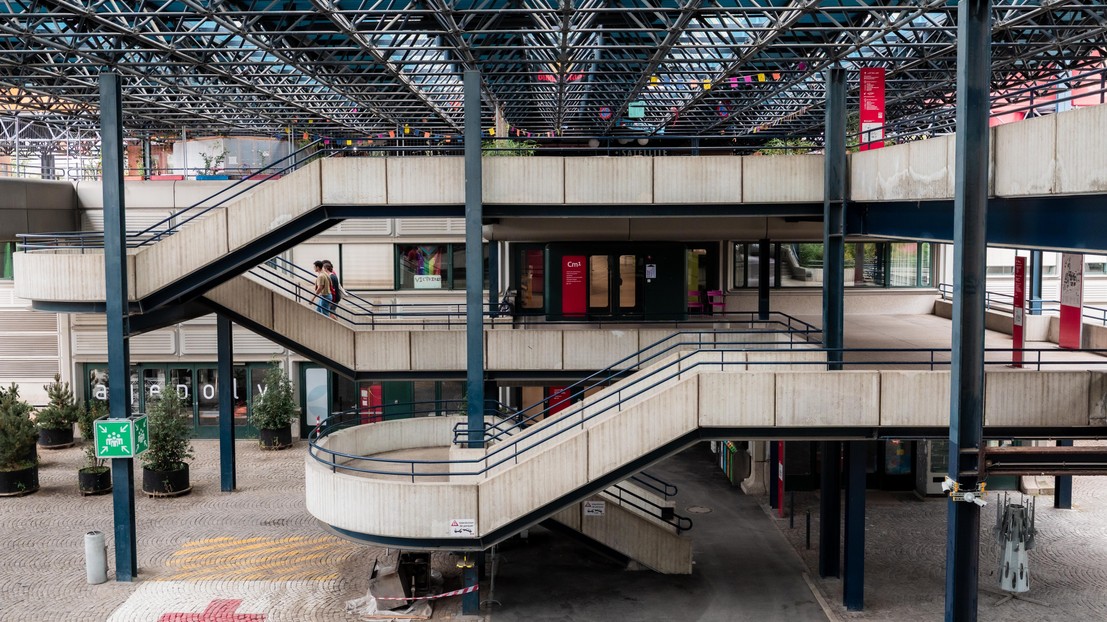
The first buildings on the EPFL campus and their surroundings are now listed as historic landmarks. This designation applies to the first construction phase, which took place from 1969 to 1984. The complex was designed by Zweifel Strickler Associés and comprises 158,800 square meters of floor area.
Its strength lies in its modular design. Office and laboratory spaces have been able to adapt to changing needs over the decades. This adaptability is now itself part of the protected value. The designation thus honors a defining work of 20th-century Swiss architecture.
Protection with Flexibility
The term “historic preservation” often conjures up the image of a building under a glass dome. The new agreement deliberately adopts a different model. The Canton of Vaud, EPFL, and the ETH Board combine the protection of architectural and historical features with flexibility for renovations, alterations, and new uses. The ETH Board represents the federal government as the owner of the buildings.
This is more than just a formal safeguard. EPFL must continually adapt its laboratories, work environments, and teaching methods to new scientific requirements. The campus is to preserve its identity without losing its function as a center for research and innovation.
Dialogue Instead of Obstacles
At the heart of the agreement is a permanent cooperation mechanism. A project committee will meet at least every two months to discuss ongoing work. Once a type of project has been approved, comparable measures can subsequently be implemented without additional formal procedures.
For larger renovations involving entire buildings or groups of buildings, a steering committee will be convened. It will also decide on “model zones”—areas that preserve characteristic elements of the original architecture and highlight them.
A Model Beyond Lausanne
Many universities, campuses, and administrative sites face the same challenge. They must adapt existing buildings, accommodate new ways of working, and at the same time preserve their architectural character. The EPFL approach shows one possible path forward.
Not every project needs a new building to become future-proof. Sometimes, innovation lies in carefully analyzing the existing structure, expanding it wisely, and establishing rules that combine speed with quality.