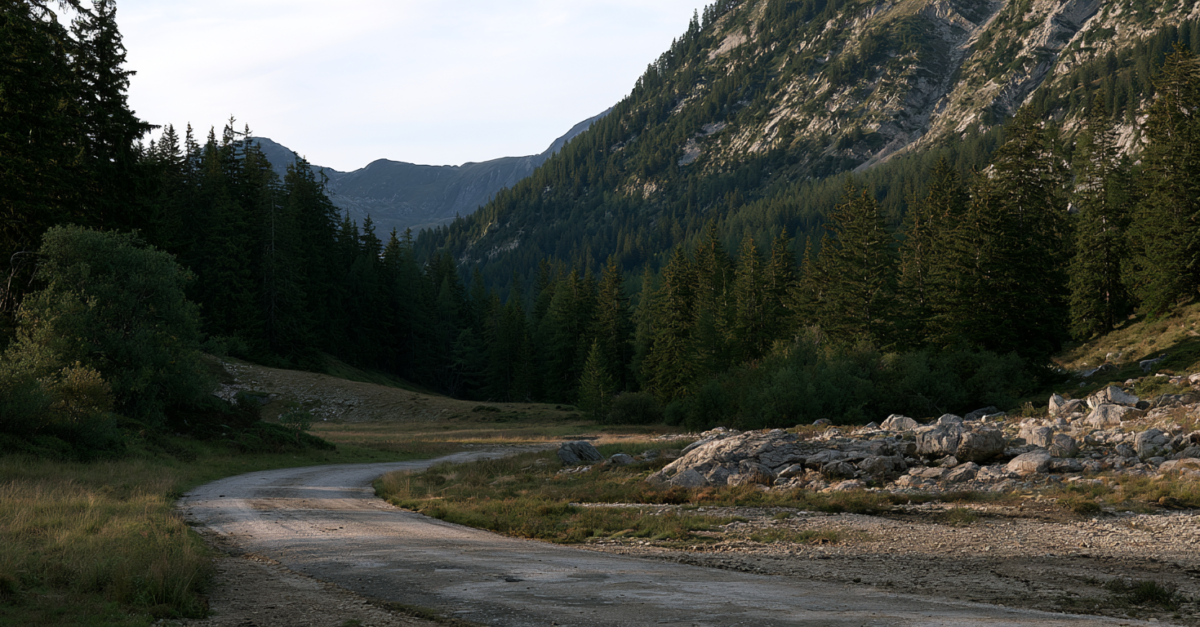

The appeal relates to two separate cases. So-called ‘ownerless land’ refers to rocks, scree slopes, firn, glaciers and other uncultivable areas, some of which are not yet recorded in the land register. ‘Ownerless plots’, on the other hand, are parcels that have already been surveyed and registered but no longer have an owner.
Local authorities to gain greater control
For uncultivable land, the amendment aims to lay the groundwork for these areas to be fully surveyed and entered in the land register. According to the cantonal government’s proposal, ownership of such land is to be transferred to the respective local authorities. Thirteen of the fifteen affected municipalities in the Bernese Oberland had spoken out in favour of this solution.
However, the municipalities would not be free to dispose of these areas as they see fit. The land is to remain open to the public and continue to serve the common good. A transfer to private individuals would only be possible in exceptional cases with cantonal authorisation. The rights to use hydropower and geothermal energy are to remain with the canton.
The municipalities will also gain greater influence over ownerless plots of land. These may include, for example, sections of road, woodland and arable land, or industrial sites. The proposal provides for a right of pre-emption for the local authority. A transfer to private individuals would only be possible with its consent.
This is relevant to property and location planning. Even small or, at first glance, insignificant plots of land can become important for access routes, infrastructure or the future development of a site. This would provide municipalities with a tool to safeguard their long-term interests.
A legal loophole has become a political issue
The canton has been working on the legal framework since 2021. An initial proposal envisaged assigning ownerless land to the canton. The Grand Council rejected the bill in 2022 and called for further clarification as well as greater involvement of the affected municipalities.
In December 2025, the Cantonal Government submitted a revised draft for consultation. In addition to the new ownership regulations for non-arable land, it also contained provisions on ownerless properties.
The issue received further attention thanks to Jonas Lauwiner, who describes himself as the ‘King of Switzerland’. SRF reported in December 2025 that he owns around 150 unclaimed properties across several cantons, including paths, woodland, arable land and industrial sites. These cases illustrate how seemingly insignificant plots of land can suddenly become relevant in the context of infrastructure development, neighbourhood issues or the development of a site.
On 13 August 2026, the Cantonal Government approved the revised bill for submission to the Grand Council. The Grand Council is expected to debate it during the 2026 winter session. It is now up to Parliament to decide whether, and in what form, the new rules on ownership and prior acquisition will come into force.