Pioneering civil engineering
The new Oder bridge between Küstrin-Kietz and Kostrzyn sets international standards in bridge construction. For the first time, ultra-light and robust carbon cables, developed and tested at the Swiss Empa, are supporting a railway network arch bridge with a large span. The project is regarded as an engineering masterpiece and a model for economic and sustainable infrastructure development.
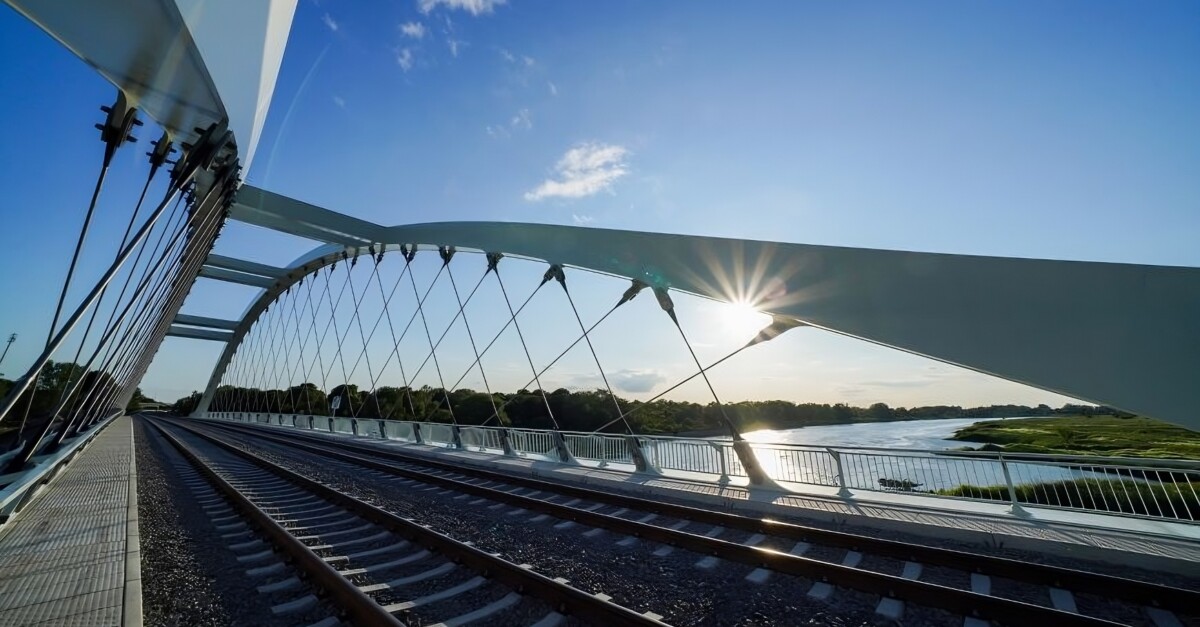
With a total length of 266 metres, the bridge replaces an outdated structure from 1926 that no longer met the requirements of modern rail traffic. The central component is a gleaming white network arch with a span of 130 metres, which spans the border river Oder without supports. Instead of classic flat steel cables, 88 carbon tension members made of carbon fibre-reinforced plastic are used. These hangers were largely developed, tested and assessed at the Empa Institute in Dübendorf. They replace the steel segments weighing several tonnes and thus significantly reduce the overall weight of the supporting structure. An advantage for material efficiency and design freedom.
Economic and sustainable benefits
The innovative bridge technology made it possible to save around 600 tonnes of steel and 1,350 tonnes of reinforced concrete. A project-specific scaffolding solution was used in the construction process to ensure efficient assembly and welding of the bridge segments. Thanks to the high fatigue, tensile and corrosion resistance of the carbon fibre cables, both the maintenance effort and the service life of the bridge are positively influenced. A sustainability study shows that the use of carbon causes around 20 per cent less CO₂ emissions than a conventional steel structure.
International appeal and future potential
The railway bridge can be used by freight and passenger trains at speeds of up to 120 km/h and fulfils the highest safety standards. Extensive tests by Empa confirmed the fatigue strength of the material under real loads. The bridge has received several awards, including the Bridges International Award and the German Bridge Construction Prize. It is regarded as a pioneer for the use of high-performance composite materials in infrastructure construction.
New aesthetics and symbolic significance
The striking, elegant arch creates an architectural accent in the border region and emphasises the connection between the countries. The network arch bridge with carbon hangers symbolises both technical innovation and ecological responsibility. In future, it could serve as a standard for comparable major projects in European rail transport.