Apartments are shrinking again
More and more people are living in less space. New-build apartments are becoming smaller for the first time in decades, while the living space per capita remains historically high. This trend is fundamentally changing planning, construction and energy policy and is turning space itself into a central control lever.
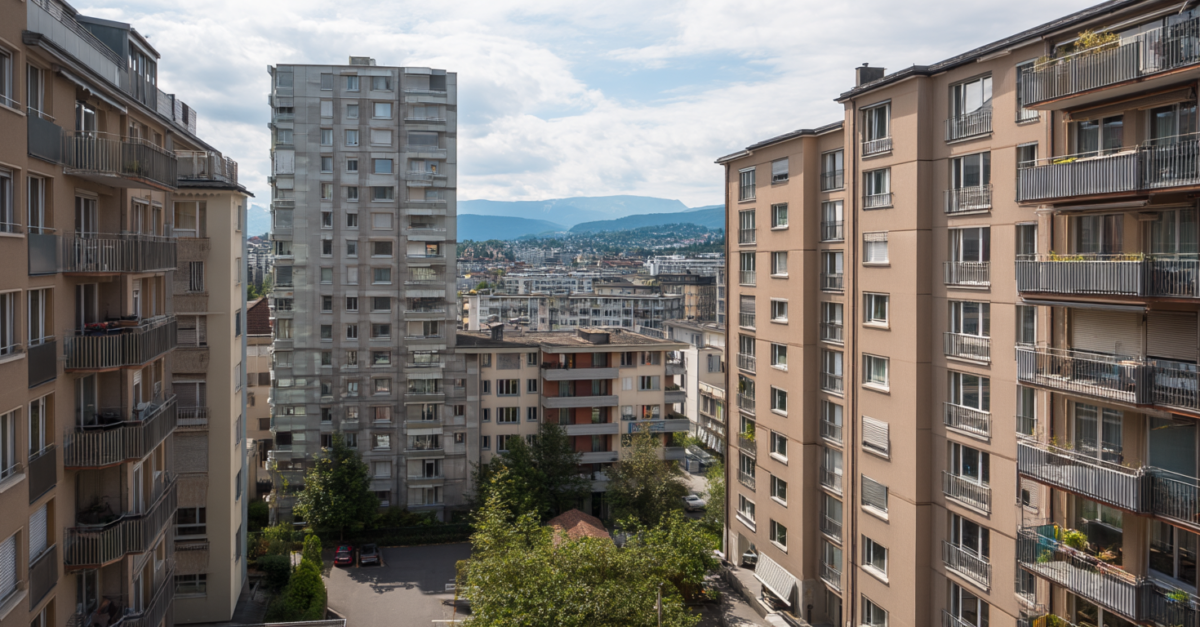

Households are getting smaller, while apartments remain large. The average household size has fallen to around two people since the 1960s, and the proportion of single-person households is now around 41%, in some cases half of all households in large cities. At the same time, the large multi-room apartment dominates the housing stock, a structural mismatch that puts new construction under pressure.
added to this are price and location pressures as well as sharp rises in land, construction and energy costs. This makes large apartments unaffordable for many, while investors achieve higher returns per square meter with smaller units. Urban planning models are focusing on redensification instead of single-family homes, and the proportion of new-build apartments in apartment buildings has risen.
technical consequences for planning and construction
Smaller apartments do not mean less planning, but more complexity in a smaller space. Higher building densities, larger spans and finer load transfer place demands on structural planning. The building services must supply more residential units per building, with higher requirements for sound insulation, ventilation, cable routing and meter logistics.
in terms of fire protection, escape routes, fire compartments and rescue concepts are becoming more demanding as densification and mixed use increase. At the same time, there is growing pressure for flexible floor plans that can be divided, combined or repurposed, from single apartments to family homes and back again.
conversion instead of tabula rasa
New construction alone cannot remedy the structural imbalance between household and apartment sizes. Most of the existing housing stock dates back to the days of other housing and family models. Demolition and replacement would be neither economically nor ecologically justifiable.
the focus is therefore shifting to the existing housing stock. Dividing up large apartments, building additions in the courtyard, adding storeys or converting office space become the central engineering task. In technical terms, this means interventions in statics and fire protection, retrofitting building services during ongoing operations and precision work on the occupied building.
space as an underestimated lever
The most important message from the evaluations is that heating, insulation and systems engineering are decisive for energy requirements. The heated living space per capita is decisive. Living on fewer square meters automatically reduces the heating load, the use of materials and the operating energy required
Smaller and more energy-efficient homes therefore become a double key. They are better suited to smaller households and noticeably reduce the energy consumption of the building sector. Downsizing has a more immediate effect than many individual technical measures, provided that floor plans remain liveable, adaptable and socially mixed.