Statics gap in timber construction is closed
Researchers from science and industry are closing a gap in structural calculations in timber construction. The horizontal load-bearing capacity of timber in walls with window openings is calculated using tests and mathematical models. The aim is to save on steel beams and concrete cores.
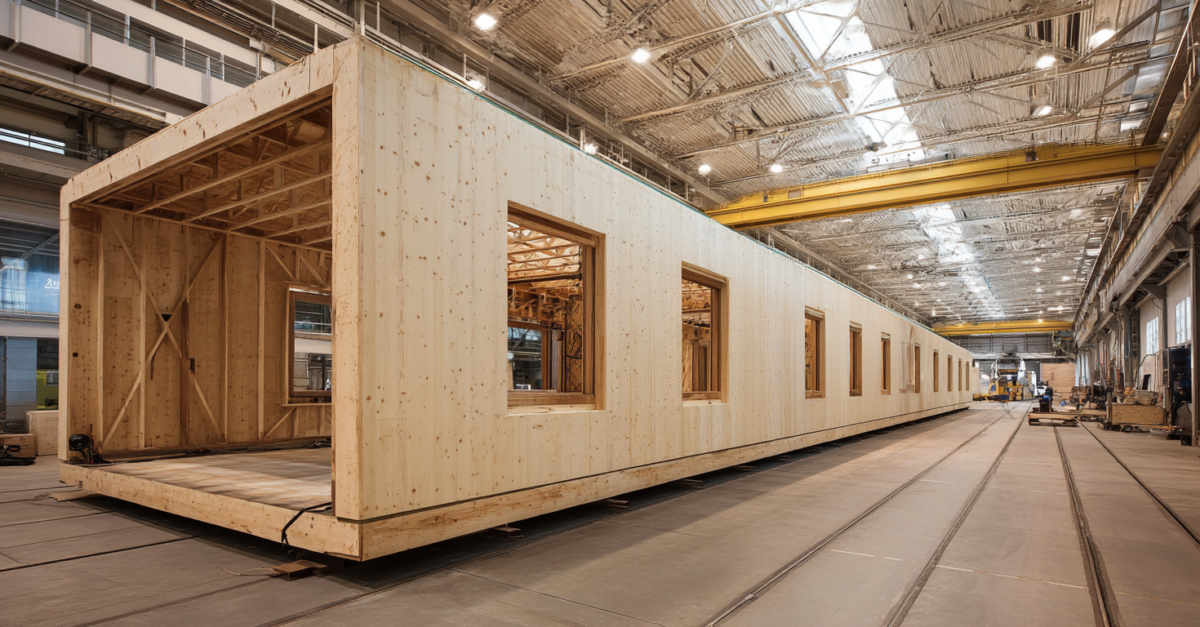
Researchers from the Swiss Federal Laboratories for Materials Science and Technology(Empa), the Bern University of Applied Sciences and the Swiss Federal Institute of Technology in Zurich(ETH) have carried out a comprehensive series of tests in collaboration with the Federal Office for the Environment(FOEN). According to a press release, the aim of these investigations was to close a structural analysis gap in timber construction. Multiple tests and mathematical models were used to gain insights into the horizontal load of timber frame constructions.
“We are investigating the horizontal bracing of buildings with timber frame walls that contain window openings,” said Nadja Manser, project manager at Empa, in the press release. “Neither in Switzerland nor in other European countries is there currently a regulation on how much horizontal load a timber frame wall can bear if it contains a window opening.”
In order to obtain this data, the researchers carried out numerous experiments in Empa’s construction hall with two-storey and single-storey walls, each containing two window openings. The horizontal beams were subjected to a load of over 100 kilonewtons.
The next step is to use the large amount of data obtained to create a computer model that is easy for structural engineers to calculate and that can be used to realise structural calculations for timber frame buildings. Throughout the project, the researchers are working with industry partners such as Swiss Timber Engineers, Holzbau Schweiz and Ancotech AG. One of the aims is to eliminate the need for expensive and labour-intensive steel anchors and the concrete cores that were previously required.