Senior citizens sell their homes late and downsize only slightly after moving out
The Zurich Cantonal Bank's real estate barometer has analysed voluntary moves out of owner-occupied homes. It is striking that moves usually involve couples, do not involve a change of location, and become more frequent from the age of 85 onwards. After moving out, the number of rooms per person decreases, but usually remains at two rooms or more.
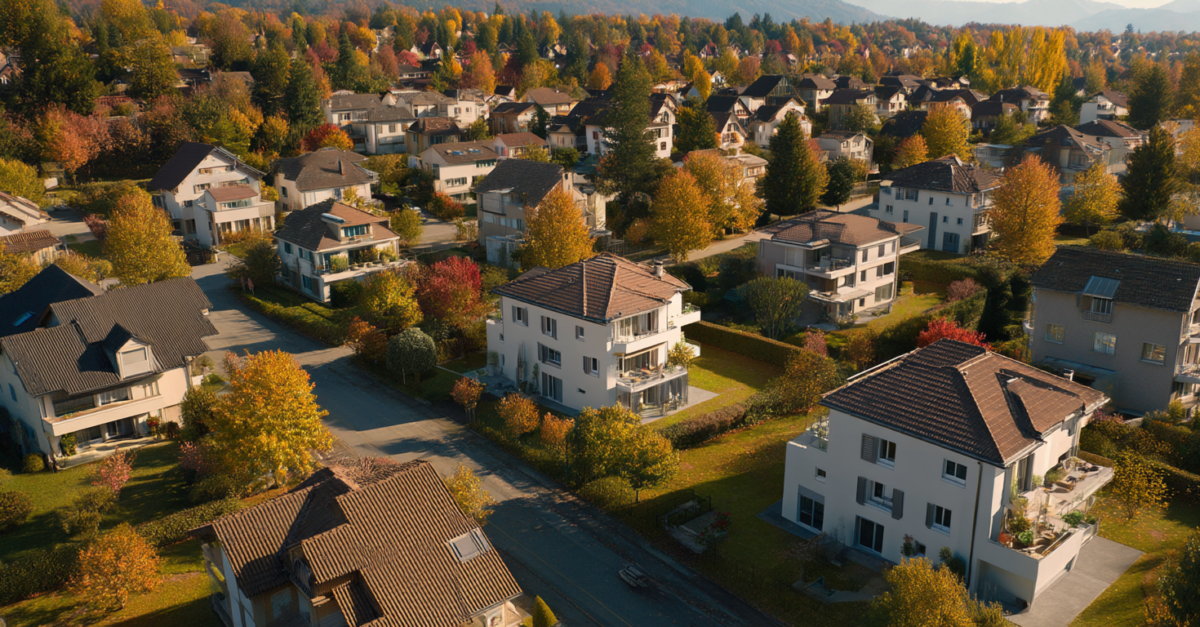

The Zurich Cantonal Bank (ZKB) real estate barometer has analysed trends and residential behaviour in the Zurich real estate market for the fourth quarter of 2025, according to a press release. The barometer shows that seniors usually only voluntarily move out of their single-family homes at a very advanced age – and often continue to live in spacious accommodation afterwards.
House transfers take place late in life: as a rule, the probability of selling a house only increases significantly from the age of 85 onwards. The average age of today’s EFH owners is 62. Most people move out in pairs in old age, with only 22 per cent of single households affected. 44 per cent of EFH movers remain in the same municipality afterwards.
Although former detached house residents downsize after moving, they do not live in small homes. More than 60 per cent of 60- to 70-year-olds move into flats with four or more rooms. The later the move, the greater the downsizing – but the living space often remains generous. “The desire to downsize one’s living situation in old age is overestimated. To put it bluntly, people don’t want to suddenly find themselves cramped in a small flat. At least, that’s how those who are used to spacious living in a detached house might feel,” says Ursina Kubli, Head of Real Estate Research at ZKB.
According to the barometer, prices for residential property in the canton of Zurich have continued to rise. In the Land region, prices rose by 4.2 per cent, while in the Regio region they rose by only 2.3 per cent. Across Switzerland, rents rose by 2.3 per cent in 2025, while in the city of Zurich they rose by only 2.2 per cent. This means that, for once, urban rent growth is below the Swiss average.
The ZKB expects property prices to continue to rise in 2026. Favourable financing conditions drove up demand, while supply did not grow noticeably, explains Kubli.