Switzerland rethinks electric mobility
Inductive charging makes electric cars automatic partners in the energy transition. Empa researchers, together with industry partners, have tested the wireless technology under real conditions for the first time with convincing results. The first converted vehicles are already registered on Swiss roads.
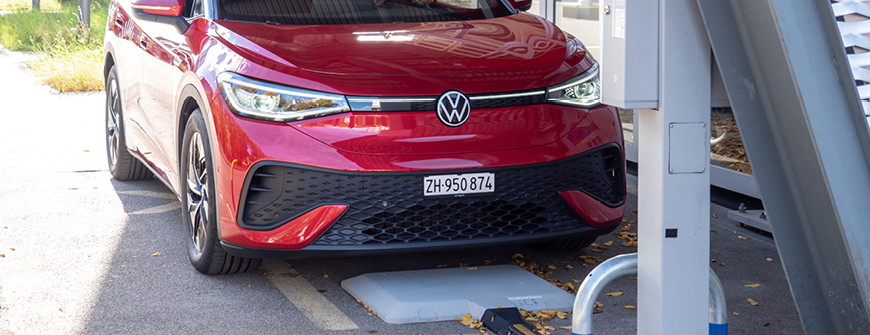
Bild: Empa
The principle is familiar from smartphones. A transmitter coil transmits energy to a receiver coil via a magnetic field without the need for a plug. In the case of electric cars, this means that all you have to do is park and the charging process starts automatically. In the “INLADE” pilot project, Empa and energy supplier Eniwa AG tested this technology for the first time under everyday Swiss conditions. The project was supported by the Swiss Federal Office of Energy and the cantons of Zurich and Aargau.
Practical test passed
Even in snow, rain and slight parking deviations, inductive charging achieves an efficiency of around 90 percent, comparable to the classic cable. AMAG and other partners equipped existing vehicles with receiver coils and integrated interfaces for charging management. Following extensive safety tests, the vehicles were granted individual approval for Swiss roads. They are among the world’s first electric cars with an inductive system that are suitable for everyday use.
Mobile storage for the energy transition
The real revolution lies in the potential. Electric cars are stationary for an average of 23 hours a day. If they were automatically connected to the grid during this time, their batteries could compensate for fluctuations in the electricity grid and stabilize renewable energies. Bidirectional charging, i.e. feeding electricity back into the grid, also works inductively. Vehicles are connected more frequently without users having to take any active steps. This makes every parking space a potential hub of a decentralized energy system.
Economically attractive
Intelligent charging reduces electricity costs, especially when charging during the day when photovoltaic systems feed a lot of energy into the grid. The combination of convenience, efficiency and grid integration makes inductive charging a promising building block for the mobility of tomorrow.