Sawdust is said to keep the fire at bay
Researchers at ETH Zurich and the Swiss Federal Laboratories for Materials Science and Technology are developing an insulation material made from sawdust that can be used for fire protection. The material, which is mixed with minerals, is intended for use in fire-resistant interior fittings.
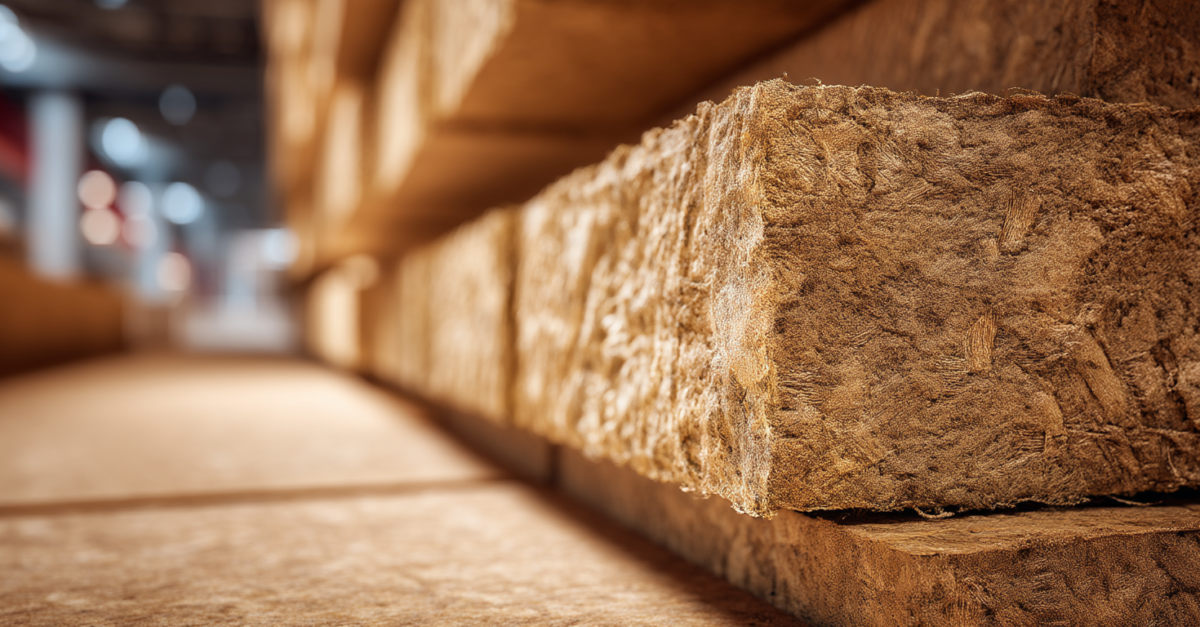

Researchers at the Swiss Federal Institute of Technology Zurich (ETH) and the Swiss Federal Laboratories for Materials Science and Technology (Empa) have developed an insulation material made from sawdust that can be used for fire-resistant interior fittings, according to a press release.
The composite consists of sawdust and the mineral struvite, a crystalline, colourless ammonium magnesium phosphate. During their work, the researchers had to overcome the difficulty of binding the materials to the sawdust particles during the struvite crystallisation process. They succeeded in doing so using an enzyme extracted from watermelon seeds. The crystallised mineral fills the voids in the sawdust. The resulting material is pressed into boards and dried at room temperature.
Initial tests show that the composition has similar fire-retardant properties to conventional cement-bonded chipboard. Tests carried out in collaboration with the Polytechnic University of Turin revealed that the struvite-sawdust boards take three times longer to catch fire than spruce wood. However, during the process, inorganic material forms which inhibits the spread of flames.
To scale up the process and put the new material into use, it is important to reduce production costs. Currently, producing the binder from the mineral is more expensive than polymer binders or cement. This could change with the development of a further recycling loop: struvite accumulates in large quantities in sewage treatment plants. “We could use these deposits as a raw material for our building material,” says Ronny Kürsteiner, a researcher in the Wood-Based Materials group at ETH, in the press release.
The study has been published in the journal Chem Circularity.