

A collaborative process with local authorities and regions
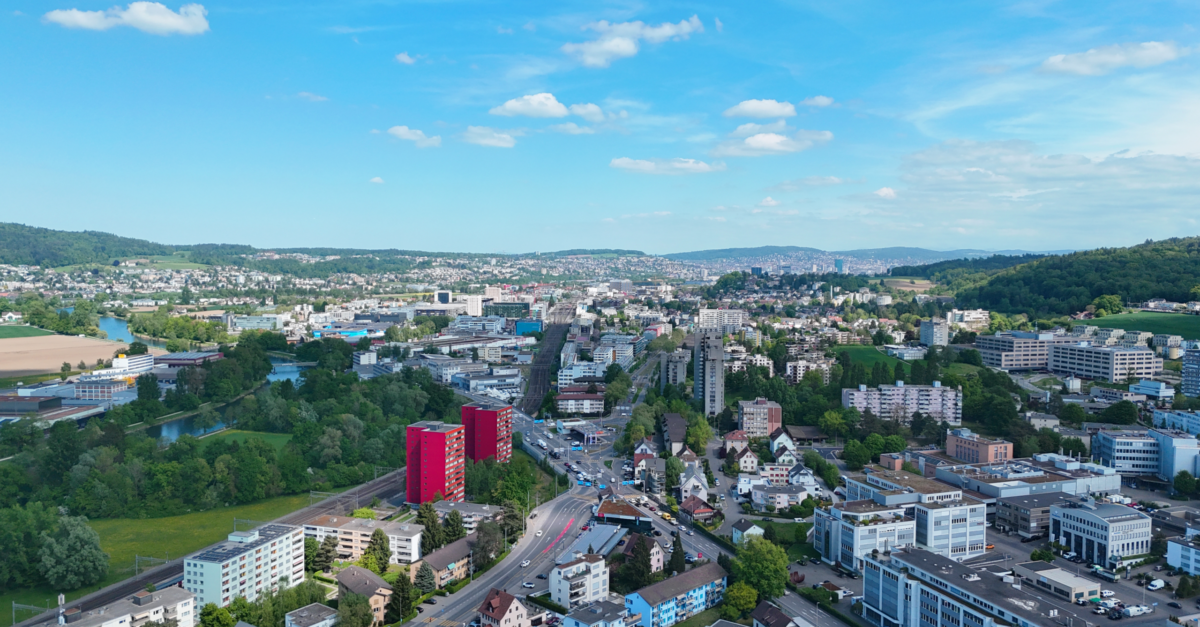
Twenty years have passed since the last Limmattal Comprehensive Transport Plan was drawn up in 2005, and the Limmattal region has undergone significant changes in terms of both living and economic conditions since then. The cantons of Zurich and Aargau are currently drawing up a regional comprehensive transport plan for the Limmat Valley in collaboration with the local authorities and the regional planning associations ZPL, Baden Regio and MRK.
The Limmattal is growing; transport and mobility are changing
The Limmat Valley has grown significantly over the past 20 years. The greatest growth has been in Schlieren, Dietikon and Spreitenbach. Above-average growth in both the population and the workforce is expected to continue in these three municipalities in the future. This is increasing the pressure on land for housing and transport infrastructure. To cope with the rising demand, projects such as the Limmattalbahn, various road improvements and the extension of the A1 northern bypass have been completed in recent years. Nevertheless, traffic congestion and diversion traffic are straining the local network and reducing the appeal of public transport, cycling and walking. The proportion of private motorised transport remains high, whilst at the same time public transport is gaining in importance, partly thanks to the Limmattalbahn. Although trends such as working from home and online shopping are curbing the growth in private transport, the predictability of journey times and the limited space available remain key challenges. Commercial transport is both a source of delivery and business journeys and is itself affected, as congestion and a lack of loading bays lead to delays. To better understand the challenges faced by transport operators, businesses and manufacturing sectors, and to fill data gaps, webinars and a survey were conducted in March 2026 in collaboration with Limmatstadt AG.
The aim is future-oriented mobility in the Limmat Valley
The rGVK is intended to promote a shift in urban areas away from private motorised transport (MIV) towards public transport, walking and cycling for everyday and leisure travel. A high proportion of people travelling by public transport, on foot or by cycle reduces pressure on both the road network and parking and storage spaces in public areas. This enables existing transport infrastructure and services to be used more efficiently, making journey times on the roads – particularly for both bus services and commercial transport – more reliable and easier to plan.
Local authorities are working with the canton to develop proposed measures
Based on the defined objectives, work is now beginning on developing a framework of measures to be finalised by summer 2026. These measures are intended to take all modes of transport into account, from private motorised transport and public transport to commercial transport, walking and cycling. To this end, further workshops with the local authorities are planned, amongst other things. The findings from the webinars with business representatives and from the survey will also be incorporated into the next steps.
Outlook
From spring 2027, the rGVK Limmattal is intended to serve as a guiding framework for transport development over the next 15 to 25 years. The specific measures will then be further developed in the cantons, regions and local authorities and implemented in stages.
Text: Nora Fritschi • Image: immoMedia GmbH
Mobility in the Limmattal 2050
More Articles

Zurich pulls the plug on Airbnb accommodation
Zurich is stepping up the fight against the housing shortage and is moving to remove short-term rental properties from the housing market. Airbnb considers the measure to be ineffective. Nevertheless,…
Bern Escalates the Rent Dispute
100,000 signatures against the Federal Council’s counterproposal are further fueling the conflict over abusive rents in Bern. While the Tenants’ Association is calling for stricter controls, real estate associations are…

Lucerne on the cusp of its next phase of development
With the through station, the bypass and the planned partial coverings in Lucerne South, key transport and urban development projects are at a critical juncture. State Councillor Fabian Peter explains…

 immo!nvest+
 Construction delays are also holding back the business sector
In Switzerland, lengthy procedures, objections and missed deadlines do not only affect residential construction. A new sector study on speeding up procedures in commercial construction confirms that the same obstacles…

Rösti’s charging requirement puts pressure on owners
The Federal Council wants to make it compulsory for landlords and owners’ associations to install basic charging infrastructure as soon as residents request it. The consultation period runs until 12…