More living space from the system
Serial construction is a response to the housing shortage, cost and climate pressure and opens up new opportunities for quality, sustainability and the circular economy. The decisive factor will be whether it is possible to combine standardization with architectural diversity and social acceptance.
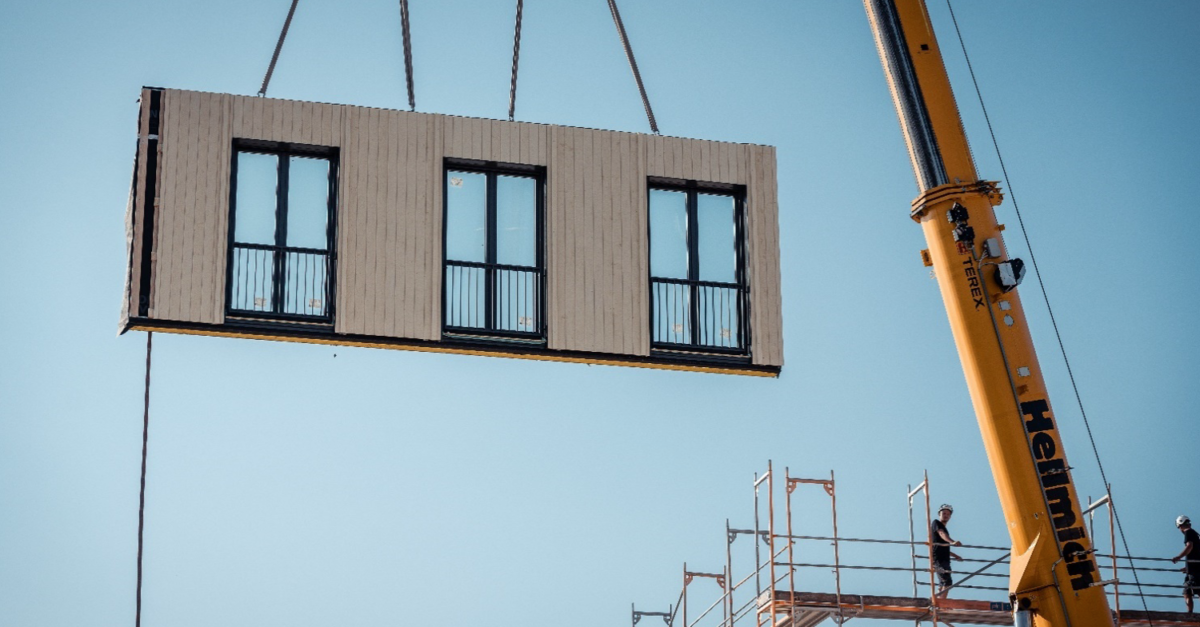
Foto: Nokera AG
The construction and real estate industry is under pressure. Construction costs are rising, there is a shortage of skilled workers, the population continues to grow and climate targets set clear limits for CO₂ emissions. Serial construction provides answers to these challenges.
Thanks to industrial prefabrication and standardized processes, construction times are shortened, workflows are more predictable and projects are more economical. The construction site becomes an assembly site, with less noise, less impact on the neighborhood and higher quality workmanship.
What serial construction is all about
Serial construction sees the building as a product, not as a one-off prototype. A system is intensively developed, thought through and used in many projects. Elements are largely created in the factory and assembled on site. This allows for precise costs and continuous improvement based on experience. Classic problem areas such as connections, thermal and sound bridges can be specifically mitigated.
From prefabricated buildings to the “Teslamoment“
Serial construction methods have a long history, from the early timber systems of the 1920s to the “Göhnerbauten” in Switzerland and prefabricated housing estates in the East. The efficiency was high, the design quality often not and the image still suffers today.
The topic is currently experiencing a new wave. Hybrid systems combine room modules and 2D elements, offer more flexibility for different plots and regulations and are bringing architecture and urban planning back on board. Projects such as the student-oriented “Woodie” in Hamburg show that serial construction and architectural quality do not have to be mutually exclusive.
Strengths: Time, costs, quality, climate
Serial systems shorten construction times and increase cost certainty. Because components and details are standardized, budgets and deadlines can be set early and reliably.
At the same time, industrial production opens up new scope for sustainability. Specifications for CO₂ reduction, material selection and energy efficiency can be consistently written into the system. Material passports and platforms are used to document installed components, making them visible as a resource for subsequent conversions or dismantling.
Acceptance determines the future
The big challenge is perception. In many people’s minds, serial construction stands for monotonous architecture and social problem districts. As long as current projects are only partially convincing in terms of design, this skepticism will persist.
To be widely accepted, buildings need to deliver more than just efficiency. Good floor plans, a high quality of stay, differentiated outdoor spaces and careful integration into the urban space. Standardization should be seen as the basis on which diversity is created.
Serial construction can become a central component of the building turnaround, faster, more plannable, more resource-efficient and circular. The technical prerequisites are in place, as are successful pilot projects.
Whether the approach experiences its “Tesla moment” now depends on whether the industry and cities manage to combine industrial processes with high quality living and design and thus show that repetition does not mean uniformity, but can be the basis for sustainable, diverse neighborhoods.